





 Portuguese
  English
  Spanish
  6 min of reading
  0 comments


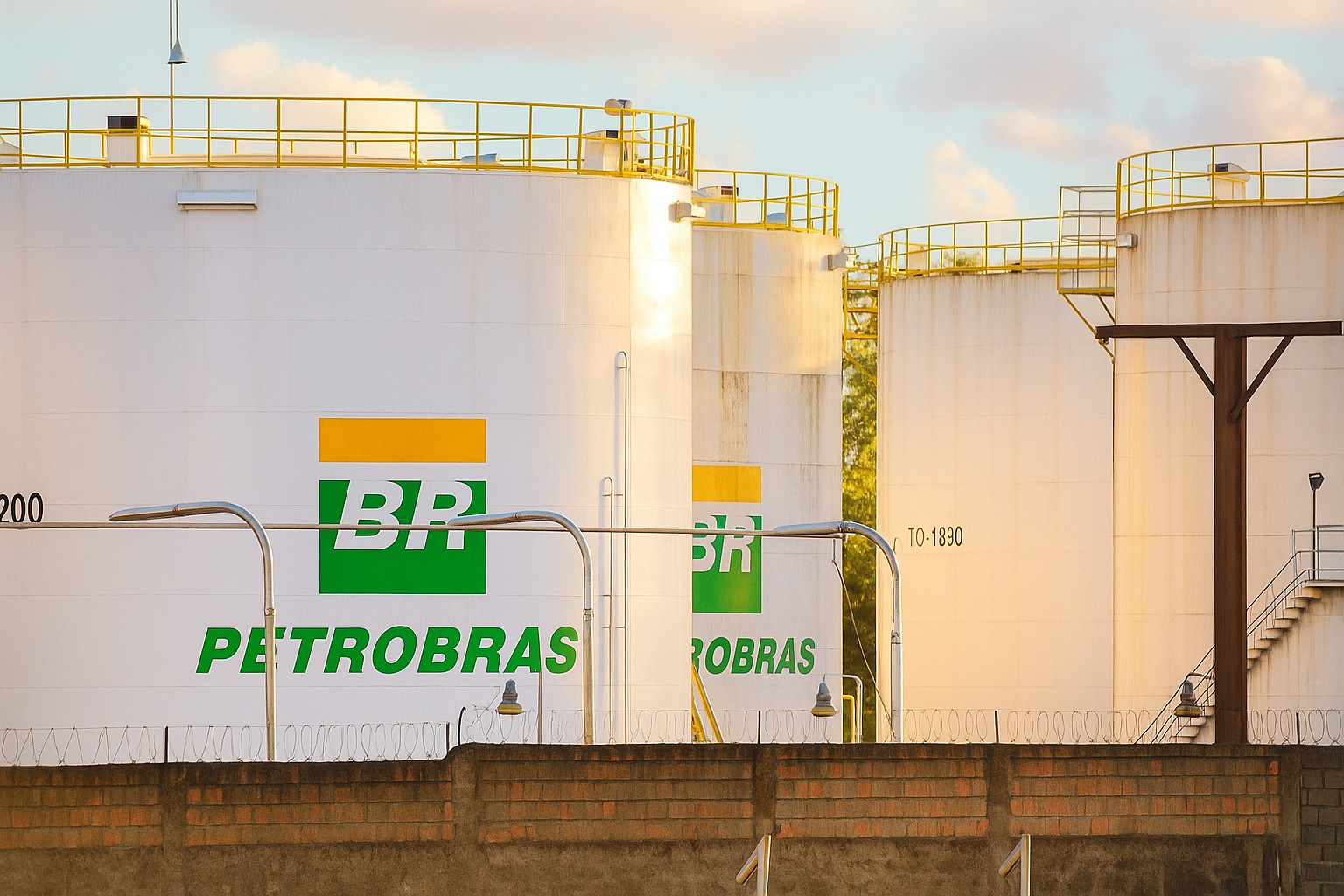
Research Highlights Strategies for the Decarbonization of Petrobras, Aligning Innovation, Investments, and Sustainability to Reduce Emissions and Prepare Brazil’s Energy Future.
The decarbonization of Petrobras has become one of the major themes in the energy sector. The company, historically linked to oil, must today reconcile its traditional operations with the search for more sustainable solutions. This transition involves technology, innovation, and changes in how the company invests in new projects.
Over the past decades, the world has demanded a more responsible posture from energy companies in light of the climate crisis. In the case of Petrobras, this pressure is even greater as Brazil has enormous potential for clean energy, which raises expectations about the role of the state-owned company.
Therefore, studies about the company’s future point to different paths that can ensure its relevance in the global sector while also contributing to the reduction of greenhouse gas emissions.
-
Petrobras evaluates suspension of sales to distributors and considers canceling the cooking gas auction following guidelines from the Federal Government.

-
Lula reveals a masterstroke by Petrobras to undo a deal made by Bolsonaro, which involves the return of an important refinery that currently produces less than half of what was expected and makes Brazil dependent on international diesel.
-
A study confirms that the natural gas sector will reduce greenhouse gas emissions in Brazil by 0.5% and accelerate the energy transition by 2026.

-
Petrobras implements a severe adjustment and confirms a 55% increase in the price of aviation kerosene with a proposal for installment payments for the companies.


Moreover, the decarbonization of Petrobras is aligned with international commitments, such as the Paris Agreement, and national goals for carbon neutrality by 2050. Thus, investments in renewable energies, biofuels, and green hydrogen represent not only innovation but also a long-term strategy.
The Trajectory of Petrobras and the Challenge of Transition
Since its founding in 1953, Petrobras has been at the center of Brazilian energy policy. Its initial mission was to ensure that the country had autonomy in oil production. For many years, the focus was on exploring reserves and expanding refining capacity.
Over time, however, environmental challenges began to influence the company’s direction. Oil exploration brought wealth but also raised questions about environmental impacts.
At the same time, the advancement of renewable energies opened up new possibilities for action. Today, Petrobras recognizes that it cannot remain tethered solely to oil. International investors have increasingly demanded decarbonization strategies as a condition for supporting new projects.
Thus, the need arises to balance profitability and climate responsibility. This balance, however, requires planning, risk analysis, and the definition of strategic priorities so that the company can move forward without compromising its competitiveness.
Additionally, regulatory changes and political pressures add complexity to the energy transition. The company needs to engage constantly with government agencies, shareholders, and civil society to implement measures effectively.
Possible Paths for the Decarbonization of Petrobras
One of the key points highlighted by studies is the diversification of the business matrix. Petrobras has the conditions to invest in offshore wind energy, as it has experience in complex maritime operations. This alternative could transform the company into a global reference in the renewable sector as well.
Another important path is strengthening natural gas production, seen as a transition fuel. Although it is still a fossil fuel, it emits fewer pollutants than coal or heavy oil. Thus, it can serve as a bridge until fully clean sources are consolidated.
Additionally, Petrobras is investing in carbon capture and storage (CCS) projects. This technology seeks to reduce emissions resulting from oil exploration by storing CO₂ in underground reservoirs.
Although it is costly and challenging, this solution can help the company mitigate environmental impacts and meet carbon neutrality targets. On the other hand, advancements in second and third generation biofuels can reduce dependence on fossil fuels and create new sustainable markets.
Furthermore, investments in green hydrogen, sustainable aviation fuels (SAF), and biomethane increase Petrobras’s portfolio of clean energy. This way, the company not only contributes to the environment but also strengthens its global competitiveness.
The Role of Pre-Salt and the Resource Strategy
Pre-salt represents one of the largest oil discoveries in recent decades. Production in this layer accounts for a significant portion of national supply and shows high competitiveness.
However, an inevitable contradiction arises: exploring pre-salt guarantees financial resources but increases emissions associated with the use of fossil fuels.
To resolve this dilemma, Petrobras seeks efficiency and aims to reduce emissions from its operations. Studies indicate that pre-salt oil has lower carbon intensity compared to other producing regions. This is because the fields offer high productivity, requiring less energy per barrel produced.
Furthermore, the company plans to reinvest the profits from pre-salt into clean technologies and renewable energy projects, creating a sustainable financing cycle for the transition.
In the long run, this strategy will be crucial to ensure that the decarbonization of Petrobras is not just on paper but becomes an effective practice that combines profitability with environmental responsibility.
Perspectives and Environmental Commitments
In recent years, Petrobras has announced emission reduction targets aligned with global commitments. The company aims to achieve carbon neutrality in its operations by the middle of this century, something that other major oil companies are also pursuing.
These targets, however, require consistency and continuous investments. The international scenario shows that the financial market is increasingly watching environmental, social, and governance practices.
Investors, therefore, tend to prioritize companies with clear sustainability plans, which further pressures the state-owned company to advance.
At the same time, Brazil has its own expectations. The country possesses enormous potential in renewable energies, especially solar and wind.
Petrobras, as the largest energy company in the country, plays a strategic role in leading this movement. Now more than ever, the decarbonization of Petrobras connects to the idea of national energy sovereignty.
Innovation, Research, and Sustainable Future
Petrobras is already developing research programs in biofuels, green hydrogen, and digital technologies for energy efficiency. These investments show that the company understands the value of innovation as a leverage for the future.
Still, experts emphasize that it will be necessary to accelerate the pace of transformation. The world is moving towards a low-carbon economy, and companies that take too long to adapt risk losing ground in the international market.
The pressure for sustainability comes not only from governments but also from civil society and consumers themselves. Increasingly, corporate reputation depends on the ability to show concrete environmental results.
Additionally, strategic partnerships with startups and research centers can accelerate the development of innovative technologies, amplifying Petrobras’s positive impact on the energy transition.
Decarbonization as a Long-Term Strategy
The decarbonization of Petrobras should not be viewed merely as a cost or obligation. On the contrary, it can represent an opportunity for growth and competitiveness.
Companies that lead the transition will have a better chance of attracting investments and consolidating new markets.
In the Brazilian case, the state-owned company still plays a fundamental role in economic balance. Therefore, its transition to cleaner models can inspire other companies and even influence public policies.
By investing in sustainable solutions, Petrobras not only responds to global demands but also helps Brazil build a more just and balanced energy future.
The process of decarbonization of Petrobras is complex but inevitable. The company needs to adapt its business model, invest in innovation, and seize the opportunities that arise in the clean energy market.
The global energy transition requires that large companies assume responsibilities and lead changes. In this scenario, Petrobras is positioned to transform challenges into opportunities and ensure its relevance in the future.
In summary, studies on the decarbonization of Petrobras reveal possible paths and show that the balance between economy and environment can be achieved.
The success of this journey depends on strategic choices, continuous investments, and a long-term vision that values both the present and future generations.










Seja o primeiro a reagir!