





 Portuguese
  English
  Spanish
  4 min of reading
  0 comments


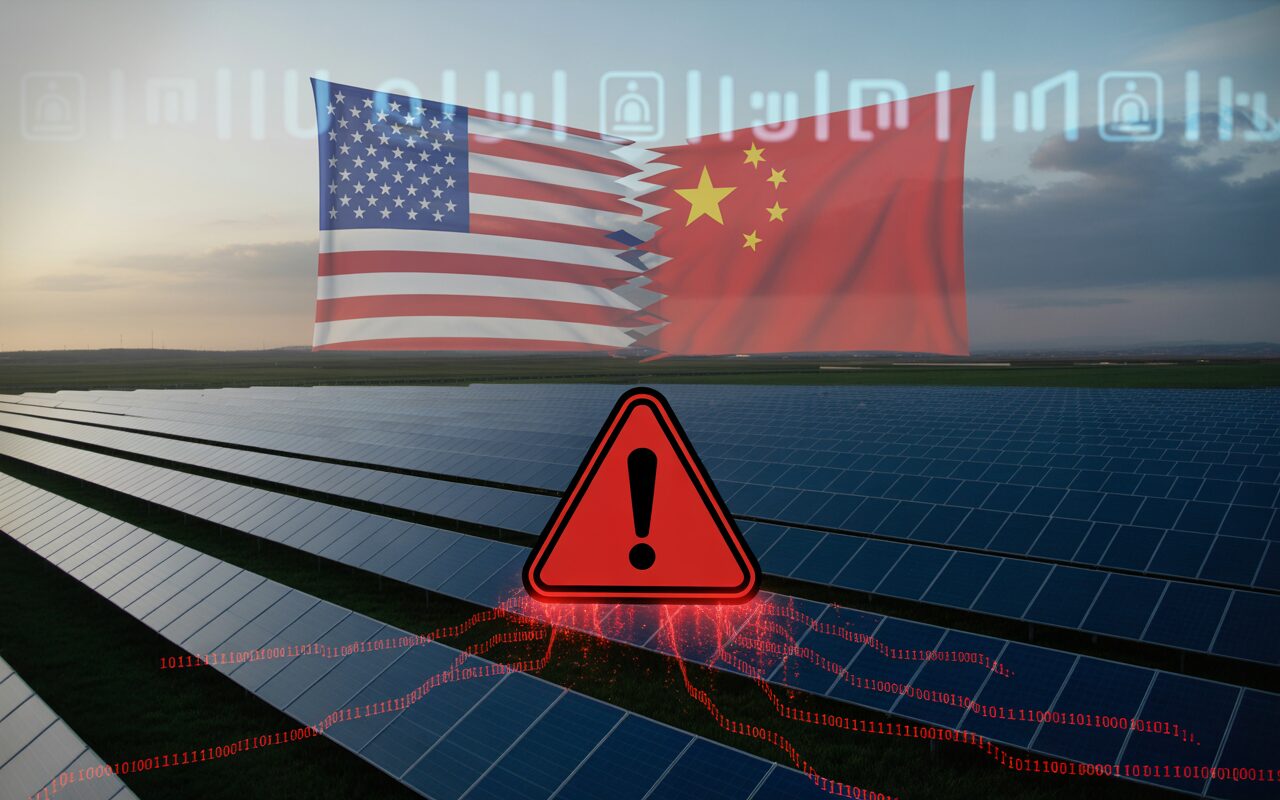
Investigation Revealed by Reuters Identifies Hidden Communication Equipment in Inverters, Raising Concerns About Sabotage and Espionage in the Electric Infrastructure of the USA and Europe.
U.S. energy authorities found undocumented communication devices inside some solar inverters manufactured in China, as reported by the news agency Reuters in a story published this Wednesday. These devices, described as “unregulated remote channels,” could allow external access to electrical systems, opening loopholes for cyberattacks, sabotage, and interference in power grids.
The discovery has raised alarm not only in the United States but also in Europe, where Chinese-made inverters are present in over 200 GW of installed solar capacity, equivalent to the production of two hundred nuclear power plants.
Equipment Found in the USA Can Bypass Firewalls and Access Critical Networks
According to Reuters, the devices found are capable of bypassing the firewalls used by power utilities in the U.S., enabling direct communication between the inverters and remote servers. There is suspicion that this channel could be used for external control without the knowledge of local network operators.
-
Seagri’s headquarters invests in solar energy with Neoenergia Coelba and promises to cut electricity costs, highlighting a strategic advance in sustainability and energy efficiency within state public administration.
-
Solar Pyramid draws attention by converting solar energy into million-dollar savings and repositioning the City Hall of Curitiba as an example of innovation, sustainability, and intelligent use of public resources.
-
Europe records strong euro economy with solar energy in March and sparks curiosity about which country leads growth that redefines the energy market and reduces costs.

-
Piauí reaches a historic milestone in energy transition: State records nearly 160,000 households powered by solar energy and leads growth in the Northeast.

Solar inverters, considered the “brain” of a photovoltaic system, are responsible for converting the energy generated by panels into usable electricity for the grid. Any vulnerability in these devices can compromise energy supply, cause blackouts, and even damage critical infrastructure.
Additionally, according to the report, similar devices have also been found in batteries of Chinese origin. The names of the manufacturers or the total number of affected products were not disclosed. However, the analysis company Wood Mackenzie reported that manufacturers Huawei and Sungrow dominated over 50% of the global solar inverter market in 2023.
Europe Reacts: Risk Is Considered “Systemic”
The implications of the report quickly spread to the other side of the Atlantic. The European Solar Manufacturing Council (ESMC) stated that the risks identified in Chinese inverters have systemic dimensions for Europe. In a social media post, the agency requested that the European Commission assess the possibility of sabotage and espionage through imported critical components.
The ESMC called for the creation of rigorous auditing tools, including full transparency in the embedded software of the inverters and a formal bill of materials (BOM) listing all components.
SolarPower Europe and DNV Had Already Warned of Risks
Last month, a joint report by SolarPower Europe and consulting firm DNV already pointed out risks above the acceptable threshold for solar inverter systems. According to the document, a coordinated attack on just 3 GW of installed capacity — a fraction of what is currently connected to the grid — could cause widespread electrical instability in European Union countries.
The same report mentioned the activity of hacker groups linked to the governments of China and Russia, identified by the U.S. Cybersecurity and Infrastructure Security Agency (CISA), with a history of attacks on critical infrastructure in the U.S. and Europe.
Manufacturers and Experts Reinforce Concerns
During Intersolar Europe, held last week in Munich, executives from major European inverter manufacturers confirmed to the PV Tech portal that the cybersecurity risks are real and need immediate attention.
One of the interviewees — whose identity was not disclosed — compared the current scenario to the natural gas crisis experienced by Europe after Russia’s invasion of Ukraine. “At the time, 99% of people didn’t believe that Russia would cut off the gas supply. But it happened. The same risk exists now with the inverters,” he stated.
SolarEdge and Solargis, which also participated in the fair, reported increasing pressure from the market and regulators to adopt more robust cybersecurity protocols, especially in projects involving internet-connected digital inverters.
Measures Following Discovery in the USA May Include Restrictions on Remote Access
The ESMC and other entities advocate for restrictions on remote access by foreign manufacturers classified as “high risk,” including some of the leading names in the Chinese industry. The goal would be to prevent these devices from maintaining an active connection with servers outside European territory.
Another recommendation includes complete validation of the firmware and the communication infrastructure of the inverters before their approval for use in national grids.
And Now?
Reuters’ report ignites a new chapter in the technological dispute between China and the USA, now centered on the solar energy sector. The investigation does not point to evidence that the devices were actually used for attacks, but highlights that the mere potential for malicious use already represents a critical risk.
U.S. authorities have not yet officially commented on what measures will be taken following the identification of the devices, but it is likely that new regulatory guidelines for imported inverters will be announced soon.
In Europe, there is growing pressure for the European Commission to require complete transparency in the software and hardware of photovoltaic devices connected to the grid, given the risk of vulnerabilities that can be exploited for industrial espionage or state sabotage.
The information cited in this report is primarily sourced from the Reuters news agency, which revealed the investigation into hidden devices in solar inverters of Chinese origin.










Seja o primeiro a reagir!