





 Portuguese
  English
  Spanish
  4 min of reading
  0 comments


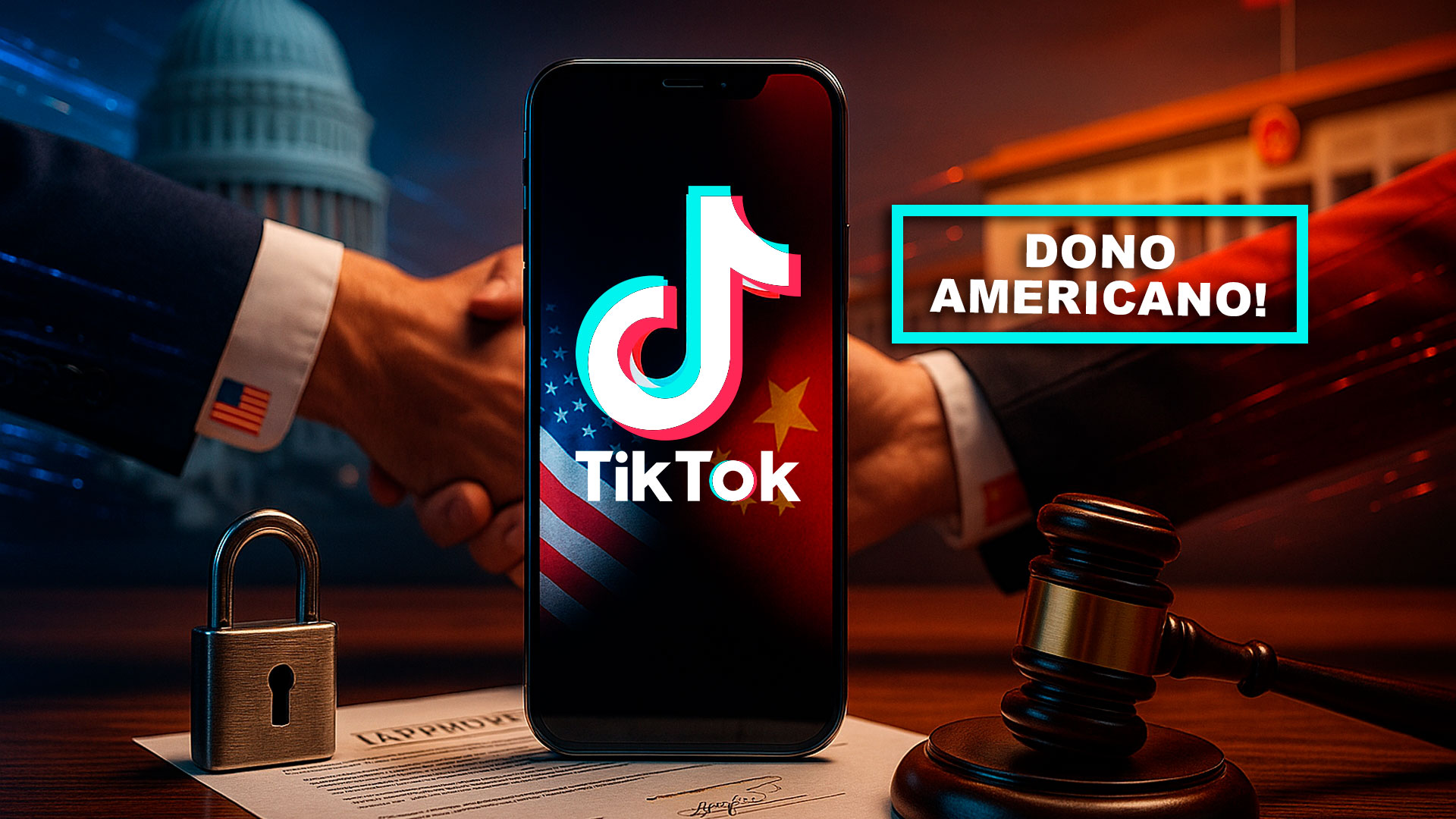
The U.S. Secretary of the Treasury Said That the Understanding Between Washington and Beijing Foresees U.S. Controlled Ownership of TikTok, With Final Agreement Pending on Discussion Between Trump and Xi This Week.
The TikTok saga gained a decisive chapter on Monday, September 15, 2025. After a round of negotiations in Madrid, U.S. Treasury Secretary Scott Bessent stated that the understanding outlined between the two countries foresees that the platform will have a U.S. owner.
The measure meets the requirement of legislation passed in the U.S. that conditions the app’s continued presence in the country on forced sale or blocking. Commercial details have not been revealed, and a final agreement is expected to be reached after a direct conversation between Donald Trump and Xi Jinping later this week.
According to Bessent, the “structure” of the agreement points to U.S. control of TikTok’s operation in the U.S., a step deemed crucial to address concerns regarding national security and user data protection. On the Chinese side, negotiators spoke of a “base consensus” on the issue but also raised tariffs and export controls as parts of the broader bilateral relationship package.
-
With an investment of R$ 612 million, a capacity to process 1.2 million liters of milk per day, Piracanjuba inaugurates a mega cheese factory that increases national production, reduces dependence on imports, and repositions Brazil on the global dairy map.

-
Brazilian city gains industrial hub for 85 companies that is equivalent to 55 football fields.

-
Peugeot and Citroën factory in Argentina cuts production by half and opens a layoff program for more than 2,000 employees after Brazil drastically reduced purchases of Argentine vehicles.

-
A Brazilian city gains a factory worth R$ 300 million with the capacity to process 200 thousand tons of wheat per year, a mill of 660 tons/day, silos for 42 thousand tons, and an industrial area of 276 thousand m².

The potential solution comes on the eve of a new divestment deadline, which has been extended as technical discussions on governance, data, and algorithms progressed. In parallel, Washington and Beijing are discussing tariff reductions and investment flows. Analysts see a chance for a phased announcement, with an extension of the deadline and guidelines for the company transition of the app.
For the over 170 million TikTok users in the U.S., the advancement reduces the risk of service interruption and provides guidance for creators and brands that depend on the platform. ByteDance, the parent company of the app, had not commented on the proposed terms by the time this text was published.
What Changes With “U.S. Owner” on TikTok
In practice, the agreement signals that TikTok’s operation in the U.S. would be under ownership and control of a U.S. company, which may involve transfer of ownership, creation of a separate entity, or entry of a consortium of investors. The final design should address data access, security audits, and algorithm licensing, sensitive points since the beginning of the impasse.
This framework aims to address the concerns of security agencies and Congress regarding potential foreign interference and misuse of citizens’ information. According to Reuters and Politico, the understanding is that the corporate structure and governance should be “Americanized” enough to meet legal and regulatory requirements while maintaining service continuity and competitiveness with Instagram Reels and YouTube Shorts.
For China, the arrangement would need to preserve intellectual property, avoid precedents that deter cross-border investments, and be accompanied by U.S. gestures on tariffs and technological barriers. Chinese negotiators indicated that the TikTok issue is part of a broader package, which includes rare earths and export controls.
Experts note that any sale or transfer needs to resolve algorithm licensing clauses and address the issue of code updates coming from China. Without this, there would be a risk of “American shell” with external technological dependence.
Deadlines, Law, and Next Steps in U.S.–China Negotiations
The legal backdrop is the American law passed last year that stipulates: either sell, or go offline. Since then, the White House has renewed deadlines multiple times as the parties negotiated an “orderly” solution to avoid a blackout of the platform. Today’s signal is of a “framework agreement”, with political finalization awaiting a Trump–Xi call scheduled for Friday.
According to Reuters, the talks in Madrid involved Bessent and U.S. Trade Representative Jamieson Greer, along with He Lifeng from the Chinese side. The assessment is that there has been “technical progress,” but wider issues such as tariffs remain under discussion. A final press conference was being considered for Monday afternoon.
For the market and advertisers, the timeline matters. A clear definition reduces regulatory uncertainty, stabilizes media planning, and can unlock stalled investments. For regulators, the focus is on ensuring lasting compliance, with regular audits and response mechanisms in case of non-compliance.
Meanwhile, ByteDance and potential buyers or partners must draft valuation, governance, and timeline for the transition. The challenge is to align price, control, and technology protection without violating the laws of both countries.
Impacts for Users, Creators, and Advertisers
If the solution succeeds, users are likely to see little immediate change in experience. The main impact will be behind the scenes, with new data rules in the U.S., logs, and audits. For creators, an agreement reduces the risk of reach disruption and favors long-term contracts with brands.
For advertisers, the continuation of TikTok in the U.S. under U.S. guard can bring more regulatory predictability, favoring the investment mix across platforms. Still, it will be crucial to monitor compliance costs and possible adjustments to content policies during the transition.
Finally, the solution creates a precedent. Other apps with control chains considered sensitive may be pressured to adopt local ownership and governance models, raising the cost of operating in strategic markets.
Having an “American owner” solves TikTok’s security and transparency problem, or is it just regulatory window dressing that could raise costs and fragment global technology? Share your opinion in the comments.








-

Uma pessoa reagiu a isso.