





 Portuguese
  English
  Spanish
  4 min of reading
  163 comments


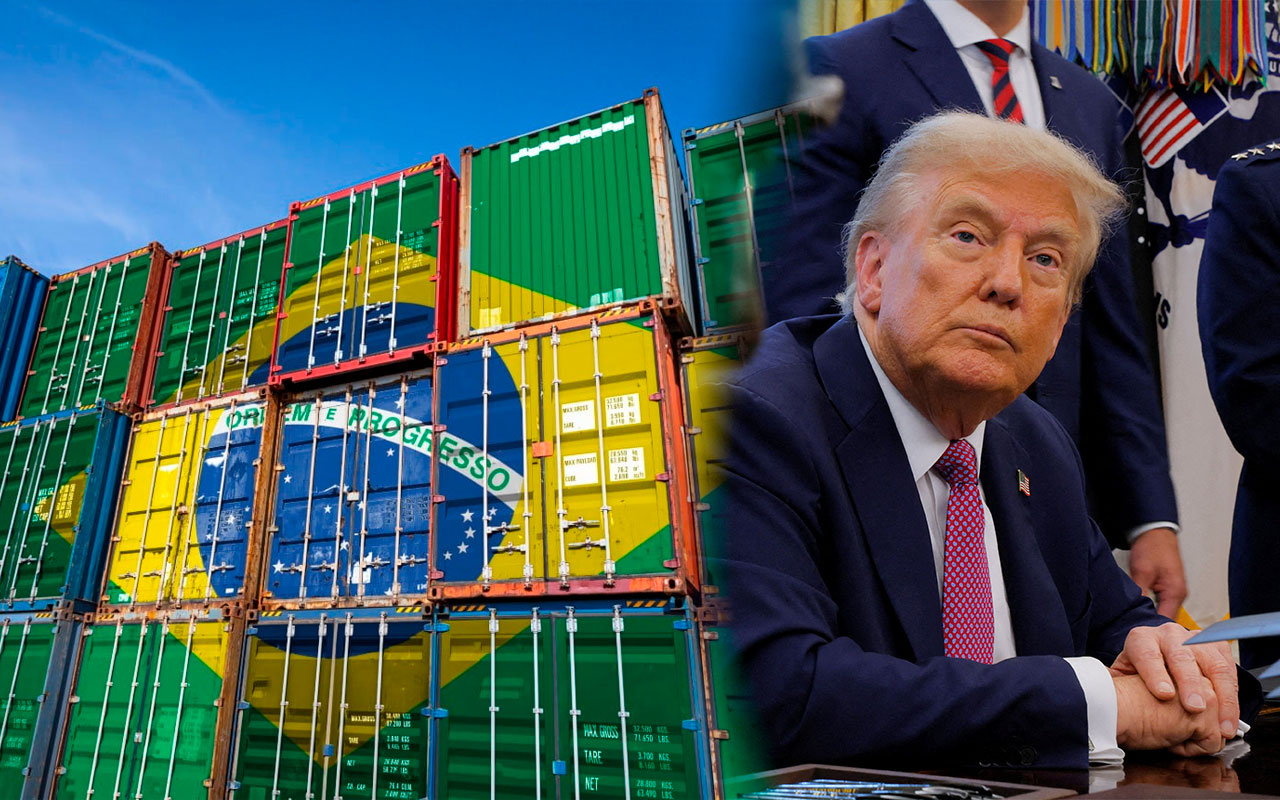


Executive Order of September 5 Expands the List of Products Exempt from Tariffs for Countries That Establish Reciprocal Agreements with the U.S. Coffee, Cocoa, Tropical Fruits, Teas, and Spices Are Included, but the Benefit to Brazil Still Depends on Negotiation.
The United States published on September 5 an executive order that changes the “reciprocal” tariff regime and opens exemptions (zero tariffs) for a series of products when there is an agreement with “aligned partners” of the U.S. The measure, which took effect on September 8, 2025, updates annexes with eligible items and establishes a procedure to apply reductions in trade and security agreements.
According to the White House and Reuters, the package also creates a specific annex of “Potential Adjustments for Aligned Partners (PTAAP)” for goods with insufficient domestic supply.
Among the highlighted products are coffee and cocoa, tropical fruits (such as banana, mango, papaya, avocado, and kiwi), teas (green and black), and spices such as cinnamon, cardamom, saffron, clove, nutmeg, and pepper. The inclusion was reported by food industry outlets and confirmed as part of the lists attached to the order.
-
Larger than entire cities in Brazil: BYD is building a 4.6 km² complex in Bahia with a capacity for 600,000 vehicles per year, but the discovery of 163 workers in conditions analogous to slavery has shaken the entire project.

-
With an investment of R$ 612 million, a capacity to process 1.2 million liters of milk per day, Piracanjuba inaugurates a mega cheese factory that increases national production, reduces dependence on imports, and repositions Brazil on the global dairy map.
-
Brazilian city gains industrial hub for 85 companies that is equivalent to 55 football fields.

-
Peugeot and Citroën factory in Argentina cuts production by half and opens a layoff program for more than 2,000 employees after Brazil drastically reduced purchases of Argentine vehicles.


The declared intention of the government is to ease costs on inputs that the U.S. does not produce or does not produce in sufficient quantities, while using exemptions as bargaining chips to close reciprocal agreements. In practice, countries with agreements recognized as “aligned” will have zero tariffs for the listed items; others remain subject to reciprocal tariffs.
How the Exemption Works and What Changed in the Official Text
The order “Modifying the Scope of Reciprocal Tariffs and Establishing Procedures for Implementing Trade and Security Agreements” alters annexes of the regime created in April and expands/updates the list of products that can have zero tariffs for aligned partners. The Annex II lists goods that are not subject to reciprocal tariffs, and the PTAAP lists candidate goods for zero tariffs from future agreements. The aim is to align tariff policy with international commitments and provide predictability to affected sectors.
The White House states that the items covered are generally those that “cannot be grown, mined or produced” in the U.S., or for which domestic supply is insufficient. This includes agricultural inputs such as coffee, cocoa, and spices, as well as other industrial categories. Starting from the last day September 8, 2025, the changes came into effect for goods cleared in the country.
Market reports indicate that large food manufacturers pressured for exceptions for inputs not available locally, arguing impact on consumer prices if reciprocal tariffs were maintained on these items. Reuters documented this movement throughout the year, and the new order partially addresses these demands.
Brazil Concerned Because the Benefit Is Not Automatic. The Status of “Aligned Partner” Still Needs to Be Negotiated
For Brazil, the change is not automatic. The text makes it clear that zero tariffs apply to partners who establish agreements with the U.S. and are recognized as aligned. Without this recognition, Brazilian exporters of coffee, cocoa, and tropical fruits remain subject to the current regime of reciprocal tariffs.
Brazilian authorities have already stated that they would prioritize negotiation with Washington before retaliating tariffs, a scenario that remains with the new rule. In April, President Luiz Inácio Lula da Silva stated that the country would seek dialogue before reciprocal measures — a sign that diplomatic avenues are on the table to discuss sectoral exemptions.
Trade analysts emphasize that opportunities arise for countries that quickly close agreements with the U.S. Meanwhile, competing Latin American exporters may advance in niches such as banana, mango, and coffee, if they secure the “aligned partner” stamp first. Meanwhile, Reuters noted that the EU and Japan have already aligned in recent understandings, which helps to explain the acceleration of ongoing negotiations.
Why Coffee, Cocoa, and Spices Were Included — and What the Industry Says
The Consumer Brands Association (CBA), which includes companies such as PepsiCo, General Mills, and Mondelēz, has been advocating for exceptions for inputs that do not exist domestically at scale — such as coffee, cocoa, teas, and various spices. The entity emphasizes that the consumer goods industry “can only produce 100% in the country when inputs exist in the country”: about 90% come from American suppliers, but a portion relies on imports.
From the sector’s perspective, removing barriers for this basket of products reduces cost pressure and helps maintain prices for consumers, preserving competitiveness in industries such as confectionery, beverages, and ready-to-eat products. The request for exemptions was formalized in letters and public statements throughout 2025.
With the new order, roasters, chocolatiers, and processors that depend on coffee, cocoa, and spices gain clarity on eligible tariff codes in the annexes, provided that the country of origin is aligned by agreement. For Brazilian producers, the message is: there is demand, but preferred access requires active diplomacy.
Ultimately, the decision does not guarantee an automatic advantage to Brazil, opens the door for those who align. If Brasília can achieve aligned partner status, coffee and cocoa exporters may gain competitiveness; if not, the window could be filled by regional competitors.
Do you agree with the strategy of “trading” exemptions for agreements? Do you think Brazil should hurry to be recognized as an aligned partner or harden and demand greater concessions? Comment below and say how this could affect Brazilian coffee, cocoa, and fruits in the coming months.






Sim, concordo com a estratégia de troca certamente. O Brasil precisa mudar sua postura política, pois o próprio presidente norte-americano deixou bem claro que os impesilhos que impedem nossas exportações, se manterem saudáveis no território americano é sim político. Assim nossos governantes precisam e tem por obrigação representar a vontade do povo e deixar de lado suas ideologias mesquinha e prepotente, com a finalidade de se manterem no poder, aumentando ainda mais a pobreza no país.
Hahaha parei no impesilhos
Basta vender o mesmo produto de qualidade pro Japão, Coreia, Austrália, Singapura, Europa Ocidental, todos alinhados aos interesses americanos que eles revendem com tarifa zero pros EUA e todo mundo sai ganhando.
Basta vender o mesmo produto de qualidade pro Japão, Coreia, Austrália, Singapura, Europa Ocidental, todos alinhados aos interesses americanos que eles revendem com tarifa zero pros EUA e todo mundo sai ganhando.