





 Portuguese
  English
  Spanish
  3 min of reading
  4 comments


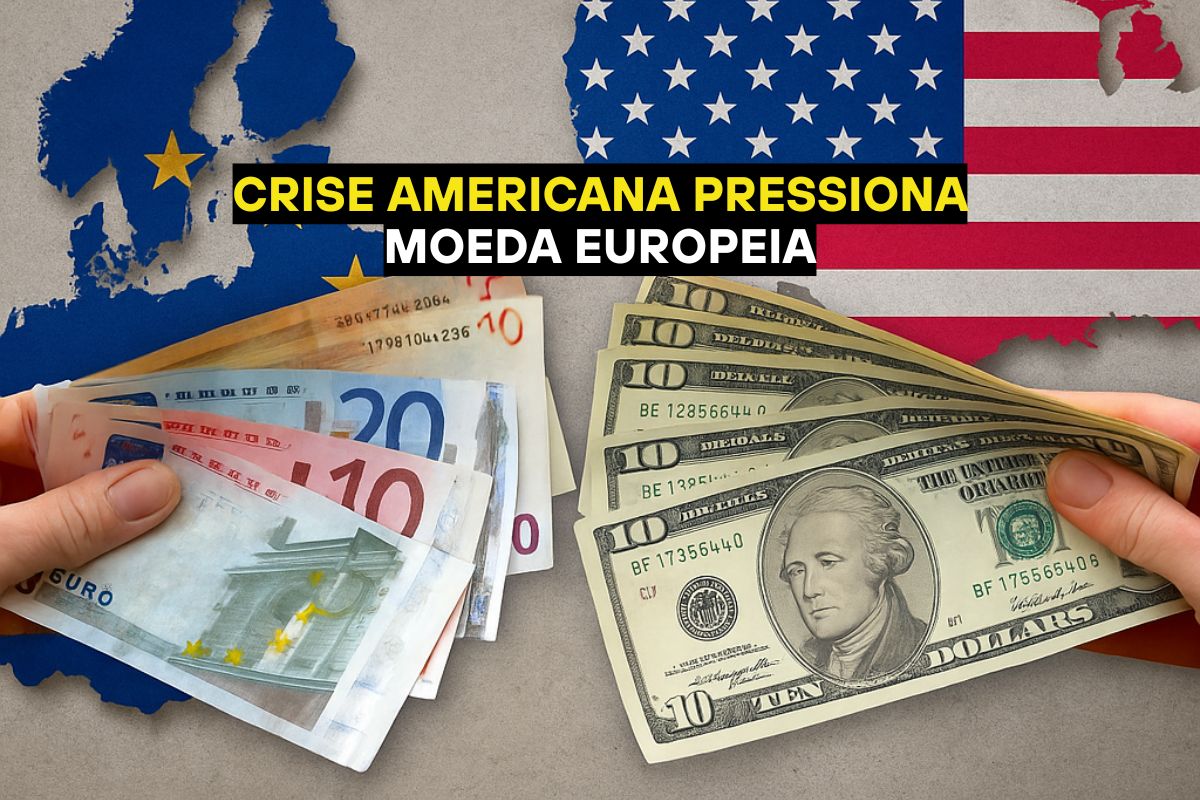


According to UOL, the Bundesbank claims that the European currency must increase its international weight to protect the economy of the bloc and reduce vulnerability to the dollar in times of instability in the U.S.
The president of Bundesbank, Joachim Nagel, stated that the euro will not replace the dollar as the dominant currency, but that the European currency needs to gain global weight to shield the European Union from external shocks. The warning comes in a context of declining confidence in the dollar, a result of erratic trade policies and fiscal measures from the United States government.
According to UOL, concerns are intensifying in light of American tariffs and tax cuts that could make U.S. debt unsustainable. Furthermore, pressure on the Federal Reserve has weakened the historical reputation of the dollar as a safe haven.
Why the Euro Needs Greater International Relevance
UOL highlights that the main justification presented by Nagel is the need to ensure resilience for the European bloc in case the instability of the dollar persists.
-
50 viaducts, 4 tunnels, 28 bridges, and 40 kilometers of bike paths: BR-262 in Espírito Santo will receive 8.6 billion reais for the largest engineering project in the state’s history, inspired by the Immigrant Highway in São Paulo.

-
Brazil produces too much clean energy and doesn’t know what to do with it: over 20% of solar and wind capacity was wasted in 2025 while investors flee and 509 renewable generation projects were abandoned in the last year.

-
Piauí will produce a new fuel that replaces diesel without needing to change anything in the truck’s engine and reduces pollutant gas emissions by half: truck drivers from all over the Northeast are already celebrating the news that will arrive later this decade.

-
A new Brazilian shopping center worth R$ 400 million will be built in an area equivalent to more than 4 football fields, featuring 90 stores, 5 cinemas, a supermarket, a college, and parking for 1,700 cars, potentially generating 3,000 jobs.


According to the president of the Bundesbank, although it is neither realistic nor desirable to replace the American currency, it is essential to increase the euro’s participation as a reliable alternative for investors.
To achieve this, it would be necessary to strengthen fiscal stability, maintain predictable economic policies, and expand the depth of European capital markets.
Another central point would be to offer high-quality and secure assets capable of attracting global savings to the region.
American Crisis Increases Calls for a Stronger Euro
Again, according to UOL, the loss of confidence in the dollar has worsened after signs of increased U.S. indebtedness and a more aggressive stance in trade disputes.
The immediate consequence was the appreciation of the euro, but experts warn that this rise should not be seen as an end in itself, but rather as an opportunity to reposition the European currency in the international arena.
Nagel emphasized that the euro will only have real weight if it is supported by innovation, productivity, and competitiveness.
For this, he suggested that the high savings of European households be channeled to finance the green and digital transition, as well as contribute to defense spending in a time of geopolitical tensions.
Challenges for Strengthening the European Currency
The path, however, is not simple.
UOL notes that to enhance its role, the European currency will have to face structural barriers, such as the need for more integrated financial markets and a greater political appetite for international assertiveness.
Without these factors, the currency will remain limited to the role of a second option in the global system.
Another challenge cited by Nagel is the growing presence of stablecoins, which, although designed to maintain stable value, pose risks to financial stability if not regulated.
For him, the euro needs to compete with these digital assets and ensure confidence to prevent a capital flight that weakens its support base.
The statement from the Bundesbank exposes a dilemma: the European currency is not ready to replace the dollar, but needs to grow so that Europe does not become vulnerable to the American crisis.
The future of the euro will depend on internal reforms, market integration, and the ability to provide security amid global instability.
Do you believe that the European Union will be able to transform the euro into a real alternative to the dollar, or will dependence on the American currency continue for decades? What do you think is the biggest obstacle: internal economic factors or the political hegemony of the U.S.? Leave your comment and participate in this debate.









A economia global muito flutuante .
Acho o dolar americano a melhor moeda pra investir a medio prazo????
Enquanto continuarem alimentando o fundo indenizatório de guerra para Israel realizar chacina étnica e crime contra a humanidade a Europa vai amargar a maior crise do euro.
Com lá guerra.en pleno desarrollo y grupo bris formalizando su estratégia em el futuro noda para saber que vá acontecer com ele dólar y el euro lo que si ya és evidente que el dólar tiene poca vida egemoniva em el mundo