





 Portuguese
  English
  Spanish
  6 min of reading
  0 comments


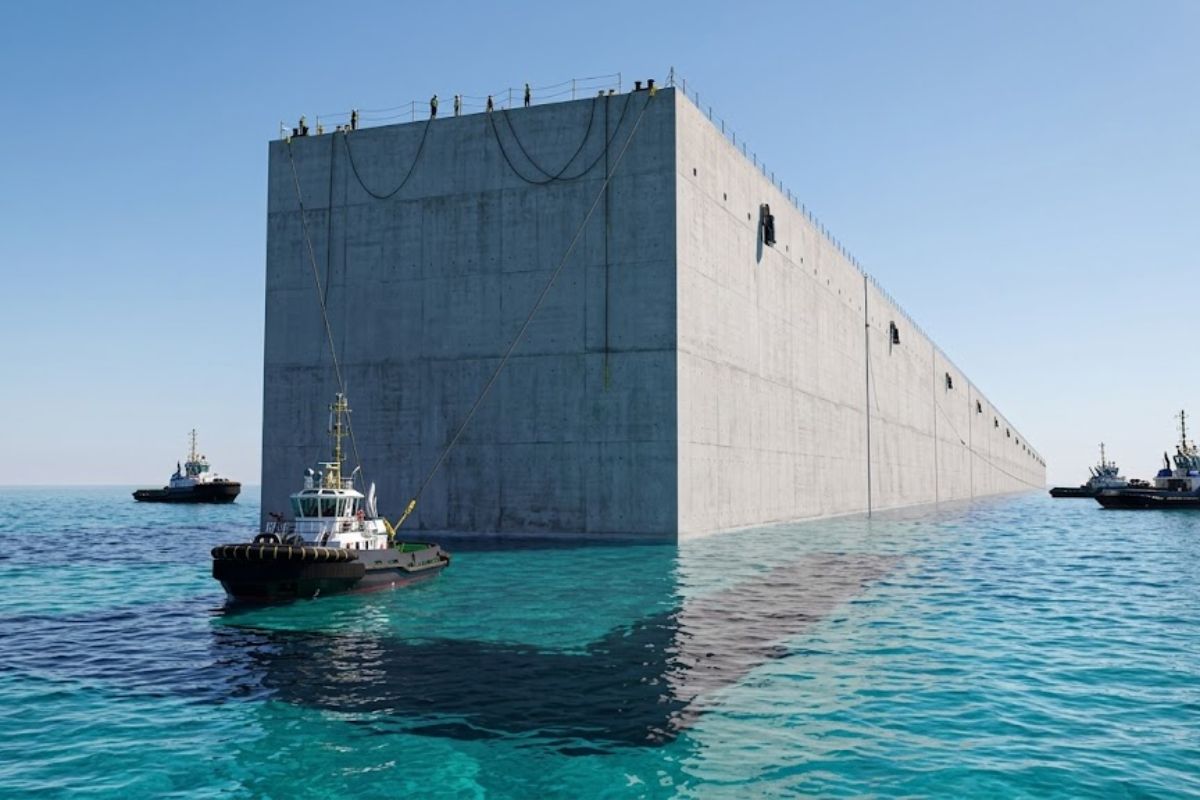
The Construction of a Billion-Dollar Artificial Island in the North Sea Marks a New Phase in the European Energy Strategy by Creating an Offshore Hub Capable of Collecting Wind Energy from Hundreds of Turbines, Connecting International Grids, and Redistributing Electricity Between Several Countries Simultaneously
The billion-dollar artificial island that is starting to be built in the North Sea represents one of the most ambitious energy projects ever planned in Europe. The structure will function as a major distribution hub capable of collecting energy from offshore wind farms and transmitting it to multiple countries at the same time.
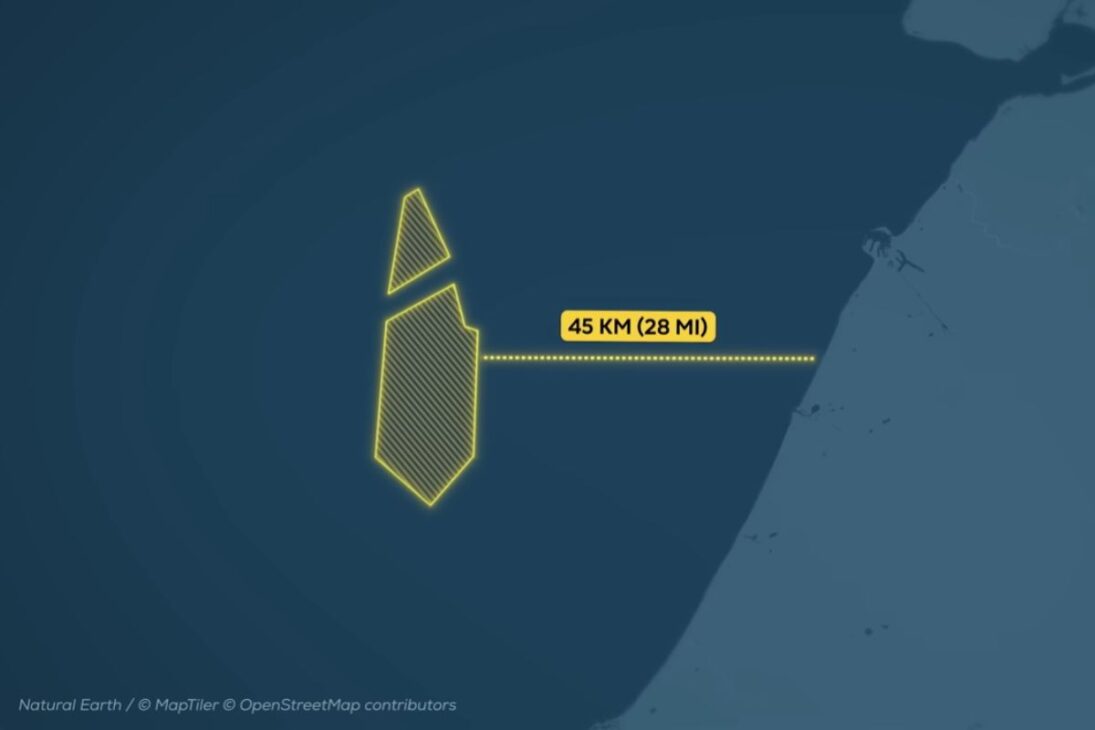
Located about 45 kilometers from the coast, the billion-dollar artificial island promises to integrate international electrical grids, operate with automated systems, and help turn the North Sea into a massive continental wind power plant at a time when Europe seeks to reduce its dependence on fossil fuels.
The Billion-Dollar Artificial Island That Could Redesign the European Energy Map
The project of the billion-dollar artificial island arises as part of a larger plan to drastically expand offshore wind energy generation in Europe.
-
What can really trigger large volcanic eruptions? Research suggests that gas returning to the magma may be more dangerous than gas escaping from it.
-
Found in one of the most radioactive places on Earth, this Chernobyl fungus may be doing something with radiation that no one has been able to explain to this day.

-
A bright yellow mushroom imported from Asia escaped from a cultivation farm in the United States in 2010 and is now aggressively spreading across 25 states, destroying entire communities of native fungi in American forests.

-
Buried under China, a colossal machine weighing 20,000 tons began operating as the largest neutrino detector on the planet and, in just 59 days, surpassed results that science took half a century to achieve.

The initiative gained momentum after the energy crisis caused by the war in Ukraine, which exposed Europe’s vulnerability regarding natural gas supply. In light of this scenario, various countries began to accelerate projects aimed at large-scale renewable energy production.
At the center of this strategy is the so-called Princess Elisabeth Energy Island, an artificially constructed structure in the North Sea designed to serve as a connection point between wind farms and continental electrical grids.
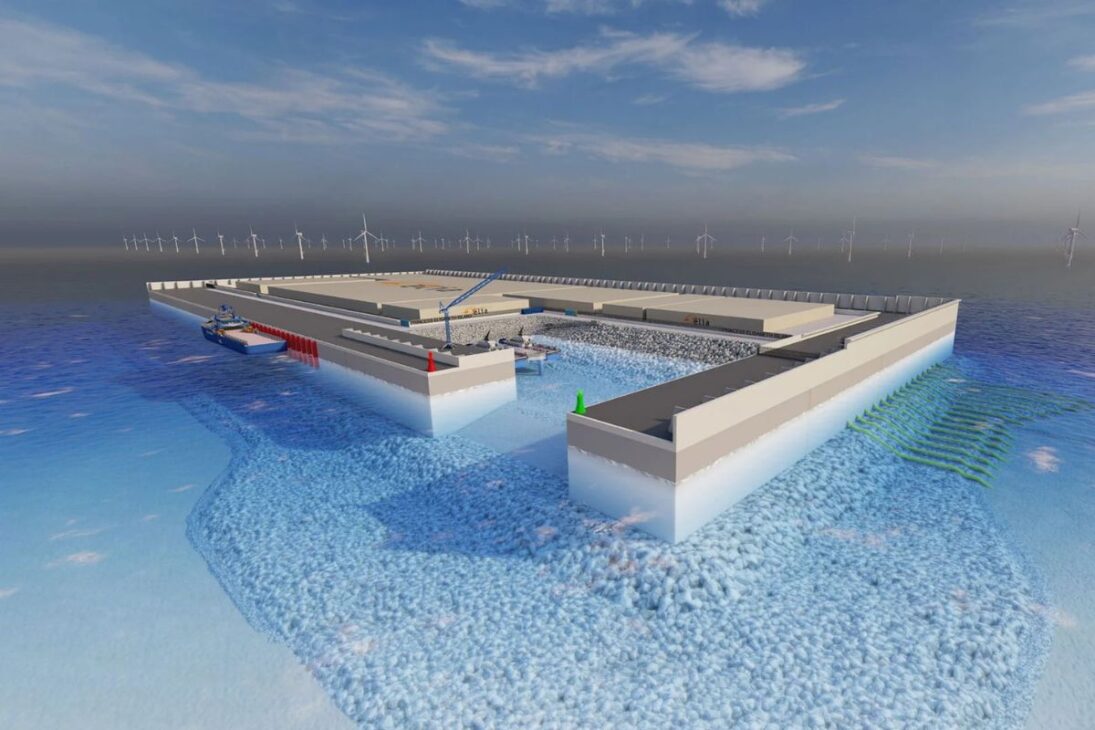
The idea is simple in concept but gigantic in scale: transforming the ocean into a platform for generating and distributing electricity to multiple countries simultaneously.
How the Island Will Collect and Distribute Wind Energy
The primary function of the billion-dollar artificial island will be to gather energy produced by large wind farms installed around the structure.
These offshore turbines generate electricity that will be transmitted to the island, where specialized substations will consolidate and redistribute the energy to different destinations.
One of the technical challenges involves the type of electricity used. The initial transmission occurs in alternating current (AC), common in traditional electrical systems. However, to transport energy over long distances at sea, direct current (DC) is much more efficient.
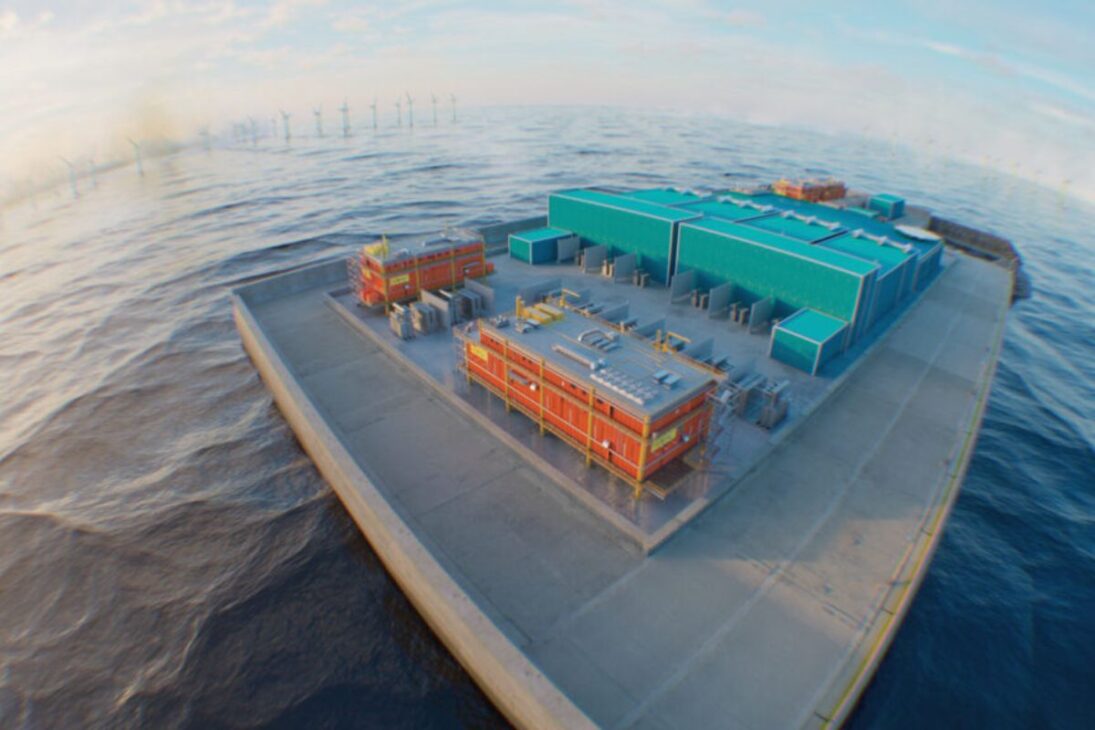
Therefore, the island has been designed to convert energy between AC and DC, allowing electricity to travel with less energy loss to other countries.
This system transforms the island into a true “energy hub” in the middle of the ocean.
International Connections Could Transform the North Sea into an Electrical Grid
Besides sending energy to the mainland, the billion-dollar artificial island is planned to connect different European countries.
Two major international submarine cables are at the center of this strategy.
The first, called Nautilus, will connect the island’s energy system with the United Kingdom. The Triton Link aims to integrate the network with Denmark.
This infrastructure creates a system in which electricity can be transferred between countries as needed.
When one country produces more wind energy than it needs, the surplus can be sent to another country with lower production at that moment.
This transforms the offshore grid into a kind of continental energy market.
The Gigantic Engineering Needed to Build the Island
Building the billion-dollar artificial island requires a large-scale engineering operation on the bottom of the North Sea.
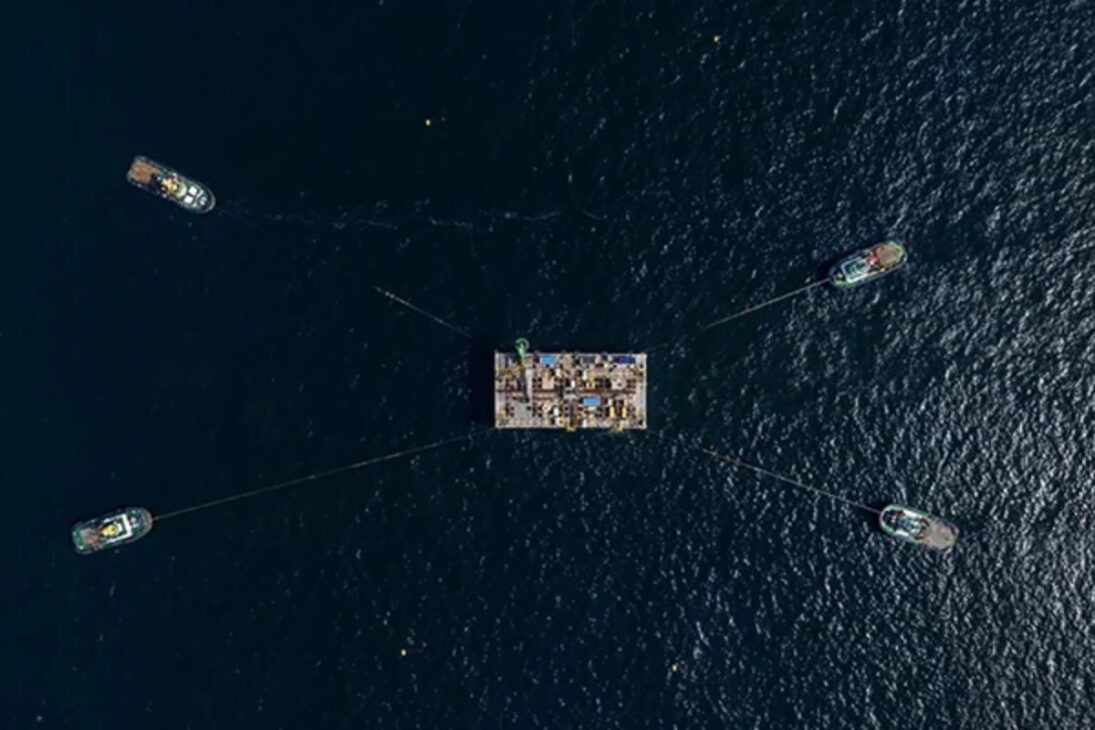
The structure begins with enormous concrete blocks called caissons, which form the perimeter of the island. Each of them measures approximately 58 meters long, 32 meters high, and weighs about 22 thousand tons.
These concrete giants are built on land and then towed to the construction site by specialized vessels.
Once they arrive at the installation point, they are filled with sand and water to sink and secure themselves to the seabed, at about 18 meters deep.
In total, 23 caissons will form the structural base of the island, creating a barrier against waves and storms.
After that, about 3 million cubic meters of sand will be used to fill the interior of the structure and form the solid base of the island.
The final result will be an area of approximately six hectares in the middle of the North Sea.
An Island Operated by Robots in the Middle of the Ocean
Despite the size of the infrastructure, the billion-dollar artificial island will not have a permanent population.
The project envisions that much of the maintenance will be carried out by automated systems, including quadrupedal robots similar to robotic dogs, capable of patrolling facilities and sending images and data to control centers on the mainland.
These robots have already been tested on offshore platforms to verify their ability to operate in environments with strong winds and extreme maritime conditions.
In addition, the island will have a small port and helipad, allowing technical teams to perform periodic maintenance when necessary.
Most of the time, however, the structure will operate practically on its own in the middle of the sea.
Environmental Impacts and Debates About the Project
Like any large-scale construction in the ocean, building the billion-dollar artificial island raises environmental debates.
Engineers claim that part of the project includes solutions to stimulate marine biodiversity around the structure.
Among the planned initiatives are artificial reefs installed at the base of the island, irregular surfaces designed to facilitate the attachment of mollusks, and elevated nurseries intended for oyster cultivation.
These structures may help form new marine habitats, as well as reduce erosion processes.
Nonetheless, some environmental organizations point out that the full impacts on marine life and fishing are not yet fully understood.
This debate accompanies virtually all large offshore infrastructure projects around the world.
Rising Costs and Uncertainties About the Timeline
Although the project of the billion-dollar artificial island advances in the construction phase, financial challenges have also grown.
Initial estimates pointed to costs around US$ 2.5 billion, but later revisions raised the total value to more than US$ 8 billion.
Part of this increase is linked to global inflation, but also to the high cost of specialized equipment for direct current substations.
These technologies are produced by only a few companies in the world, and the growing demand for offshore wind projects has driven up prices.
Because of this, some project stages have been reevaluated or temporarily suspended.
The latest forecasts indicate that the complete infrastructure may come into operation around the next decade, depending on financial and contractual decisions.
The construction of the billion-dollar artificial island in the North Sea illustrates how far European countries are willing to go to transform their energy matrix.
If the project achieves its objectives, it could connect wind turbines, countries, and electrical markets in an integrated network capable of distributing renewable energy on a continental scale.
But the success of the initiative still depends on various factors, including costs, technical challenges, and environmental impacts.
Now an inevitable question arises.
Transforming the ocean into a gigantic continental power plant is really the future of energy in Europe, or could this type of megaproject become too complex to work in practice?








-

-

-

-

-

-

66 pessoas reagiram a isso.