





 Portuguese
  English
  Spanish
  5 min of reading
  0 comments


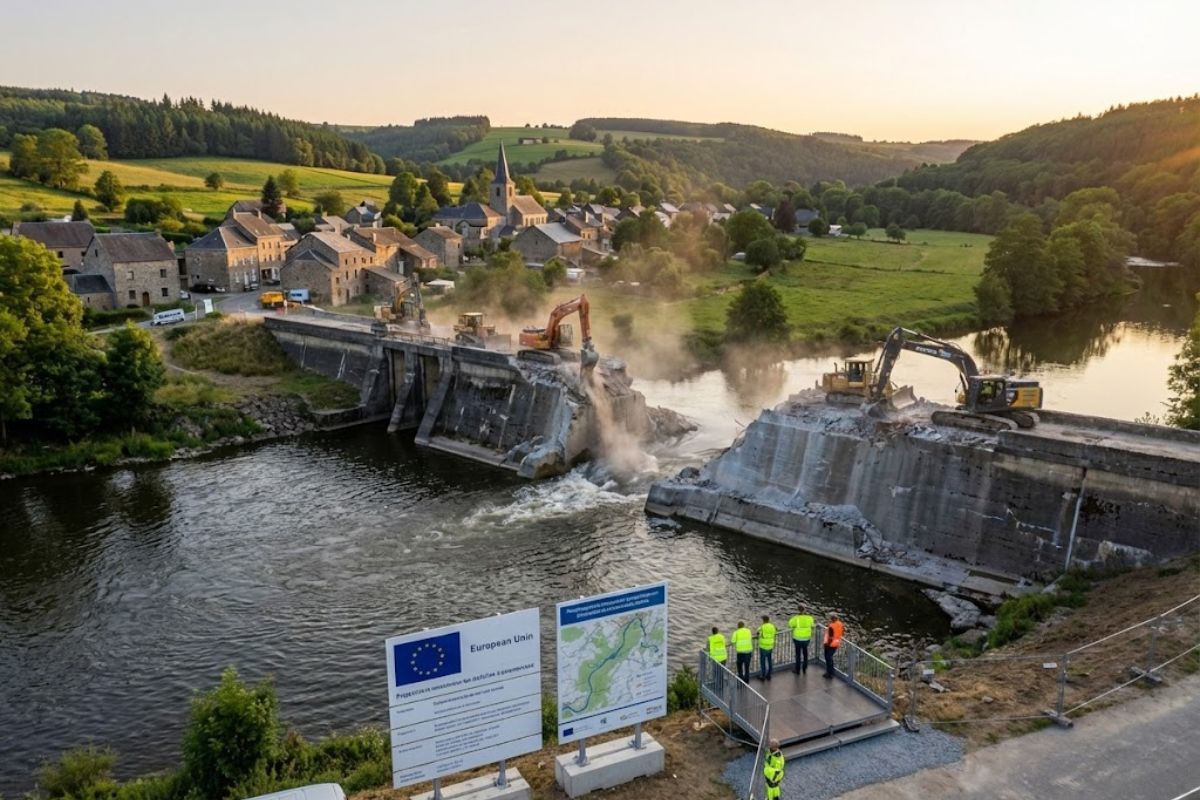
Obsolete Dams Enter the Heart of the European Environmental Debate After Plans to Remove About 30 Thousand Old Structures, Many Out of Use, with the Goal of Reconnecting Rivers, Restoring Natural Flows, Allowing Fish Migration and Revitalizing Local Economies in Diverse Countries of the Continent.
The obsolete dams scattered across Europe are now being treated as one of the main barriers to the health of the continent’s rivers. A broad European plan proposes the removal of tens of thousands of these old structures, focusing on fragmented waterways and regions where dams and locks no longer serve economic or energy functions.
The initiative occurs on a continental scale, involving countries such as France, Spain, Poland, and the United Kingdom, and seeks to test whether the removal of obsolete dams can restore river ecosystems, reduce floods, release sediments, and restore necessary connectivity for migratory fish and other species dependent on free-flowing rivers.
Where the Removal of Obsolete Dams is Being Planned

The plan focuses across Europe, highlighting countries in Western and Central Europe.
-
China accelerates global science and may surpass the United States in 2 years with increased public investment, continuous growth, and direct impact on the global technological competition.

-
Scientific studies indicate that drought may be strengthening a much greater silent threat: more resistant superbugs.
-
Man builds functional 5-meter submarine in his garage using gas cylinders, PVC pipes, and a refrigerator motor, and navigates with the vessel on a lake in Colombia.
-
Millions of people have been eating yam for centuries without knowing that this humble tuber contains a compound called diosgenin, which scientists have now discovered can improve memory and help control blood sugar levels.


Estimates indicate that in France, Spain, Poland, and the United Kingdom, there are up to 30,000 obsolete dams, mostly small, scattered across rivers, streams, and secondary waterways.
These structures were built over centuries for purposes such as mills, irrigation, local navigation, and water control.
Over time, they have lost practical function but remain physically in rivers, fragmenting river systems and altering essential natural processes.
The Real Dimension of the Problem in European Rivers

One of the central points raised is that the density of dams, weirs, and locks in Europe is much higher than previously thought.
For decades, only dams over 10 meters tall were counted in official surveys, but these represent less than 3% of all river barriers.
In practice, this means that European rivers face obstacles every kilometer, on average, hindering water flow, sediment transport, and the migration of aquatic species.
The obsolete dams of small size, although discreet, accumulate severe impacts when considered collectively.
Direct Impacts of Obsolete Dams on Biodiversity
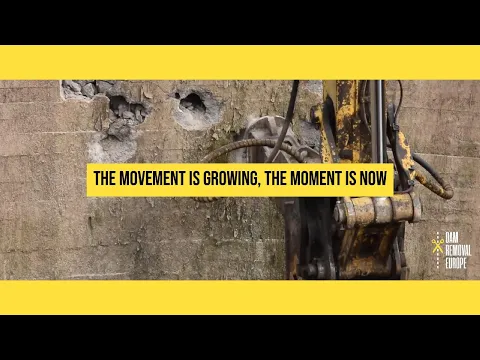

The obsolete dams block essential migratory routes for species such as salmon, eels, sturgeons, and other fish that require long distances for reproduction.
Without access to spawning sites, these populations collapse, affecting the entire food chain.
In addition to fish, fish-eating birds and various animals that depend on healthy rivers are also impacted.
Fragmentation hinders the natural recovery of ecosystems and contributes to the accelerated decline of freshwater species, one of the most threatened groups in continental Europe.
Sediments, Nutrients and the Loss of Natural River Dynamics
Another critical effect of obsolete dams is the interruption of sediment and nutrient flow.
Old dams retain materials that should flow downstream, impoverishing stretches downstream and altering the natural morphology of riverbeds.
With the removal of these structures, it is expected to restore the natural transport of sediments, allowing the formation of sandbars, river islands, and varied habitats.
This process is considered essential for the recovery of rivers and associated wetlands.
The Relationship Between Obsolete Dams and More Intense Floods
Although many dams were built to control water, obsolete dams often exacerbate flood risks.
Deteriorating structures reduce the river’s capacity to adapt to extreme events and create hydraulic bottlenecks that raise water levels during periods of heavy rain.
The removal of these barriers restores space to the river, improves lateral connectivity with natural flood areas, and helps dissipate flood energy.
In the context of climate change, this strategy is seen as a way to strengthen natural defenses against flooding.
Economic Benefits for Local Communities
In addition to environmental gains, the European plan highlights positive impacts for local economies.
Free and healthy rivers favor activities such as fishing, tourism, bird watching, and outdoor recreation, generating income especially in rural areas.
The obsolete dams, on the other hand, represent ongoing maintenance costs and safety risks, without economic returns.
The removal is considered cheaper than maintaining old and potentially dangerous structures, while also expanding sustainable economic opportunities.
Cases Already Observed After the Removal of Dams
Previous experiences in Europe show rapid results.
After the removal of dams in small rivers, there was a significant increase in the number of fish species and the abundance of individuals in previously isolated stretches.
In different European countries, rivers that became barrier-free recorded immediate returns of fish after decades of absence, followed by the recovery of fish-eating birds and other organisms dependent on healthy river systems.
Large-Scale Demolitions and the Advancement of the European Plan
The process of removing obsolete dams has gained momentum in recent years.
Large-scale demolitions are planned, including dams over 15 meters and even 35 meters in height, considered among the largest ever removed in Europe.
These interventions are seen as decisive tests to prove that dam removal can work not only in small streams but also in larger rivers, with large-scale positive impacts.
What Europe Plans to Do From Now On
The plan intends to accelerate the mapping of all existing dams, large and small, prioritizing which obsolete dams should be removed first.
It also proposes to integrate the removal of these structures into watershed management plans and involve local communities in the decisions.
Another strategic point is to avoid the construction of new dams where more sustainable alternatives can be adopted, consolidating the idea that free rivers offer more environmental, social, and economic benefits in the long term.
Do you believe that removing obsolete dams on a large scale can truly transform European rivers and local economies, or does this type of intervention still face resistance that is difficult to overcome?






-

-

-

-

-

29 pessoas reagiram a isso.