





 Portuguese
  English
  Spanish
  5 min of reading
  0 comments


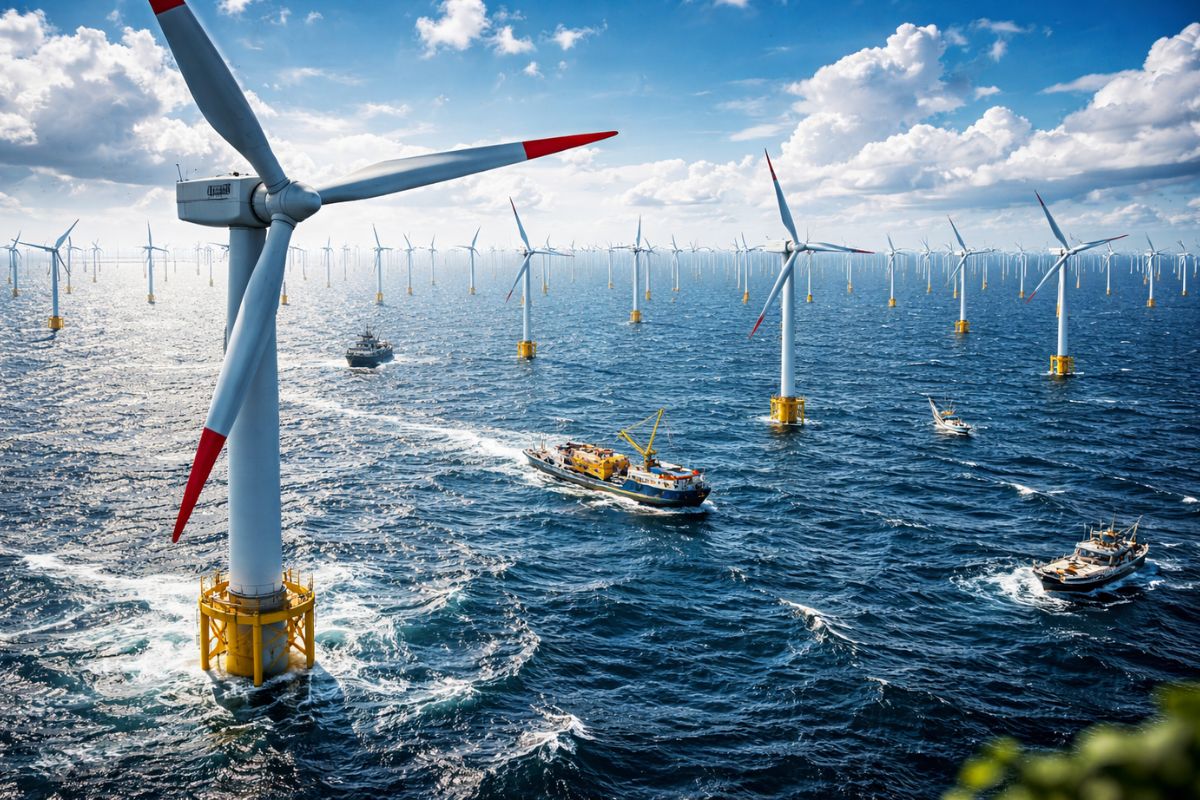
Signed At The North Sea Summit In Hamburg, The Colossal Project In The North Sea Brings Together Belgium, Denmark, France, Germany, Ireland, Luxembourg, Netherlands, Norway, And United Kingdom To Erect An Offshore Wind Farm With 300 GW Of Offshore Wind Energy, Seeking Energy Independence And Carbon Neutrality By 2050.
The colossal project in the North Sea took shape after the signing of a joint declaration at the North Sea Summit in Hamburg, bringing together nine countries with shared coastlines. The ambition is to transform the North Sea into the world’s largest clean energy hub, with offshore wind farms, interconnected grids, and a capacity jump targeting 300 GW.
At the heart of the plan, the colossal project in the North Sea aims to reduce imports and strengthen supply security in a scenario of geopolitical tension and competition for gas. The bet is that large-scale offshore wind energy will rebalance electricity in the north and central Europe, with a direct impact on industry and households.
The Agreement Of Nine Countries And The Goal Of 300 GW By 2050

Belgium, Denmark, France, Germany, Ireland, Luxembourg, Netherlands, Norway, and United Kingdom signed the agreement to develop the colossal project in the North Sea.
-
New CCR concrete paving technology promises roads up to 3x more durable, less maintenance, and cost reduction in Brazil.

-
Made from recycled plastic, plastic wood is gaining space in the construction industry because it does not rot, resists moisture, and reduces maintenance costs over the years.

-
Florianópolis will receive a million-dollar BRT that will begin construction in 2026 with nearly 400 million in funding from the federal government and the Inter-American Development Bank, and the map already shows the routes for the exclusive bus corridors.

-
Without a blueprint, without an engineer, and using scrap from the dump, a father spends 15 years building an 18-room castle for his daughter, featuring tram tracks, 13 fireplaces, and over 700 m², which may now be demolished.

The stated ultimate goal is that by 2050, the offshore wind farm will achieve 300 GW of offshore wind energy capacity, focusing on marine renewable generation and interconnected grids.
The comparison used in the announcement is direct: 300 GW would be half of China’s production, which surpassed 600 GW in 2025.
By setting 300 GW as a reference, the signatories frame the colossal project in the North Sea as industrial and energy repositioning, with energy independence as a political axis.
The First Stage: 100 GW And Coordinated Bidding Starting In 2031

The first step of the colossal project in the North Sea is to connect up to 100 GW of new offshore wind energy through cross-border projects involving the nine nations.
The logic is to accelerate integration among countries and scale up the offshore wind farm without relying on a single national system.
To enable the expansion, a joint investment agreement was signed among governments, offshore wind industry, and grid operators.
The announced plan includes coordinating bids for new wind farms starting in 2031, ensuring 15 GW of new capacity each year, creating predictability on the path to 300 GW and energy independence.
Infrastructure At The Bottom Of The Sea: Cables, Hybrid Interconnections, And Grids
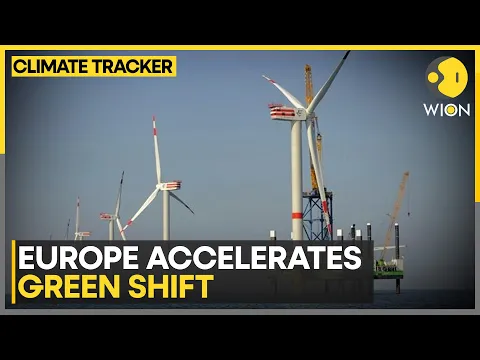

The design of the colossal project in the North Sea envisions thousands and thousands of offshore wind turbines connected to the mainland by kilometers of electrical cables at the bottom of the sea.
In addition to generation, the plan discusses hybrid interconnections that connect countries and interlink the parks, creating an integrated offshore wind farm system with multiple transmission routes.
The proposal includes connecting the turbines to national electrical systems and also to onshore wind farms, enhancing redundancy and stability.
In practice, offshore wind energy and interconnected grids become a unified piece, with the maritime zone functioning as an energy corridor.
Denmark, Artificial Island Of 10 GW And The Need For Cooperation
An example cited within the colossal project in the North Sea is the Danish project: a vast artificial island with a capacity of 10 GW annually, accompanied by dozens of offshore wind turbines.
The critical point for making the idea viable was precisely cooperation with other countries, such as Germany, for connection and off-take.
By entering the umbrella of the offshore wind farm, the artificial island becomes part of a larger mesh.
It is in this arrangement that offshore wind energy transforms into a tool for integration, and not merely isolated generation.
Why The Plan Targets Energy Independence And Reduction Of Foreign Gas
The colossal project in the North Sea was presented as a way to reduce imports, especially of gas, currently purchased from Russia, the USA, and Qatar.
The agreement also targets carbon neutrality, but the main stated political goal is energy independence, with more electricity generated within Europe.
The European Union approved a timeline for the gradual reduction of imports from Russia, which the bloc does not wish to maintain in a geopolitical scenario described as increasingly tense. Meanwhile, the USA is the largest LNG supplier to Europe, and the promise of the offshore wind farm is to reduce this dependence over time.
Denmark’s Prime Minister, Mette Frederiksen, stated that investing in offshore wind energy reduces dependence on imports and allows taking control of the energy future, citing attention to the United States and tensions regarding Greenland.
German Chancellor Friedrich Merz stated that the goal is secure and affordable energy in Europe, and that a strong, independent, and competitive Europe is essential, in line with the idea of energy independence.
The Current Starting Point: Who Leads And Who Is Catching Up
Despite the discourse of 100 GW in the first phase and 300 GW as the final target, the nine countries are still far from the goal.
The United Kingdom has the largest wind energy capacity: just over 15 GW, with 8.5 GW offshore. Germany has 7.3 GW and the Netherlands, 4.5 GW.
These numbers help frame the leap that the colossal project in the North Sea aims to produce.
To make 300 GW a reality, the offshore wind farm will need continuous execution, and offshore wind energy will have to grow for decades with coordinated bidding.
Offshore Wind Energy As A Bridge And The Future Bet On Nuclear Fusion
According to the German reference in the announcement, the commitment to renewables would be an intermediate step over the next 20 to 30 years.
In the long term, the horizon includes promising technologies such as nuclear fusion reactors, which minimize radioactive waste compared to fission reactors and promise virtually limitless clean energy, but are still in the experimental phase.
Even with this horizon, the immediate strategy remains anchored in offshore wind energy, in the offshore wind farm, and in the goal of 300 GW.
In the short and medium term, energy independence appears as a direct benefit, with interconnected grids and distributed production in the North Sea.
Keep an eye on the bids planned from 2031 and the cross-border projects of 100 GW to gauge whether the colossal project in the North Sea is really advancing toward 300 GW and energy independence.
Which part of the colossal project in the North Sea do you think is the most challenging: installing thousands of turbines in the offshore wind farm, integrating offshore wind energy into the grids, or sustaining 300 GW by 2050?





-

-

-

4 pessoas reagiram a isso.