





 Portuguese
  English
  Spanish
  7 min of reading
  0 comments


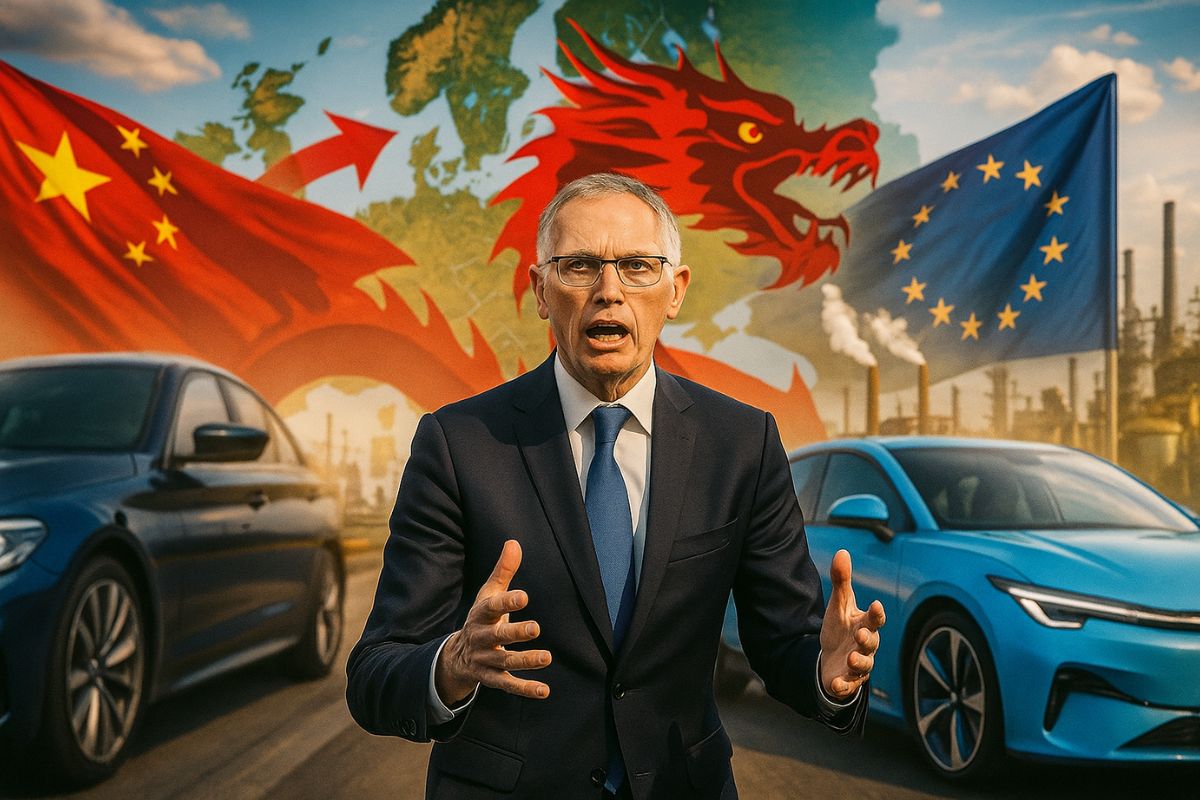
The Former CEO of Stellantis Claims That the Crisis in the European Automotive Industry Opens Space for Chinese Brands to Save Jobs in Europe While Gaining Power Over European Automakers.
The former CEO of Stellantis returned to the center of the debate by stating that China can simultaneously save jobs in Europe and end up swallowing European automakers amid the crisis in the automotive industry. In recent interviews, the Portuguese executive describes a scenario where Chinese manufacturers present themselves as a solution for factories on the brink of closure, but encroach on strategic assets in the industry in the long term.
In analyzing the movement of Chinese groups in the European market, the former CEO of Stellantis points out that the combination of trade war, strict environmental regulations, and pressure for electrification has left several traditional brands backed into a corner. In this context, the promise of job preservation made by Chinese companies could be seen as an immediate salvation, while in the background, an industrial and technological power transfer to new Asian entrants would occur.
Who Is the Former CEO of Stellantis and Why Do His Statements Matter?
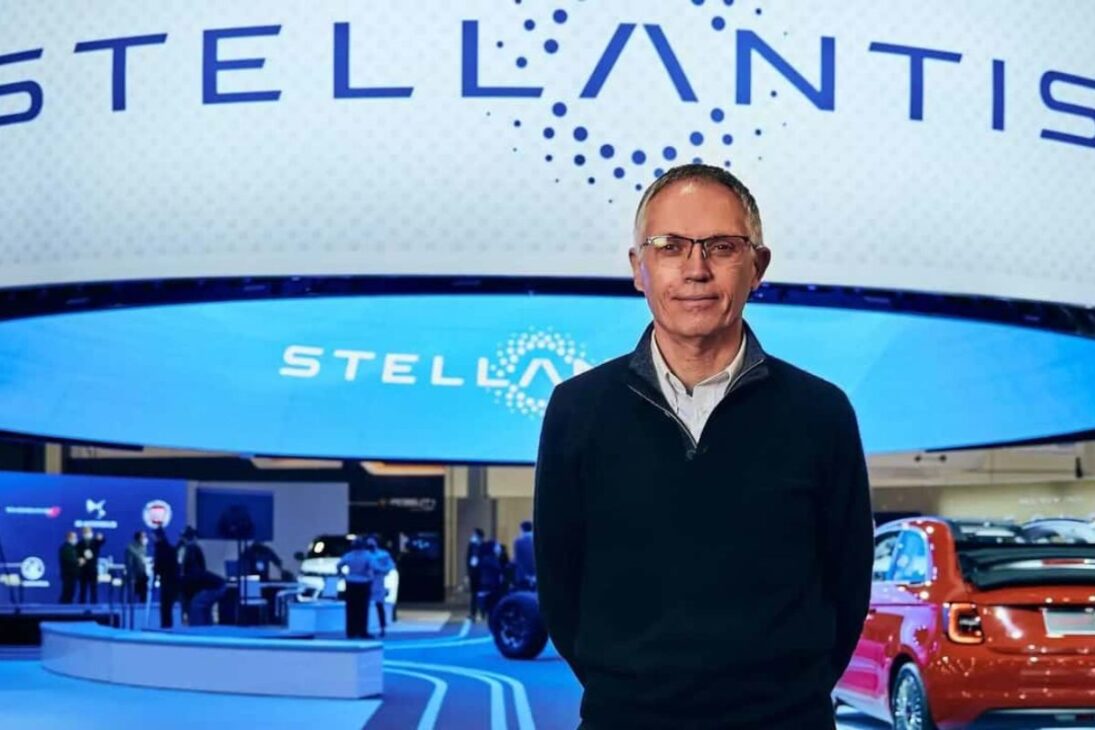
Carlos Tavares, who left the leadership of Stellantis about a year ago, built his reputation as one of the most influential executives in the global automotive sector.
-
Unemployment rises again to 5.8% at the beginning of 2026, raising alarms about the end of temporary positions and its impact on the Brazilian job market.

-
Document organization can cut invisible costs in small businesses, a simple step that prevents waste, rework, and losses in daily operations.

-
Chinese giant worth nearly R$ 4 billion that manufactures cables for electric cars, solar energy, and robotics wants to open a factory in SC.

-
Many employers do not know, but the law guarantees domestic workers a 25% increase in salary during trips, 50% for overtime, 20% for night shifts, and 17 additional benefits that can lead to labor lawsuits if not paid.

At the forefront of major restructuring and mergers, he led processes of cost reduction, portfolio reorganization, and consolidation of brands under the group’s umbrella.
The experience accumulated during his leadership of Stellantis adds extra weight to the former CEO’s analyses regarding the future of the industry, especially when they involve structural risks for European manufacturers.
Now retired, Tavares has dedicated himself to personal projects and the launch of his book, in which he revisits turbulent periods experienced by the sector.
Taking advantage of this exposure, the former CEO of Stellantis gave interviews to European media, in which he adopted a warning tone.
His statements, echoed in various outlets, draw attention for presenting scenarios where control of European operations may gradually migrate to Chinese groups, altering the balance of power in the market.
How China Enters the Crisis of the European Automotive Industry
In the analyses of the former CEO of Stellantis, the situation of the European automotive industry is described as delicate and structurally vulnerable.
He points to a combination of international trade war, increasingly stringent emission rules imposed by Brussels, and ambitious electrification policies as factors that pressure margins, require substantial investments, and limit room for strategic errors.
In this environment, traditional automakers face underutilized factories, escalating costs, and a need for capital to develop electric and hybrid platforms.
Groups like Volkswagen are cited as examples of manufacturers facing difficult decisions regarding production and closure of units.
For the former CEO of Stellantis, it is precisely this fragility that opens the door for Chinese companies to approach with purchase proposals and promises of job preservation, creating a narrative of rescuers for the local public opinion.
The Scenario Anticipated by the Former CEO of Stellantis for a Future Sale
In Tavares’ view, a possible outcome of the crisis would be the entry of a Chinese manufacturer at a moment of extreme stress, when European factories are on the verge of closing and workers are on the streets protesting.
From there, a Chinese group could announce the acquisition of operations, promising to preserve jobs and reactivate threatened units.
This strategy would allow the new controller to build a positive image with society and European governments, while gaining access to established brands, technologies, and supplier networks.
In the specific case of Stellantis, the former CEO of Stellantis even mentions the possibility of a separation between European and North American operations.
In an extreme scenario, a Chinese manufacturer could make an offer for the European arm, while investors from the United States would regain control of the company’s North American division.
Tavares does not treat this possibility as a certainty but presents it as one of the plausible scenarios if the current market pressures remain or intensify.
Leapmotor and the Chinese Doorway Crafted by the Former CEO of Stellantis
A central point in Tavares’ statements is the partnership between Stellantis and the Chinese Leapmotor, established during his management.
The agreement paved the way for Leapmotor to use Stellantis’ structure to enter international markets, leveraging distribution channels, regulatory knowledge, and established presence in several countries.
At the same time, this move allowed the European group to access technology and products from the Chinese partner, especially in segments related to electrification.
Today, with Leapmotor capturing a significant share of the attention of the former CEO of Stellantis, Tavares states that the Chinese brand is not only looking to expand its sales outside China.
In his words, the long-term goal would be “to swallow us someday,” referring to the possibility that the Chinese partner may one day become the controller of assets currently belonging to Stellantis or other European groups.
For the executive, this type of motivation reveals that current trade agreements may serve as a springboard for strategic acquisitions in the medium term.
China as a Job Saver and Automaker Devourer
The central axis of the former CEO of Stellantis’ statements is the idea that China can fulfill two roles simultaneously in Europe.
On one hand, by buying threatened factories and maintaining production, Chinese companies would be seen as responsible for saving thousands of jobs, with strong political and social appeal.
On the other hand, by taking control of plants, brands, and technologies, they would end up “devouring” European automakers, absorbing their assets and repositioning the industry’s center of gravity.
This reasoning is reinforced by the observation that Chinese automakers have been increasing their presence in Europe while Western manufacturers close units and cut production capacity.
In the former CEO of Stellantis’ view, each closed European factory opens additional space for a new player to enter, offering capital, volume, and competitive products.
Thus, the process of “saving jobs” could merely be the visible face of a profound shift in control within the sector.
Tesla and the Advance of Chinese Brands on the Horizon Foreseen by Tavares
Beyond Europe, the former CEO of Stellantis also makes projections about the position of North American automakers in the face of Chinese brands. In his statements, he claims that Tesla tends to be completely surpassed by Chinese manufacturers, suggesting that the combination of scale, competitive costs, and technological advancement of Asian brands will increasingly pressure Elon Musk’s company.
Tavares even ventures a scenario where Elon Musk, facing market maturity and increasing competition from China, starts directing more energy to other projects outside of Tesla.
For the former CEO of Stellantis, what is unfolding is a global reconfiguration of the automotive sector where Chinese manufacturers assume a dominant position both in Europe and in other strategic markets, occupying spaces previously reserved for European and North American brands.
The Crossroads of the European Industry Viewed by the Former CEO of Stellantis
The analyses of the former CEO of Stellantis indicate that the European industry is at a crossroads.
On one side, it needs to invest heavily in electrification, digitalization, and new vehicle architectures to meet increasingly stringent environmental and regulatory goals.
On the other, it faces compressed margins, high costs, and Chinese competitors with strong support from their domestic supply chains, capable of offering electrified vehicles at aggressive prices.
Without a coordinated response in terms of industrial policy, access to financing, and technological strategy, European automakers risk getting trapped in a cycle of piecemeal adjustments, factory closures, and loss of global relevance.
In this scenario, the entry of Chinese groups as asset buyers may seem like a short-term solution but could mean a loss of decision-making capacity regarding the future of the sector on the continent.
Will the Warnings of the Former CEO of Stellantis Come True?
The statements of the former CEO of Stellantis about the Chinese advance in the European automotive industry serve as a warning regarding the depth of the crisis and the speed with which the correlation of forces may change.
By projecting a path where China saves jobs in Europe by buying struggling factories, while at the same time swallowing European automakers, Tavares exposes a strategic dilemma involving jobs, technology, regulation, and industrial sovereignty.
In a context of trade war, accelerated electrification, and cost pressure, ignoring this type of analysis could mean arriving too late at industrial and corporate policy decisions that will define who will lead the next phase of mobility.
Given this scenario outlined by the former CEO of Stellantis, do you believe Europe will still be able to protect its automakers with its own adjustments, or do you already see it as inevitable a wave of acquisitions and Chinese control over a significant part of the European automotive industry?









Seja o primeiro a reagir!