





 English
  Francês
  Alemão
  Italiano
  Japonês
  Norueguês
  Portuguese
  Spanish
  4 min of reading


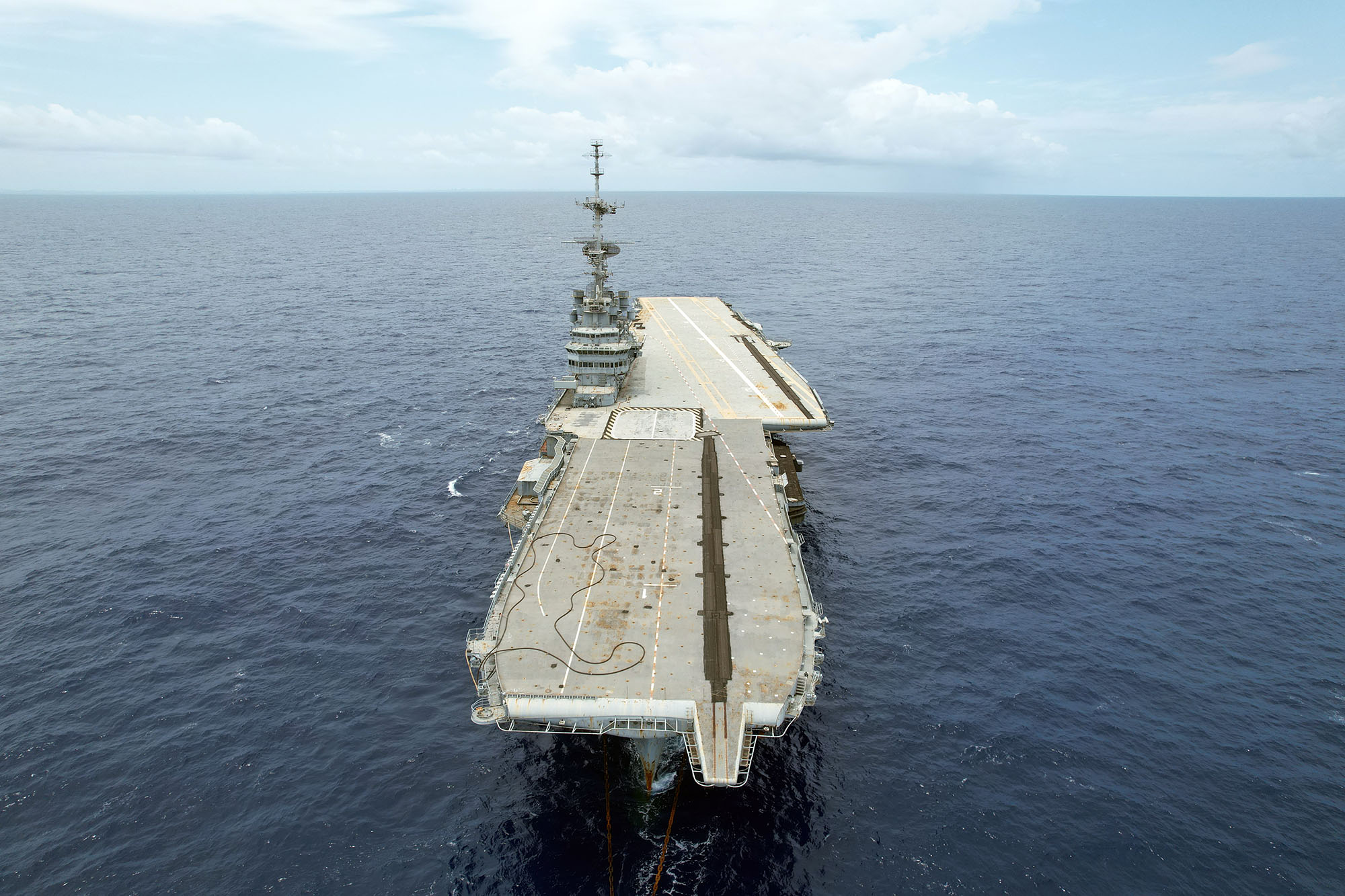
While It Wandered Aimlessly In Brazilian Waters, The Military Vessel Caused Several Conflicts, Polemic And Damages
The former aircraft carrier NAe São Paulo was sunk by the Navy this Friday (03). But it is still unknown if this was the final chapter of a major controversy that has been occurring since the vessel was prevented from heading to Turkey in October, where it would be dismantled. The Brazilian authorities do not guarantee that the sinking was a procedure that would not cause environmental risks, nor do they clarify whether they will monitor potential damages to the marine ecosystem.
It is also unknown how the sinking occurred, nor how much the operation cost. The procedure took place 350 kilometers off the Brazilian coast, in an area more than 5,000 meters deep, but only after a decision by the Federal Court. Prior to that, the Federal Public Ministry requested the 5th Regional Federal Court to review the decision to sink the former aircraft carrier.

The vessel contains about 10 tons of asbestos, a potentially cancer-causing and toxic mineral. The sinking was authorized based on a report from the Navy detailing the extremely precarious conditions of the hull. According to the military, there was a 5m x 2m hole partially submerged, another 0.3m x 0.3m at the waterline, and one more of about 0.08 meters, both on the left side (port side).
-
OceanPact Announces Acquisition of CBO and Creates One of Brazil’s Largest Maritime Support Structures with 73 Vessels, Annual Revenue Above R$ 4 Billion and R$ 14 Billion Backlog
-
With Extreme Winds, Giant Waves, and Unrestricted Currents, Drake Passage Is Considered the Most Violent Stretch of the Oceans
-
15th Century Merchant Ship Surprises Archaeologists
-
Odfjell Inaugurates First Operational Green Corridor Between Brazil and Europe Using Sustainable B24 on Maritime Routes and Reinforces Decarbonization Strategy

These and other damages caused an invasion of 2,787 cubic meters of water in the internal compartments of the vessel, which was causing it to tilt to the left side. These conditions raise the following questions: was there a lack of due attention in the retirement procedure of the former aircraft carrier? Did they know that taking better care of the ship would facilitate green dismantling in the future?
Pernambuco Government Points Out Environmental Risks That May Be Caused By The Sinking
The Pernambuco government, through the Department of Environment, warns about the proliferation of a plague, known as sun coral, which would be a huge threat to the state’s marine biodiversity since shipwrecks like that of the former aircraft carrier favor the establishment of these invasive species.
The government also recalls the disaster that occurred in 2019, when a large amount of oil appeared on the beaches of Pernambuco. At that time, scientists discovered that the origin of the product that invaded the beaches and caused enormous environmental damage was located more than 400 kilometers from the coast. The sinking of the former aircraft carrier occurred at a shorter distance.
Therefore, all the toxic substances located in the vessel, of which there is knowledge, could be brought to the coast through ocean currents.
Understand How This Controversy Started
With 266 meters in length, a width of over 50 meters, and a capacity to displace around 30,000 tons, the NAe São Paulo belonged to the Brazilian Navy since 2000. The vessel was purchased from the French Navy for US$ 12 million. Upon arriving here, it became the largest war equipment in Brazil, and still the largest military ship in the southern hemisphere.
But while it belonged to Brazil, the vessel was the center of many controversies, disasters, and losses. Last year, the former aircraft carrier was sold to a shipyard in Turkey. When heading through Moroccan waters, bound for a Turkish shipyard, it had to return to Brazil after Greenpeace issued a warning that there was a lot of asbestos in the hull.
The Navy ordered that the docking take place at the Port of Suape, in Pernambuco. But the local government did not allow it, due to environmental, sanitary risks, and the port operation itself. The story spread, and no other Brazilian port accepted to receive the former aircraft carrier.
Adrift, the former aircraft carrier wandered in circles in Brazilian waters, 30 kilometers off the coast of Pernambuco. Unable to sustain the daily loss of maintaining the ship and the tugboat while the situation remained unresolved, the companies MSK Maritime Services & Trading and SÖK, buyers of the vessel and responsible for what would be the dismantling, decided to renounce ownership.
This measure was seen as “definitive abandonment” by the Brazilian Institute of Environment and Natural Renewable Resources (Ibama). Then, the Navy, which had stated that the asbestos present in the former NAe São Paulo posed no health risks at the beginning of the whole story, decided to carry out the sinking.









Seja o primeiro a reagir!