





 English
  Francês
  Alemão
  Italiano
  Japonês
  Norueguês
  Portuguese
  Spanish
  5 min of reading


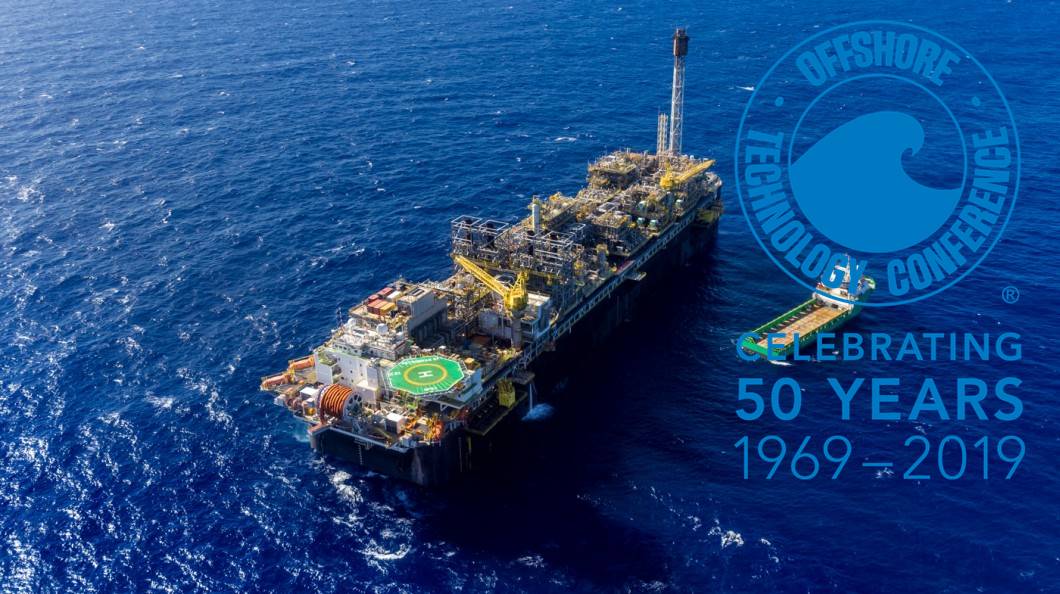
On The Second Day Of OTC Brasil 2019, Oil And Gas Companies Address Topics Such As Cost, Technology, And Attracting Young Talent
The oceans offer many opportunities in the energy sector, but harnessing them requires investment, skilled personnel, and, above all, high technology. This was demonstrated by representatives from nearly a dozen companies, including the global directors of exploration and production from the world’s largest oil companies, who participated in OTC Brasil 2019 on the afternoon of this Wednesday (10/30).
See Also
- BP And Total Withdraw From Participating In The Auction Of The Surplus Of The Excessive Cession
- Large Company Announces Job Openings For Maintenance Professionals This Wednesday, October 30
- Attention To New Hires For Teams That Will Work In Petrobras Refineries In Macaé, Paraná, And Pernambuco
For the emeritus adviser of IBP, Jorge Camargo, the energy transition has changed the competitive landscape of the oil and gas sector. “We have always had to compete, but competition itself has changed. We now have to compete with other industries,” he said at the opening of the panel “How To Increase Competitiveness In Deep Water Projects.”
The E&P director of ExxonMobil, Stephen Greenlee, responded to Camargo’s provocation by defending the competitiveness of the offshore industry. According to him, despite the challenges of the energy transition, there is still great potential for oil and gas production, especially in deep waters. However, exploring it requires creativity. “Our ability to explore these resources (oil in deep waters) has increased considerably over the last ten years. They are competing in a very favorable way,” he assured.
-
Government unlocks R$ 554 million for a highway that has been requested for decades and accelerates the duplication of BR.
-
Without bricks, without cement, and without endless construction: the cardboard house that is assembled in modules and can be moved.
-
Billions of barrels on the equatorial margin could lead Amapá to double its oil production in Brazil — the state aims to enter the route of companies in the Campos Basin, attract investments, and boost jobs and businesses in the oil and gas sector.
-
Without bricks, without cement, and without endless construction: the cardboard house that is assembled in modules and can be moved.
The E&P director of Total, Arnaud Breuillac, noted that the challenge of having profitable projects with technology and innovation involves attracting young talent to the sector. For him, this is one of the greatest challenges in the industry, as deep water projects are competitive even when compared to the so-called shale oil in the United States.
The COO of Baker Hughes, Uwem Ukpong, recalled that the time to discovery for the first oil has decreased from 20 years to 5 years. To improve this record further, as Petrobras proposes, whose goal is 1,000 days, he emphasized that it is necessary to invest more in collaboration between operators and suppliers. “Technology and collaboration are what will take us to the next step,” he said.
Petrobras presented its 1,000-day challenge, but the company’s E&P director, Carlos Alberto Pereira de Oliveira, stressed that competitiveness has always been a goal for the company, whose cost of capital has historically been higher than that of its competitors. Now, he said, the focus is on seeking disruptive projects. “We need to think about disruptive models; only then can we increase competitiveness,” he declared, highlighting that one of the company’s steps to achieve the goal of less than three years until the first oil is to ensure 100% certainty of finding oil when drilling a well.
The CEO of Equinor Brasil, Margareth Øvrum, also spoke about energy transition, technology, and innovation, but like the Petrobras director, she did not forget the inherent costs of operating in Brazil. According to her, it is important to remove unnecessary complexities and invest in innovation, as the company proposes in the new research center it opened in Rio de Janeiro, but one cannot lose sight of fiscal and regulatory aspects. “Brazil is improving regulation, but still needs to simplify its revenue system,” she said.
Renewable Energy
In the panel on offshore renewable energy, companies such as Equinor, Aquatera, Deme, Aker, SBM, and Petrobras presented projects, mostly in wind energy, that they are already developing in various parts of the planet. According to Fábio Passareli, the technical consultant at Petrobras for the Libra project, generating renewable energy in offshore oil exploration areas of the pre-salt will play an important role in reducing the carbon footprint of these projects. However, developing these initiatives depends on reducing the costs of equipment to make them viable.
Veronica Coelho, vice president of Equinor in Brazil, showed a wind generation project associated with oil platforms, supported by the Norwegian government. According to her, this type of solution powers the platforms, helps reduce the carbon footprint of oil production operations, and also frees up gas for sale or reinjection.
Rafael Torres, the business development director of SBM Offshore, presented a floating wind turbine suitable for deep water. In Brazil, he said, technologies like this should become a reality in four or five years.
For Professor Segen Estefen from the Federal University of Rio de Janeiro, structures like this may be well suited for the country’s coast, which has high wind generation potential.
Women’s Leadership
The oil and gas sector is seeking alternatives to increase female inclusion, the theme of the panel “Women In The Oil And Gas Industry: Improving Profitability And Results.” Anelise Lara, executive director of Refining and Natural Gas at Petrobras, emphasized that there is still a long way to go to achieve pay parity between men and women. “Today, only 17% of executives and seniors in the oil and gas sector are women.”
But female leaders are already seeing progress and argue that diversity improves company performance. Kim McHugh, vice president of Drilling at Chevron, stated that “women should be ‘sponsors’ of other female talents” and “change the unconscious corporate culture of leadership when it comes to distributing opportunities.”
Margareth Øvrum, CEO of Equinor Brasil, who mentors many young people, especially women, highlighted the importance of leadership in this regard. “At the beginning of my career, I heard from a bad leader, in the face of a problem I could solve, that my role was to ‘get coffee and cookies for the boss.’ He is no longer in the company,” she recounted.
Exhibition Area
At the exhibition, Petrobras brought two major themes: Pre-salt and the Libra Project. Divided into several areas, the stand offers four interactive screens highlighting its operations, including a video about the P-68 platform, the next to come into production in the pre-salt, and an animation about the five pioneering technologies of the Libra Project, which received, this Wednesday, the Distinguished Achievement Award from OTC for the long-duration test (LDT) of the field.
The stand also presents a daily – and free – schedule of lectures, in addition to the Mission Pre-salt, an interactive panel simulating operations in the pre-salt using joysticks, and Connections with Innovation, an area where those interested in startups can talk directly with the operator’s technicians.
OTC Brasil is sponsored by Petrobras, Equinor, ExxonMobil, Shell, BP, Chevron, Petrogal, Total, Repsol Sinopec, TechnipFMC, Vallourec, PetroRio, Aker Solutions, Frank’s International, Maha Energy Brasil, Shawcor, Solvay, Halliburton, Enauta, and MOL.
Source: IBP Press Office






Seja o primeiro a reagir!