





 English
  Francês
  Alemão
  Italiano
  Japonês
  Norueguês
  Portuguese
  Spanish
  5 min of reading
  0 comments


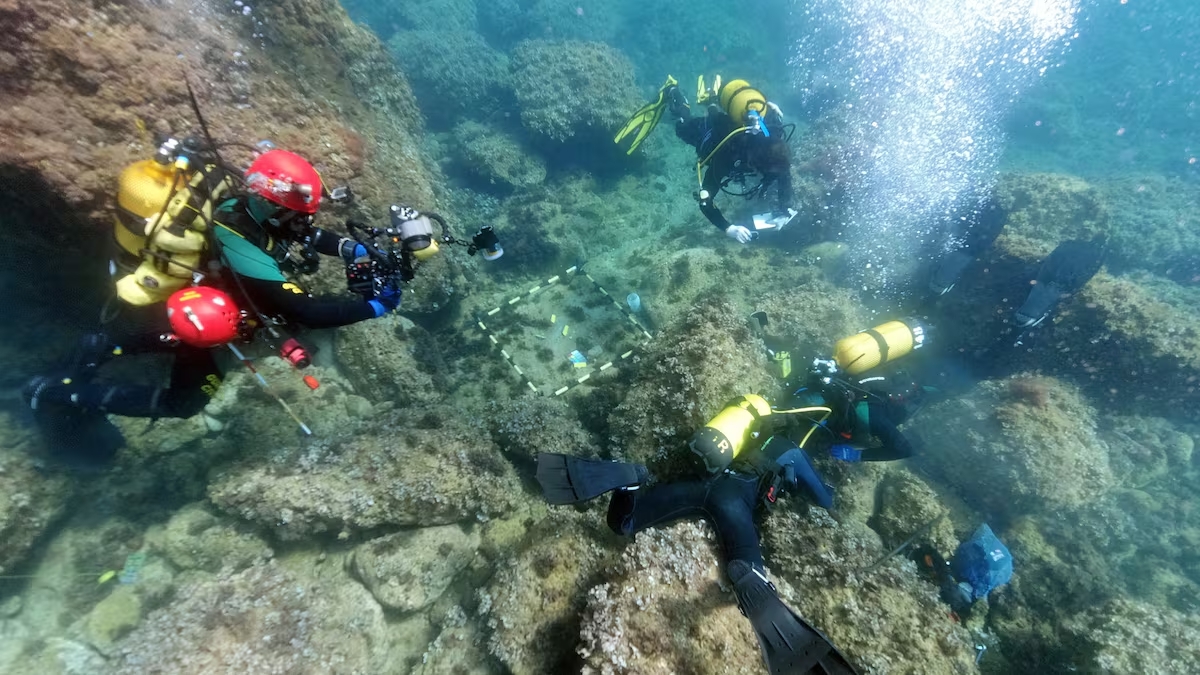
Roman treasure with 53 gold coins found submerged after 1,600 years reveals attempt to hide wealth during invasions in the Roman Empire.
In 2021, divers and Spanish authorities confirmed the discovery of a Roman treasure consisting of 53 perfectly preserved gold coins, found on the seabed, trapped between rocks off the Mediterranean coast. The find occurred in the region of Xàbia, Spain, and was reported by international media. According to a report by the Spanish newspaper El País, the coins were embedded in a submerged rock crevice in the bay of Portitxol, in one of the rarest finds ever discovered in Europe.
The coins were grouped and protected in a submerged rock cavity, which allowed their preservation over approximately 1,600 years. The positioning and the way they were found indicate that this was not a common shipwreck, but rather a deliberate attempt to hide wealth during a period of extreme instability at the end of the Roman Empire.
Submerged Roman treasure reveals flight amid the collapse of the Empire
Archaeological analysis indicates that the coins date back to the late Western Roman Empire, a period marked by invasions, political crises, and administrative collapse. Between the 4th and 5th centuries, Roman territory faced constant attacks from Germanic peoples, historically known as “barbarians”.
-
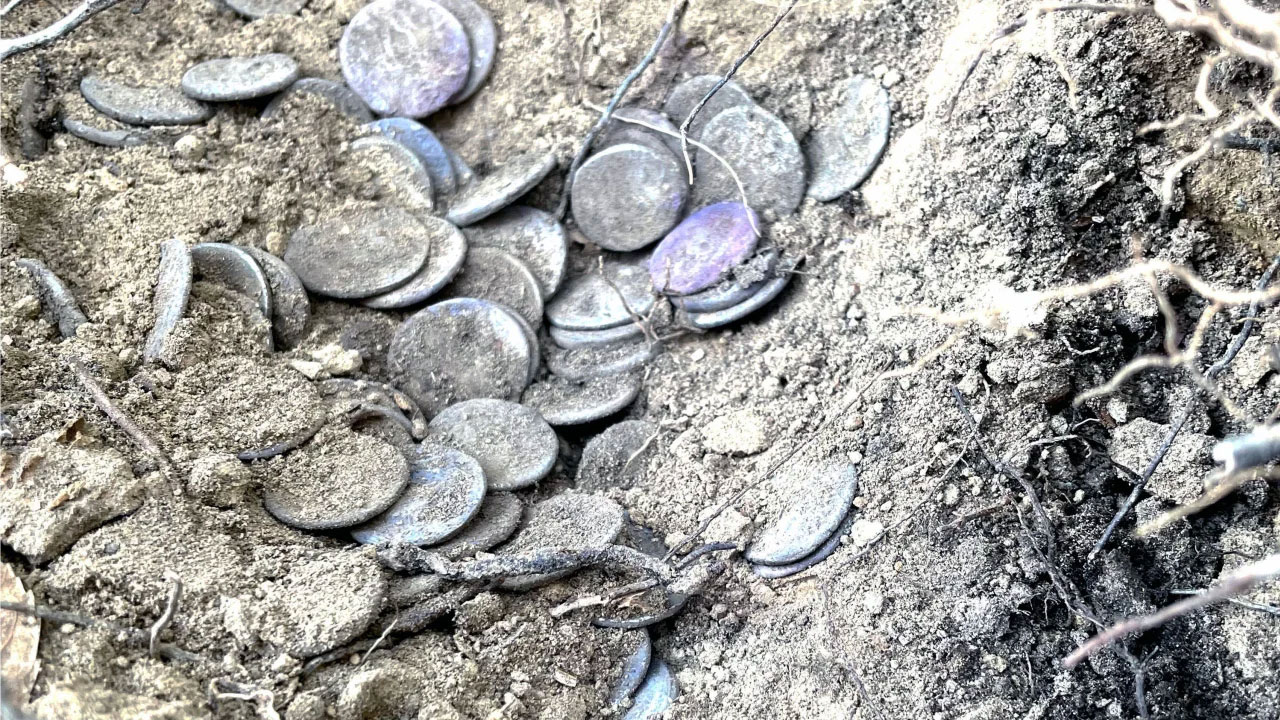
Archaeologists discover Roman vase buried for over 2,000 years with more than 175 intact gold and silver coins, revealing a desperate strategy to protect wealth during the collapse of the Empire.
-
With 241 meters, 48 thousand tons, and a structure designed to accompany aircraft carriers at sea, the Chinese ship that refuels fleets in motion was born to push Beijing away from the coast and has become the hidden gear of its naval projection.

-
“Discreet” city in the interior of SP stands out among the smartest in Brazil thanks to a national ranking.

-
With 27,800 tons, 230.8 meters in length, and space for 18 helicopters, the Canberra class functions as a floating amphibious airbase and gives Australia the capability to operate at sea for more than 45 days.



In this context, hiding wealth was a common strategy to avoid looting. However, the fact that the treasure was found in the sea raises an even more dramatic hypothesis: the owner may have attempted to flee by sea and ended up leaving — or losing — their fortune along the way.
The submerged location suggests that someone tried to hide or protect their belongings in a moment of urgency, possibly during an evacuation or imminent flight.
Gold coins preserved in exceptional condition after 1,600 years
One of the most impressive aspects of the discovery is the state of preservation of the coins. Gold, being a noble metal, does not corrode like other materials, which allowed the pieces to remain virtually intact.
The coins feature images of Roman emperors, inscriptions, and details that allow for precise dating of the period in which they were minted. This level of preservation is rare and offers a unique opportunity for historical and archaeological studies.
Each coin serves as a historical document, recording the political power, economy, and iconography of the Roman Empire in its final centuries.
Find is not a shipwreck and reinforces hypothesis of emergency hideout
Unlike many submerged treasures found in shipwreck contexts, this case presents distinct characteristics. The coins were not scattered, nor associated with remains of a vessel.
They were concentrated in a single point, protected by rock formations, indicating an intention to hide rather than an accident.
This difference is crucial for interpreting the find, as it suggests a conscious act of concealment, rather than an accidental loss during maritime transport.
Historical context points to a period of invasions and Roman collapse
The period in which the coins were buried or hidden coincides with a critical phase in European history. The Western Roman Empire was in decline, facing invasions from peoples such as the Visigoths and Vandals.

Cities were being looted, trade routes were interrupted, and the security of coastal regions was compromised. In this scenario, hiding wealth was often the only alternative to preserve assets.
The treasure found is a direct reflection of this historical moment, where uncertainty prevailed and decisions were made under extreme pressure.
More than just a set of coins, the find reveals a universal human behavior: the attempt to protect resources in times of crisis. The owner of the coins likely believed they could return to recover them. However, something prevented that return, whether death, capture, or permanent displacement.
This detail transforms the treasure into an interrupted story, frozen in time for over a millennium.
Scientific importance of the treasure for archaeology and history
The archaeological value of the discovery is significant. Being intact and concentrated, the collection allows for detailed analyses on:
- circulation of coins at the end of the Empire
- patterns of individual wealth
- economic context of the time
- practices of protecting assets
This type of find offers data that would be difficult to obtain by other means, contributing to a more precise understanding of the period.
Mediterranean continues revealing secrets of the ancient world
The Mediterranean Sea is one of the richest regions in archaeological discoveries on the planet. Having been a center of trade and circulation for millennia, its waters hide countless historical remnants.
However, each discovery has unique characteristics. In the case of this treasure, the difference lies in the combination of submerged location, preservation, and historical context.
It represents not just trade or transport, but rather a human decision made at a critical moment.
Gold, power, and survival at the end of the Roman Empire
Gold has always played a central role in the Roman economy, being used not only as currency but also as a symbol of power and stability.
Possessing 53 gold coins represented a significant amount of wealth, indicating that the owner held a relevant economic position.

The attempt to hide this wealth shows that, even in a structured empire, individual security could quickly disappear in times of crisis.
The intact preservation of the treasure for so many centuries is one of the most remarkable aspects of the discovery. Unlike many finds that suffer human interference over time, this collection remained isolated.
This means it faithfully represents the moment it was left, without later alterations. It is an authentic fragment of Roman history, preserved by natural conditions and chance.
A silent record of a moment of flight
The Roman treasure with 53 gold coins found on the seabed is not just a highly valuable archaeological find. It is a silent testimony of a moment of tension, fear, and the attempt to survive.
More than 1,600 years later, these coins continue to tell a story that was never completed. A story of someone who tried to protect their wealth amid chaos — and never returned to retrieve it.
What remains is an intact record of one of the most turbulent periods in history, preserved in the depths of the Mediterranean.






Seja o primeiro a reagir!