





 Portuguese
  English
  Spanish
 7 min of reading



Furthermore, Decommissioning of Oil Fields Will Generate R$ 2.4 Billion in Business. The Data Is Part of the 5th Edition of the Annual Oil and Natural Gas Industry Yearbook in Espírito Santo, Produced by the Industry Observatory of Findes
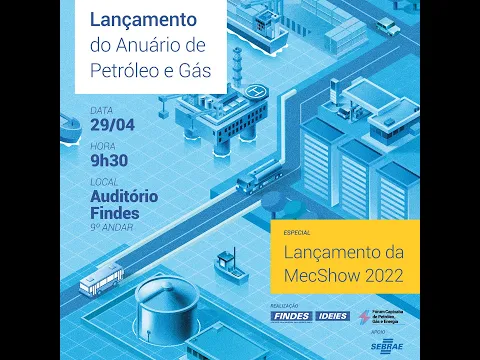
The Federation of Industries of Espírito Santo (Findes) launched this Friday (29) the 5th edition of the Annual Oil and Natural Gas Industry Yearbook in ES. The document gathers the most important data and analyses of the sector, in addition to presenting a projection of oil and gas production until 2025.

According to the study, it is estimated that Espírito Santo will receive, in four years, a total of R$ 8.1 billion in investments in the oil and gas sector, with projects from companies like Petrobras, Karavan Oil, Shell, PetroRio, Imetame and ES Gás. The decommissioning of 680 oil wells in ES is expected to generate R$ 2.4 billion in business between 2022 and 2026.
The material also includes information such as oil and gas production, number of wells drilled in the state, details of planned investments, royalties collection, and special participations, among other figures.
-
With an investment of R$ 612 million, a capacity to process 1.2 million liters of milk per day, Piracanjuba inaugurates a mega cheese factory that increases national production, reduces dependence on imports, and repositions Brazil on the global dairy map.

-
Offshore industrial demand in Macaé skyrockets with the recovery of oil and gas and could grow by up to 396% by 2026 in the Campos Basin.
-
Brazilian city gains industrial hub for 85 companies that is equivalent to 55 football fields.

-
Peugeot and Citroën factory in Argentina cuts production by half and opens a layoff program for more than 2,000 employees after Brazil drastically reduced purchases of Argentine vehicles.


The launch of the publication took place at the Findes headquarters in Vitória/ES and gathered specialists and authorities. On that occasion, the president of the Federation, Cris Samorini, stated that the Yearbook – produced by the Industry Observatory, with the support of Sebrae and the Capixaba Forum of Oil, Gas and Energy – is an important tool for outlining a snapshot of one of the main economic segments of the state.
“In the national ranking, Espírito Santo is the third largest producer of oil and the fourth of natural gas. The sector has the highest representativeness in the value added of the general industry in ES, at 25.4%. The Yearbook is very relevant since, in addition to reinforcing the importance of the sector through the data, it guides strategies and planning, especially for the generation of opportunities and the development of Espírito Santo.”
The chief economist of Findes and executive manager of the Industry Observatory, Marília Silva, emphasized that understanding the current scenario of oil and gas exploration in Espírito Santo, in the country, and in the world is also essential for understanding the context of the energy matrix transition, which is gaining more and more strength across the planet.
“There is no questioning the benefits brought about by the transition from an energy matrix currently intensive in fossil fuels to a low or zero carbon emission matrix. The doubts about this transition lie in the speed at which it will occur, given the need for energy security and the financial, technological, and regulatory incentives that must be promoted by global leaders,” emphasized Marília.
The Undersecretary of State for Attraction of Investments and International Business, Christiane Vargas Menezes, stressed that Espírito Santo stands out in oil production on the national scene and is the only state in the federation with a Sovereign Fund, which allocates resources for structural investments that make Espírito Santo increasingly competitive and attractive to new businesses.
“The Oil and Gas Yearbook of ES is an important document for the state, as it can indicate assertively the preparation of new strategies and government investments that may best support the sector, through technical and precise information,” she said.
The technical director of Sebrae, Luiz Toniato, reminded the importance of the oil and gas sector for the state. “Sebrae is a partner of this chain and is committed to doing its utmost to prepare small businesses and entrepreneurs to seize the opportunities that arise in the production and exploration of oil and natural gas,” he commented.
The resource availability management manager of Petrobras, Hudson Gomes Carvalho, pointed out that the company manages operations in the state that represent approximately 14% of national oil and gas production. He also reinforced the partnership that Petrobras has with Findes. “This partnership is very strategic for us. After all, this way, we get closer to the local industry, stimulate the supply chain and encourage the development of innovation and technology,” he emphasized.
During the event, the launch of Mec Show, one of the main fairs of the metallurgy sector, took place, bringing the latest trends and cutting-edge technology to the industry. The president of the Union of Metallurgical and Electrical Material Industries of the State (Sindifer), Luis Cordeiro Soares, said that this will be a great fair.
“After two years of virtual editions, we hope to offer many attractions of products, services, and technologies applicable to the metallurgical and oil and gas segment. Many novelties can be expected,” he emphasized.
Also, at the launch event of the Yearbook, there was a round table with the theme “Oil and Natural Gas Facing the Transition to New Energy Sources: Opportunities and Challenges,” with the participation of the contracting and procurement director of Equinor Brazil, Rafael Tristão, the director of UnIBP, Karen Cubas, the lawyer specializing in Socio-Environmental Law, Samanta Pineda, and the executive secretary of ABPIP, Anabal Santos.
Projection of the Industry Observatory: Oil Production Should Fall by 2.7% Annually Until 2025
Since the year 2000, Espírito Santo has gone from being a supporting role to a national protagonist in oil and natural gas production.
While in 2000, Espírito Santo’s share in national oil and gas production was 1.0% and 2.8%, respectively, occupying the seventh position in both inputs. Now, the state holds the 3rd position in oil production, with 8.4% of the national production share, and the fourth position in natural gas production, accounting for 4.9% of national production.
However, despite its relevance, since 2014, Espírito Santo has been recording successive declines in production, reaching in 2021 the lowest contribution to national production in the last 12 years, down from 7.3% for oil and 4.1% for natural gas.
According to the chief economist of Findes and executive manager of the Industry Observatory, Marília Silva, the decline in oil activity is linked to several factors such as the less favorable international environment and the little interest from oil companies in new frontier areas (areas to be explored) for oil and gas production.
“Moreover, the producing fields have lost space within the investment portfolios of large oil companies, being maintained with production below capacity. This scenario, combined with the natural decline phases of most producing fields, has resulted in a decline in the level of activity of the sector in Espírito Santo,” she justified.
Marília explained that, according to the projection brought by the Oil and Natural Gas Industry Yearbook in Espírito Santo, this declining production scenario is not expected to be reversed in the coming years.
It is expected that by 2025, offshore oil production will have an average annual decline of 2.70%, reaching a production of 64.4 million barrels. For natural gas, an average annual increase of 1.02% is projected until 2025, reaching a production of 2.1 billion cubic meters (m³).
In the onshore environment, it is expected that by 2025, oil production will have an average annual decline of 3.58%, reaching 2.5 million barrels. Regarding natural gas, an average annual decline in production of 3.62% is expected until 2025, reaching 21.7 million m³.
“The Yearbook helps us understand the prospects for the coming years, and this is essential for the government, the private initiative, and society to plan the future of the sector and the most efficient way to apply the resources generated from this productive chain,” highlighted Findes president, Cris Samorini.
About the Yearbook
In its 5th edition, the Oil and Natural Gas Industry Yearbook in Espírito Santo brings together the most important data and analysis variables of the sector for Espírito Santo.
Produced by the Industry Observatory of Findes, the document provides information about the global and capixaba oil and natural gas industry, presents the reflections of the sector’s activities, highlighting government participations, addresses the incentive mechanism for oil and gas sector research, development and innovation, and cites new opportunities in exploration and production of oil and natural gas for Espírito Santo.
With technical information and analysis, the Yearbook is an excellent instrument for public managers, especially, to plan the future of the sector and the resources it generates for ES.
In addition, the content presents the official map of the sector, in partnership with the National Agency of Oil, Natural Gas and Biofuels (ANP).
- Available at: http://findes.online/anuariopeg
- Watch a live event: https://www.youtube.com/watch?v=NFGahsr-dU0
Data and Impacts of the Oil and Gas Industry for ES
- Oil production: 3rd place in the country, with 8.4% of the national production share.
- Natural gas production: 4th place in the country, corresponding to 4.9% of the national production.
- Expected investments in the oil and natural gas sector in ES until 2025: R$ 8.1 billion.
- Approved decommissioning projects for the Espírito Santo Basin: 19, being 18 on land and one (01) offshore.
- Expected investments for the decommissioning of 680 wells from 2022 to 2026: R$ 2.4 billion.
- Economy: the sector represents 25.4% of the value added to the general industry in ES.
- Royalties collected in 2021: R$ 1.6 billion.
- Special participation collection in 2021: R$ 1.9 billion.
- Labor Market (2020): 11.6 thousand formal jobs.
- Average remuneration (2020): R$ 6,622.79.
- Exports (2020): US$ 599 million.
Sources: ANP, RAIS and MDIC | Preparation: Industry Observatory of Findes









Seja o primeiro a reagir!