





 Portuguese
  English
  Spanish
  5 min of reading
  0 comments



Formation of an extratropical cyclone and cold front is expected to cause intense rain, strong winds, and the advancement of instabilities across three regions of Brazil throughout the week, with the greatest impact in the South and reflections in the Southeast and Midwest.
The formation of a new extratropical cyclone and a cold front is expected to cause heavy rain, storms, and gusts of wind in the South, Southeast, and parts of the Midwest between April 6 and 10, 2026.
According to Climatempo, the period of greatest impact on the continent is concentrated between the 6th and 9th, while the cyclone is expected to move away to the ocean on the 10th, still affecting the southern coast.
The forecast indicates that the system begins to organize itself between Brazil, Uruguay, Argentina, and Paraguay, in a scenario of strong thermal contrast in the central portion of South America.
-
Embraer proves that the KC-390 Millennium achieves 100% reliability in tests in the Arctic, operating in extreme cold in Sweden with short takeoffs, quick deployment, and simultaneous transport of heavy vehicles and troops.

-
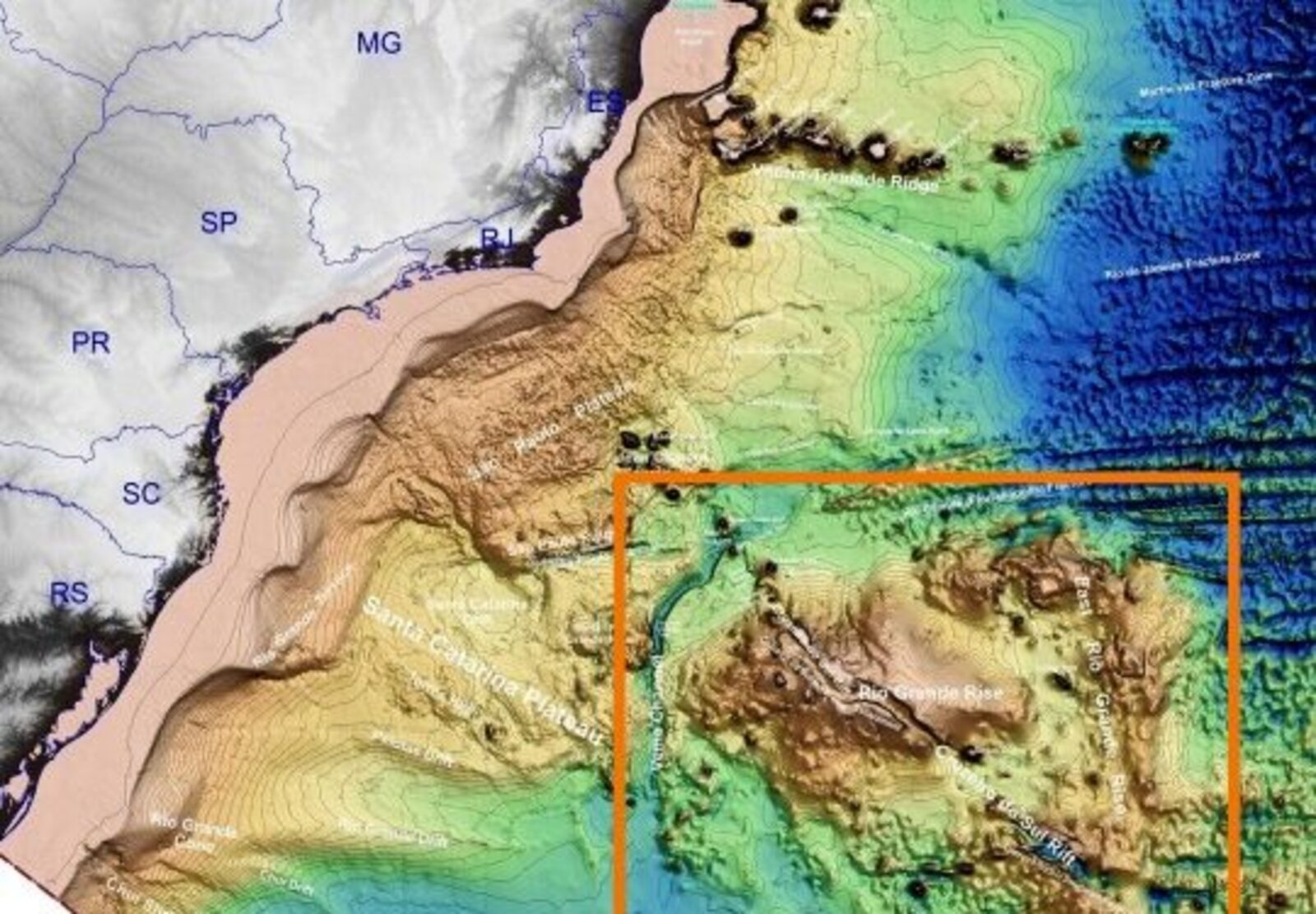
Trapped between layers of lava for 44 million years, an ancient tropical island in the Atlantic is back on the map and puts Brazil in contention for valuable minerals on the seabed.
-
Specialists are urging residents to eat as many wild blackberries as they can because the invasive plant is destroying native species and causing billions of dollars in damages in the United States.

-
At 93 years old, Mr. Francisco completes a 5 km run, is cheered as he crosses the finish line, moves the city, and gives an emotional lesson in strength, discipline, and the will to live.


In this environment, the warm air over northern Argentina and Paraguay meets the advance of a cold air mass of polar origin from eastern Argentina, a typical condition for the formation of extratropical cyclones and associated cold fronts.
Formation of the extratropical cyclone in Southern South America
The initial process expected for Monday, April 6, involves the strengthening of a low-pressure area between Paraguay and northern Argentina.
By Tuesday, April 7, this low pressure intensifies between Uruguay and Argentina, favoring the emergence of the cyclone’s center over Uruguayan territory, with a gradual shift towards the coastal strip between the two countries.
According to the weather maps cited by Climatempo, the cyclone is expected to gain strength until Tuesday night, when the pressure at the center of the system may drop below 1000 hectopascals.
The cold front associated with this process also organizes itself on the same day and begins to influence the South of Brazil, as well as areas of Paraguay and Argentina.
Despite the name and intensity associated with the phenomenon, the projection does not indicate the passage of the cyclone’s center over Santa Catarina, Paraná, Southeast, or Midwest.
The most likely trajectory places the system between Uruguay and the extreme south of Rio Grande do Sul, with subsequent movement towards the ocean, off the coast of Rio Grande do Sul.
Where there is the greatest risk of storms and heavy rain
In Rio Grande do Sul, the expectation is for storms between Monday and Tuesday, a period when the formation of the cyclone and the cold front is likely to concentrate the most severe effects.
The combination of heavy rain, atmospheric instability, and intense wind increases the risk of locally heavy downpours and rapidly advancing storms, especially in areas more exposed to the initial movement of the system.
In Santa Catarina and Paraná, rain is also expected to strengthen on Tuesday, especially between the afternoon and evening, when the heavy clouds are likely to spread throughout the interior of the Southern Region.
Even though the cyclone’s center does not pass through these states, the atmospheric circulation and the organization of the cold front are sufficient to favor isolated storms and strong gusts.
In Mato Grosso do Sul, the advance of instability is also expected to be stronger on Tuesday, with forecasts of heavy showers and moderate to strong winds.
The action of the cold front also opens the possibility for rain in other parts of the Midwest throughout Wednesday and Thursday, reaching Goiás, Mato Grosso, and the Federal District.
Advance of the cold front through the Southeast
Starting from Wednesday, April 8, the cold front is expected to advance over the Southeast and spread areas of instability across a wide strip of the region.
On this day, the forecast for heavy rain includes São Paulo, the Triângulo Mineiro, the south of Minas, parts of the Zona da Mata, the Greater Belo Horizonte, and the center-south of Rio de Janeiro.
On Thursday, April 9, the system continues to advance, with a greater concentration of rain in Minas Gerais, Rio de Janeiro, and Espírito Santo.
In São Paulo, the trend is for a gradual reduction in instability, although the state will still remain under watch for irregular showers, as the passage of the cold front does not occur uniformly across the entire state.
The expected behavior for the Southeast reinforces that the main role of the cyclone, outside the Southern Region, will be to organize the cold front and boost the atmospheric circulation that favors rain.
Strong winds may reach 90 km/h
In terms of winds, Monday is expected to start with gusts between 60 km/h and 80 km/h in parts of the medium and southern coast of Rio Grande do Sul.
In other areas of the South and in Mato Grosso do Sul, the estimate for the same day is between 40 km/h and 60 km/h.
Tuesday concentrates the most critical phase for wind in the interior of the Southern Region, where gusts are expected to occur frequently throughout the day, even at times without rain.
The most common values are between 60 km/h and 70 km/h, but heavy clouds associated with storms may cause peaks of up to 90 km/h.
On the coast of Rio Grande do Sul and Santa Catarina, the expectation for Tuesday is also for strong and persistent winds, with gusts between 60 km/h and 80 km/h.
Offshore, the scenario may be more severe, with speeds exceeding 100 km/h in the oceanic areas near the coast of Uruguay, Buenos Aires province, and the extreme south of Brazil.
Effects of the cyclone until April 10
Although the most intense phase over the continent is expected to concentrate between the 6th and 9th, the influence of the cyclone does not end abruptly.
The projection indicates that, on April 10, the system will already be further away in ocean waters and will cease to directly influence the Brazilian coast, but the total monitoring period continues until this date due to residual effects on wind and rough seas.
The scenario outlined for the coming days combines two main axes of risk: the storms associated with the formation of the cold front and the gusts of wind that accompany the intensification of the extratropical cyclone.
The distribution of these impacts will not be equal among the states, but the alert covers a wide area of the country and requires special attention in the South, where the initial organization of the system is expected to be more intense.







Seja o primeiro a reagir!