





 Portuguese
  English
  Spanish
  4 min of reading
  1 comment


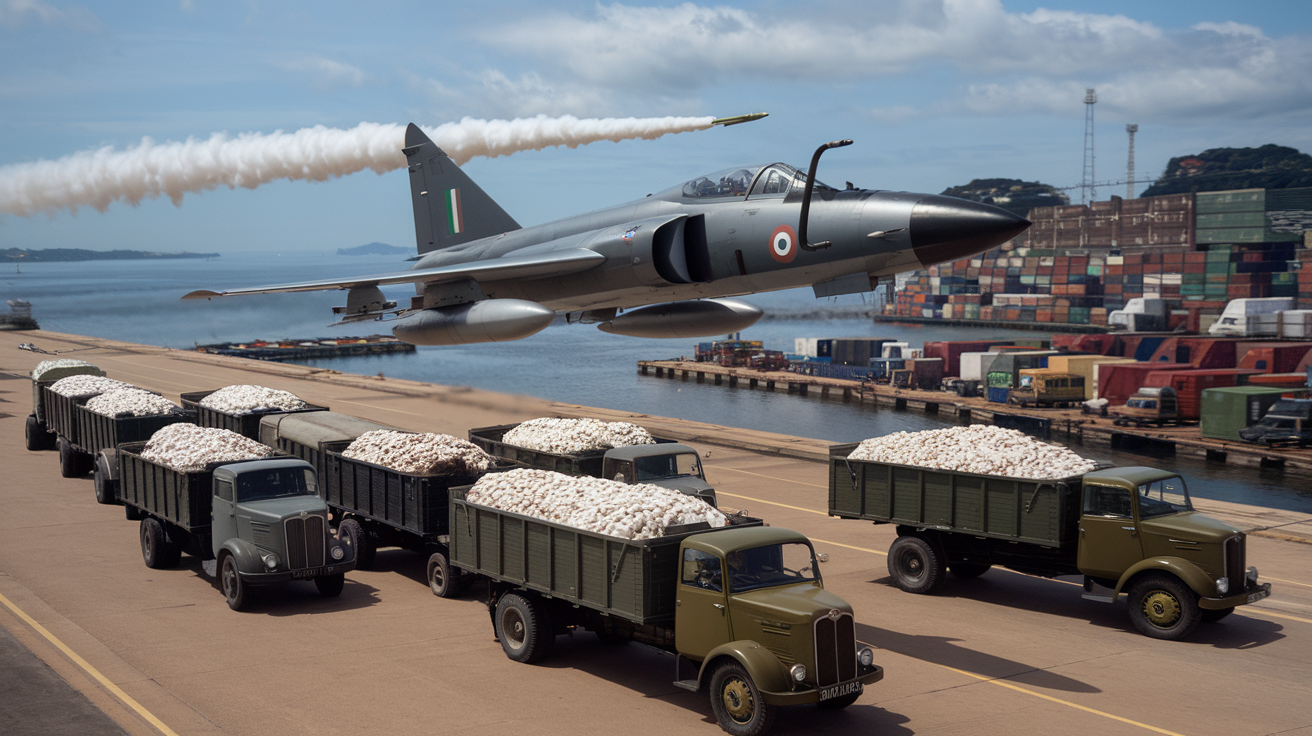

The Bold Exchange of 15 Thousand Tons of Cotton for 70 Gloster Meteor Fighters Put Brazil at the Forefront of Military Aviation in Latin America.
During the Cold War, a time marked by global tensions and ideological rivalries, Brazil took center stage in a negotiation that continues to surprise historians and defense specialists today.
Exchanging 15 thousand tons of cotton for 70 British Gloster Meteor fighters was a strategic move that highlighted the country on the international military scene.
But how did an agrarian and exporting economy manage to transform its resources into aerial power? This chapter of Brazilian history reveals the creativity and pragmatism of a nation in search of modernization and global prestige.
-
The U.S. Army receives the first Black Hawk helicopter that can fly without pilots, be controlled by a tablet, and even land on its own during high-risk missions.
-
With 11,000 tons and sensors capable of hunting submarines at long distances, the Type 055 has become one of the most feared floating arsenals of the Chinese navy.

-
With over 15,000 tons, radars capable of tracking hundreds of targets simultaneously, and more than 120 missiles ready for launch in seconds, modern destroyers cease to be escorts and begin to dominate the naval battlefield.

-
With over 15,000 tons, radars capable of tracking hundreds of targets simultaneously, and more than 120 missiles ready for launch in seconds, modern destroyers cease to be escorts and begin to dominate the naval battlefield.


The Exchange That Marked the History of the FAB
In 1952, under the government of Getúlio Vargas, Brazil made history by negotiating the exchange of tons of cotton for Gloster Meteor fighters, manufactured in the United Kingdom.
The airplanes were the first jet fighters acquired by the Brazilian Air Force (FAB), representing a significant technological advance.
The exchange involved more than just goods. It was a strategic move that strengthened national defense and consolidated Brazil as a relevant player in international negotiations.
For the United Kingdom, the agreement provided a guarantee of essential raw material for its textile industry in the post-war period, when its economy still faced challenges.
The Historical Context of the Cold War
In the 1950s, the world was divided between the influences of the United States and the Soviet Union. In this polarized scenario, countries like Brazil sought to position themselves strategically.
The Brazilian economy, predominantly agrarian, relied on products like coffee, sugar, and cotton for its exports.
Brazilian cotton had high international demand, making it a valuable currency for exchange.
Meanwhile, the United Kingdom faced economic difficulties but possessed advanced military aviation technology.
This convergence of interests paved the way for the negotiation that changed the course of the FAB.
The Gloster Meteor: A Milestone in Brazilian Aviation
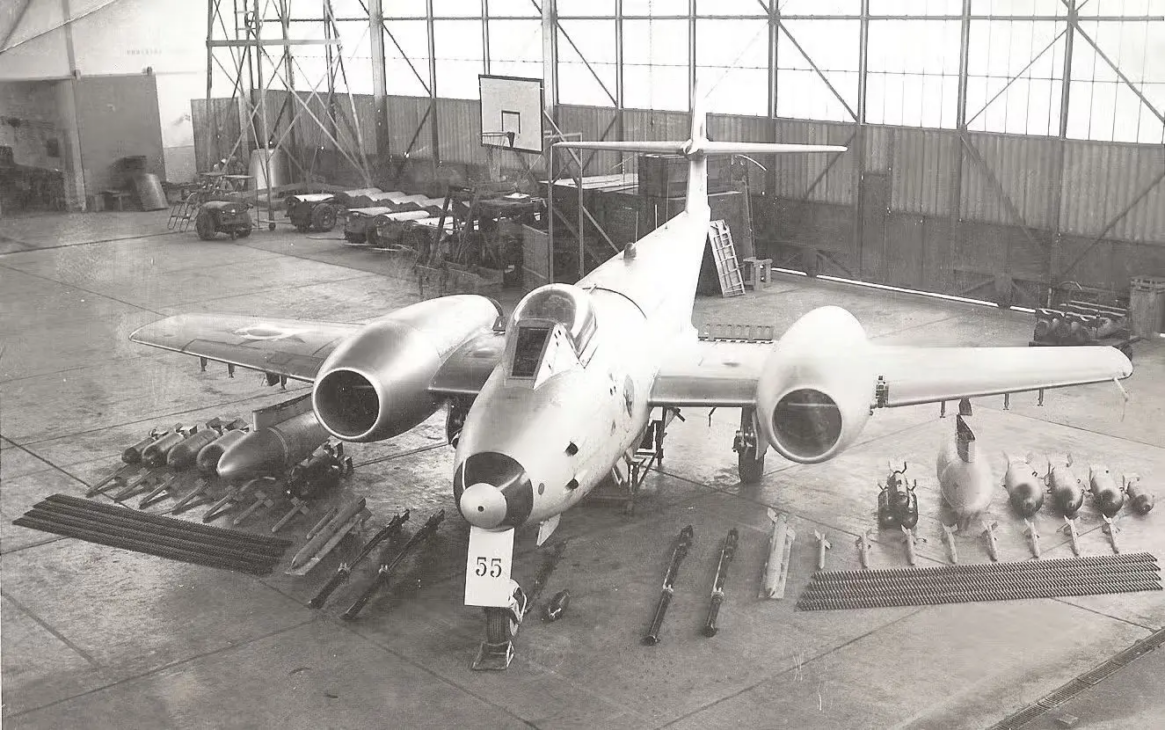
The Gloster Meteor, used by the RAF (Royal Air Force) during World War II, was the first operational jet fighter in history.
Although it was already outdated compared to the more modern models of the time, the aircraft represented a significant leap for the FAB.
Before the acquisition, the Brazilian fleet consisted of aircraft with piston engines, slow and technologically inferior.
The arrival of the 70 Gloster Meteors provided the FAB with the opportunity to train pilots in more advanced technologies and develop a modern air combat doctrine.
The fighters were primarily used in training missions and defense of Brazilian airspace, playing a crucial role in the military capacity building of the country between 1953 and 1968.
Benefits of the FAB Exchange for Brazil
The negotiation brought lasting impacts for Brazil:
- Modernization of National Defense: The Gloster Meteors put Brazil at the forefront of military aviation in Latin America.
- International Prestige: The boldness of the negotiation highlighted Brazil as a strategic player on the global stage.
- Boost to the Aerospace Industry: The experience with jet aircraft was one of the pillars for the emergence of Embraer, now one of the largest aircraft manufacturers in the world.
Moreover, the agreement demonstrated Brazil’s ability to use agricultural resources as currency in a complex international context.
The Criticisms and Challenges
Despite the success, the exchange was not without controversy.
Some sectors questioned the use of agricultural resources for military purposes, especially in a country with significant social and economic challenges.
Other critics pointed out the technological obsolescence of the Gloster Meteors, as more advanced models were available at the time.
However, for the FAB, the strategic gain was undeniable, and the positive impact of the negotiation prevailed.
The Historical Legacy of the FAB Exchange
This episode is remembered as an example of how Brazil has been able to use its strategic resources to achieve ambitious goals.
The exchange of cotton for British fighters not only modernized the FAB but also strengthened national sovereignty during a period of intense global rivalries.
The impact goes beyond the military sector. The experience helped shape the country’s strategic thinking, paving the way for the development of the defense industry and the aerospace sector.
What Can We Learn from This Exchange?
The boldness and creativity of this negotiation demonstrate that, even in adverse contexts, it is possible to transform resources into strategic advantages.
The exchange of cotton for fighters remains a milestone in Brazilian history, an example of innovation and pragmatism in times of global challenges.
And what do you think about this historic exchange? Do you believe it was a wise decision for Brazil, or could the cotton have been used differently?







O quê eu penso disso? Penso que vcs deviam contratar novos revisores com urgência.
A chamada da reportagem está ERRADA – QUINZE TONELADAS em vez de QUINZE MIL TONELADAS. É um erro muito ****.
Isso impacta cada vez mais a confiabilidade do CPG….