





 Portuguese
  English
  Spanish
  3 min of reading


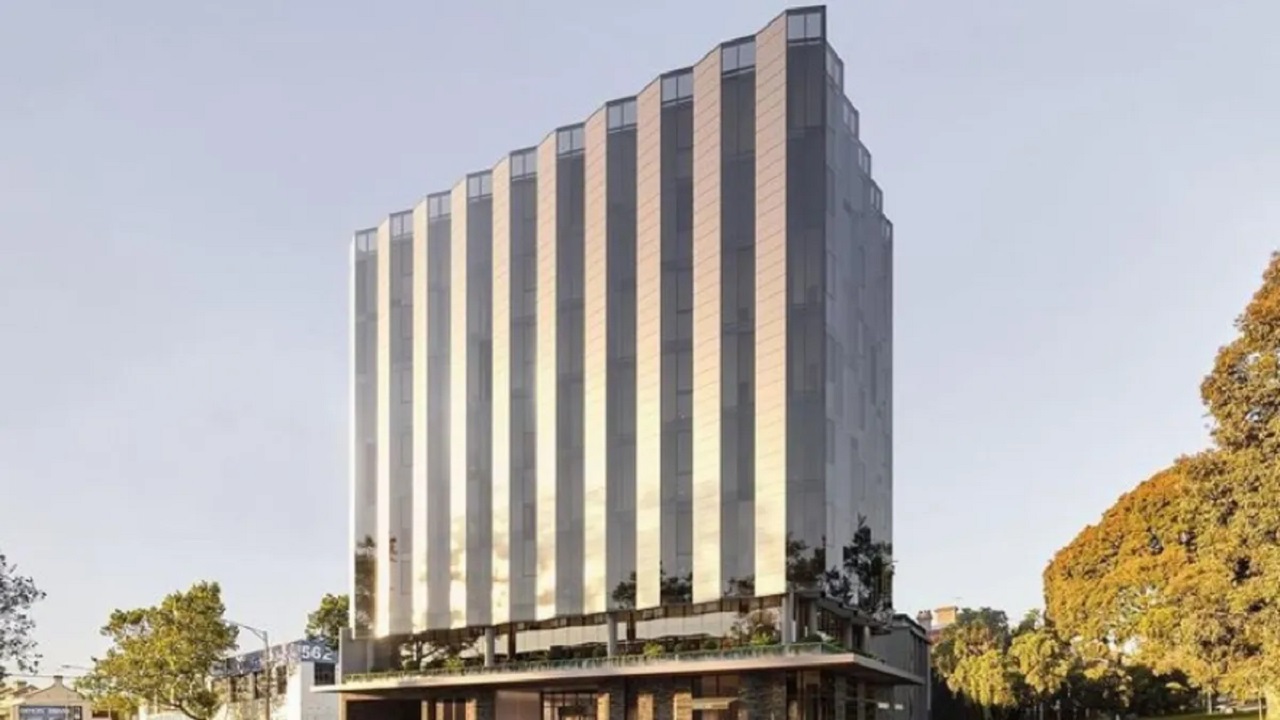
A Building Under Construction in Australia Will Be the First to Feature a ‘Solar Panel Facade’.
With the world looking for ways to meet its energy demands without emitting carbon dioxide, renewable energies like solar are gaining traction more than ever. The rates of solar energy adoption are increasing, and companies are also creating innovative ways to incorporate the technology into our lives. For example, Tesla’s solar roof provides a clean look for your home without the need to install standard-sized solar panels. But why limit yourself to the roof when solar panels can be part of the entire facade of your building? This is what the Australian design studio Kennon plans to do.
The Solar Panel Facade
The studio’s founder, Pete Kennon, researching glazing products used in Europe, realized that photovoltaic cells embedded in glass would provide a good facade for the building while also meeting its energy needs.
After the developer was eager to set a precedent in the area, the design of a ‘solar facade’ began, and Kennon had to collaborate with glass panel manufacturers in Germany, as no one was producing the product in Australia. Executives from the panel manufacturing company, Avancis, flew to Australia to help the designers maximize the energy generation of the project by deciding to place the panels on the north facade.
-
Renewable energy advances over protected areas in Brazil, and a survey by the Energy Transition Observatory reveals silent impacts that challenge environmental conservation and pressure sensitive traditional territories.

-
Rio Grande do Sul accelerates energy transition: State invests in renewable technologies and consolidates decarbonization strategies and pathways to attract billions in new industrial investments.

-
With 160,000 m² of collectors, an area larger than 20 football fields, Silkeborg, in Denmark, hosts a solar thermal plant that heats 19,500 homes and could become the largest solar heating plant in the world.

-
A study reveals the expansion of renewable energy procurement in Brazil and shows how companies are taking advantage of opportunities to reduce expenses, ensure energy efficiency, and strengthen strategic environmental commitments.


Going Where No Australian Building Has Gone Before
There was a significant problem, however. The glass solar panels that Kennon planned to use did not have the necessary approvals from the country’s building appeals board. So, the studio partnered with a local fire safety company to test these panels.
A replica of the facade was built and set on fire to study how the panels would respond to such an event. The data was carefully recorded and submitted to the relevant authorities to obtain the necessary approvals for the construction of these panels.
The result of all this work and persistence will be the 550 Spencer, an eight-story building with a facade made up of 1,182 solar panels, which have the appearance and thickness of regular glass but function as solar panels.
Solar Panel Facade Will Prevent 78.4 Tons of Carbon Dioxide from Being Released into the Atmosphere Every Year
At its peak, the system is expected to generate 142 kWp (kilowatts peak), the energy it can produce on a sunny day. This is much larger than the standard roof solar panel systems of 3-6 kWp generated in an average home.
The enormous amount of energy that the building will generate will not only be much greater than the energy it will consume, but it will also prevent 78.4 tons of carbon dioxide from being released into the atmosphere every year.
Additionally, the roof space that the solar panels would occupy can now be used to set up a garden for the people who will use that space. The building is expected to be completed in 2024.









Seja o primeiro a reagir!