





 Portuguese
  English
  Spanish
  4 min of reading
  0 comments


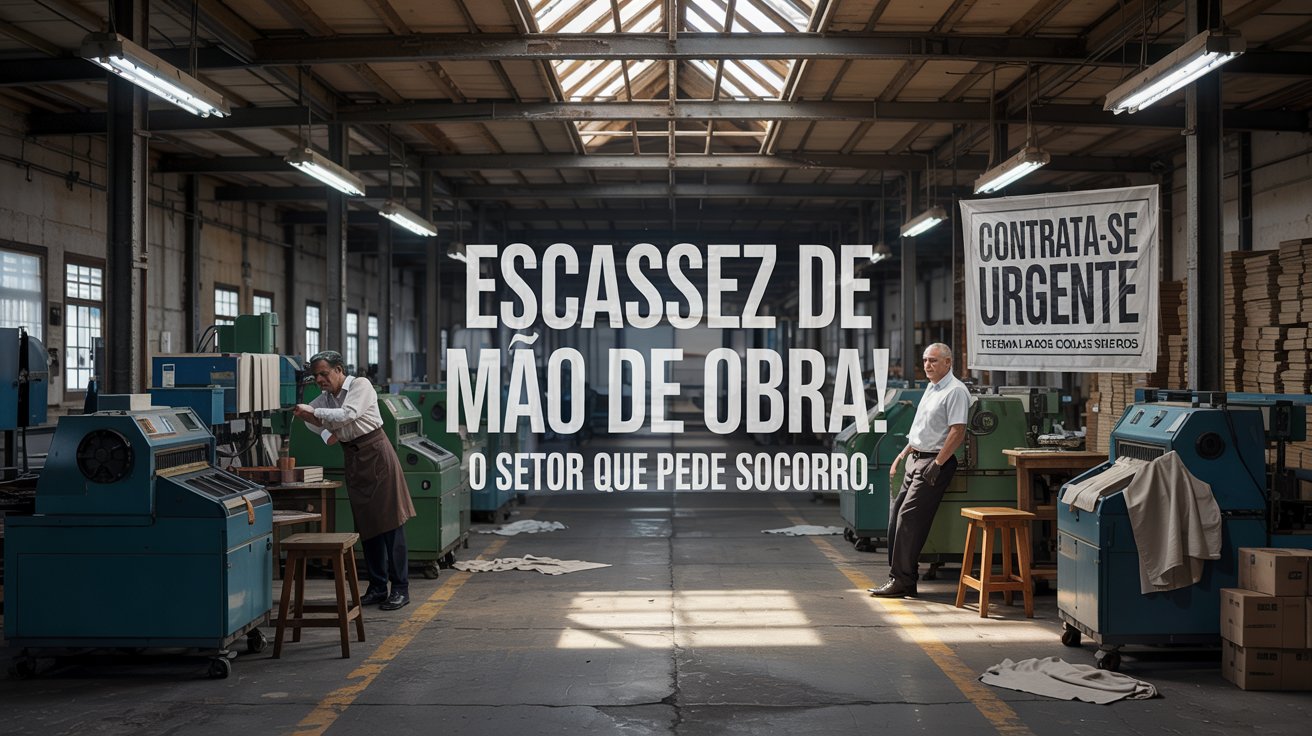
The Labor Shortage Threatens One of the Most Traditional Sectors of Brazil! Factories Are Closing, Vacancies Remain Open, and Experts Point to the Main Causes of This Crisis.
The labor shortage crisis, which has already affected sectors such as retail and transportation, is now alarmingly impacting the textile industry in Brazil.
Entire factories are facing difficulties in filling essential positions, putting the continuity of operations at risk.
The problem, which worsens each year, raises questions about the reasons and possible solutions to avoid the collapse of this traditional sector of the Brazilian economy.
-
The government requests the Federal Revenue Service for a new system to automate the income tax declaration, reducing errors, time, and bureaucracy for millions of Brazilians.

-
Friends have been building a small “town” for 30 years to grow old together, with compact houses, a common area, nature surrounding it, and a collective life project designed for friendship, coexistence, and simplicity.

-
Pix in installments, international Pix, and contactless payment without internet: the Central Bank revealed the new features coming to the tool that is already used by almost every adult in Brazil.

-
This small town in Germany created its own currency 24 years ago, today it circulates millions per year, is accepted in over 300 stores, and the German government allowed all of this to happen under one condition.


Factories with Open Positions and a Shortage of Professionals
According to the president of the Textile Industries Union of Minas Gerais, Neuler Ribeiro, in an interview with Rádio Santa Cruz, companies are struggling to find qualified workers for various roles.
In cities like Pará de Minas, where the textile sector is one of the main employers, there are constantly open positions at Santanense, DTX, and Coopertêxtil.
“The complete list is posted at the union’s entrance, and the demand just keeps growing”, warns Ribeiro.
The labor shortage has already led to the closure of some factories in Brazil, and the impacts could be even more severe if nothing is done to reverse this scenario.
Companies are facing increasing losses, and some are unable to maintain production at the necessary pace to meet market demand.
This problem is not limited to Minas Gerais but also affects key textile hubs like Santa Catarina and São Paulo, where factories are struggling to find professionals willing to work in the sector.
What Is Behind the Lack of Workers?
The shortage of professionals in the textile industry has various causes.
Some business owners attribute the problem to the federal government’s welfare policies, which offer financial aids like Bolsa Família.
They believe that part of the population becomes complacent with the benefits and chooses not to enter the formal job market.
However, experts in the textile sector have a different view.
According to them, workers are becoming more aware of professional value and demand better working conditions.
Excessive working hours, low wages, and lack of incentives have pushed young professionals away from the textile industry.
Many prefer to seek opportunities in sectors that offer greater flexibility and more attractive pay.
Another relevant factor is the lack of technical qualification.
Many young individuals are not prepared to work in the textile industry, and without incentives to pursue that training, they opt for other job areas.
Additionally, the modernization of the sector demands increasingly specialized workers, making it even harder to fill certain positions.
How to Solve the Problem?
Faced with this challenge, some measures are suggested as potential solutions to avoid the collapse of the textile sector. Among them, highlighted are:
Investment in Professional Training: Offering courses and training to prepare new workers.
Improvement of Working Conditions: Increasing salaries, flexibilizing shifts, and creating a more attractive environment.
Awareness Campaigns: Encourage young people to consider the textile industry as a viable and promising career option.
Tax Incentives for Companies: Public policies that favor job retention and stimulate hiring.
Expansion of Partnerships with Educational Institutions: Companies can partner with vocational schools to train new professionals.
In addition to these measures, adopting technologies to modernize production can help reduce the need for labor in some roles.
However, this solution requires significant investments, which not all companies can afford.
The Future of the Textile Sector in Brazil
If the labor shortage problem is not resolved, the textile sector could face a significant decline, harming the economy and reducing job opportunities.
The textile industry is one of the pillars of the Brazilian economy, responsible for thousands of direct and indirect jobs.
Without workers, companies will be forced to reduce their operations or even cease activities.
Another risk is the increase in textile product imports.
With less domestic production, Brazil may become more dependent on fabrics and clothing from abroad, further weakening the national industry.
Given this scenario, which solutions do you believe would be more effective in ensuring the survival of this essential sector? Comment below and join the discussion!








-

-

-

-

-

11 pessoas reagiram a isso.