





 Portuguese
  English
  Spanish
  4 min of reading
  0 comments


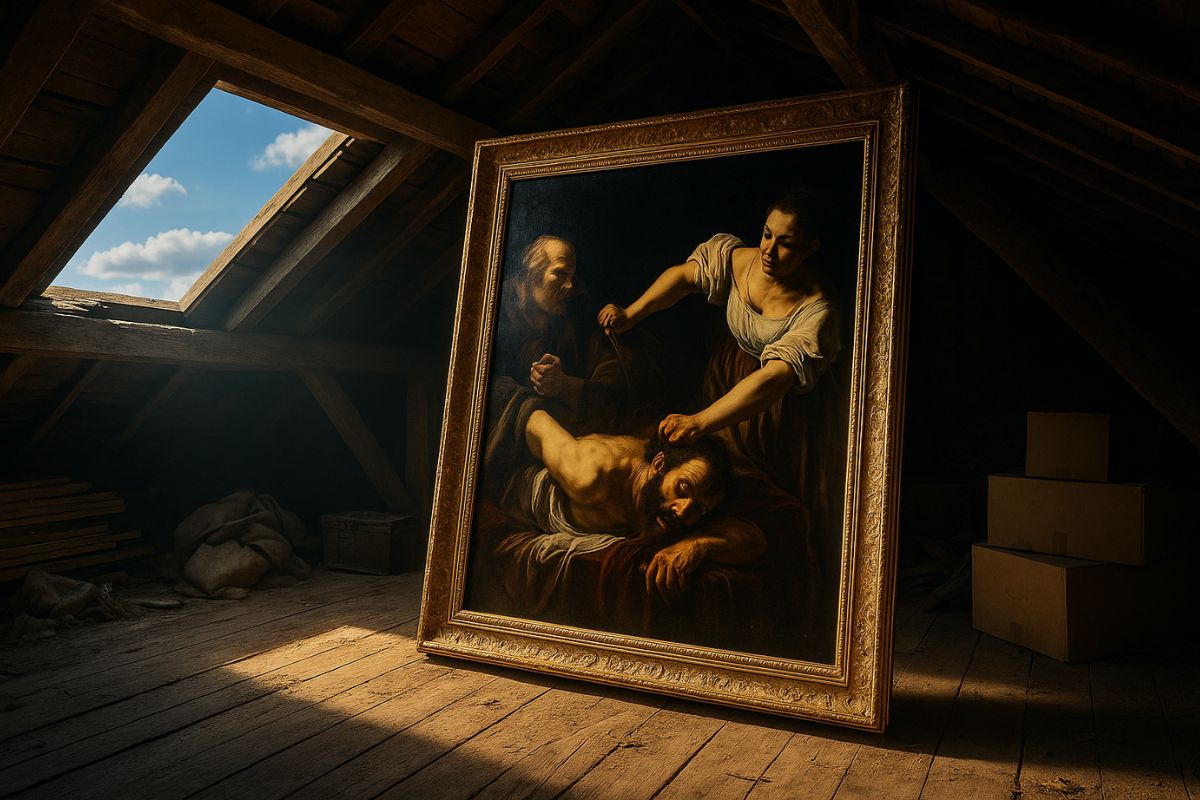
Discovery in France, the work Judith Beheading Holofernes reignites the mystery surrounding the lost painting by Caravaggio, missing for four centuries and now valued at around 170 million dollars by international experts
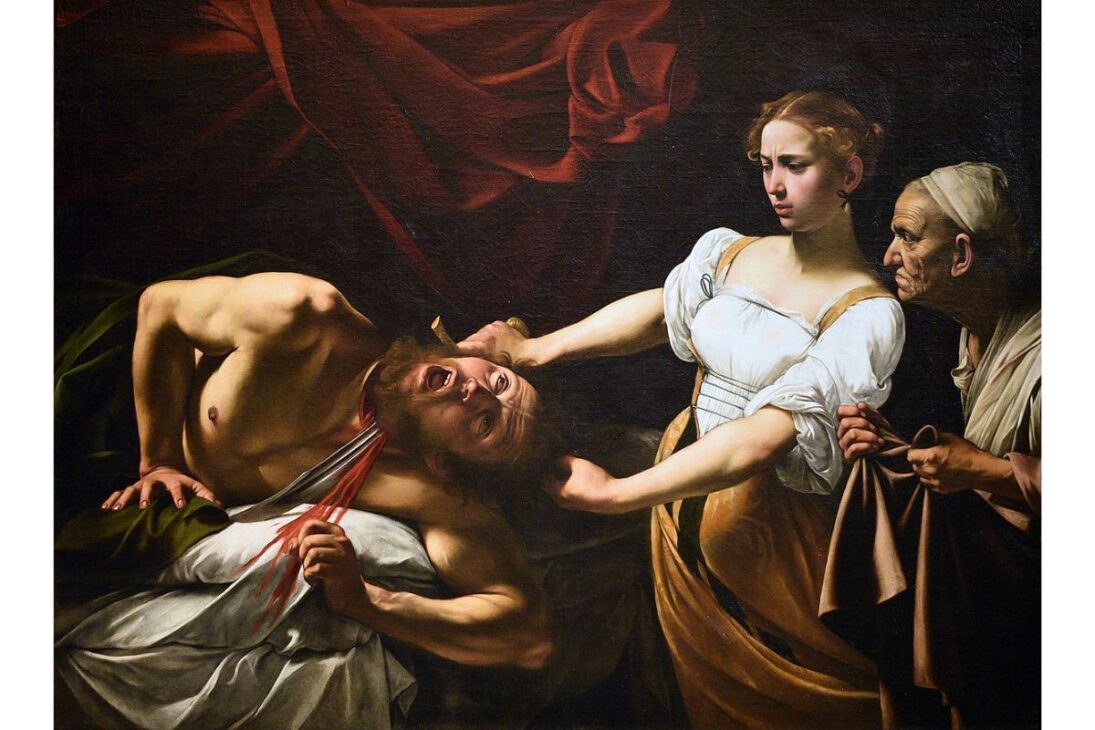
A French family discovered a treasure hidden in their attic for over four centuries: a lost painting by Caravaggio, valued at 170 million dollars (900 million reais at current exchange rates). The canvas, depicting the biblical scene of Judith Beheading Holofernes, was found by chance during a roof repair, covered in dust and old newspapers.
The discovery, made in Toulouse, in southern France, in 2014, quickly became one of the most intriguing finds in the art world. Since then, the painting has divided experts between those who believe it to be an authentic Caravaggio and those who argue it is a copy made by his disciple, the Fleming Louis Finson.
The Discovery That Surprised the Art World
The French family found the artwork while repairing a leak in the ceiling of their home.
-
A couple buys an old chalet, breaks the kitchen floor for renovation, and finds over a thousand coins of gold and silver hidden since the English Civil War over 4 centuries ago.
-
Rigid bags with their days numbered: new trend prioritizes comfort in 2026.

-
YouTuber creates an excavator equipped with a giant 4.5-meter sword to challenge his brother to a rematch, and the invention quickly goes viral on social media.

-
The U.S. Army surprises the world by presenting the UH-60MX Black Hawk helicopter capable of flying without pilots, controlled by a tablet, featuring the MATRIX system, smart sensors, and full autonomy in real combat and rescue missions.


Upon opening the access to the attic, the residents encountered a large canvas covered in dirt and partially damaged by moisture.
The first appraiser, skeptical of the piece’s value, contacted French expert Eric Turquin, who confirmed the hypothesis that it was the lost second version of a Caravaggio painted in 1607.
The painting had been considered lost since the 17th century. It depicts the biblical heroine Judith beheading the Assyrian general Holofernes, a theme that Caravaggio had portrayed before, but with variations in technique and expression.
The canvas discovered in Toulouse exhibited dramatic realism and the use of light characteristic of the Italian baroque master, reinforcing the authenticity thesis.
The Controversy About Authorship
Despite the initial excitement, the artistic community remained divided.
Some critics argue that the painting is a copy made by Louis Finson, a Flemish painter contemporary with Caravaggio who lived alongside him in Naples.
Finson is believed to have reproduced several of the master’s works, and a similar version of Judith Beheading Holofernes attributed to him is on display in Naples.
Eric Turquin, however, argues that the Toulouse work has unique characteristics of Caravaggio, especially in the strength of expressions, anatomical accuracy, and intense lighting.
“No student could capture the brutality and psychological tension with such mastery,” the specialist declared in an interview at the time of the discovery.
An Impressive Historical and Financial Value
After technical appraisal, the auction house Marc Labarbe estimated the value of the lost painting by Caravaggio between 120 and 150 million euros, equivalent to around 170 million dollars.
If confirmed as authentic, the find would become one of the most expensive paintings in history, surpassed only by works like Salvator Mundi, by Leonardo da Vinci, sold for 450 million dollars in 2017.
The public auction was to be held in June 2019, but was canceled at the last minute.
Shortly after, the artwork was privately sold to an anonymous buyer even before the event began.
The exact value of the transaction and the identity of the collector remain confidential, further fueling the mystery and fascination surrounding the case.
The Mystery of the Buyer and the Artwork’s Fate
It is only known that the buyer committed to display the painting in a major museum, but the location and date remain unknown.
Some rumors suggest that the buyer may be an American billionaire connected to the board of the Metropolitan Museum of Art in New York, but this information has never been confirmed.
The final destination of the work is kept secret, and the painting disappeared once again from the public radar after the private sale.
The lack of official information has only heightened public and expert interest, who follow the case like a thriller from the art world.
Comparisons with Other Historical Finds
The Toulouse episode has entered the list of the greatest artistic rediscoveries in history. Few lost works by Renaissance or Baroque masters are found in good condition.
The value of the lost painting by Caravaggio places it on par with legends like Salvator Mundi, by Da Vinci, and Ecce Homo, another work attributed to Caravaggio, which was nearly sold for just 1,500 euros in 2021 before being recognized as authentic.
Besides the price, the story reinforces the romantic appeal of rediscoveries.
Paintings that have been hidden in attics or private collections for centuries ignite the collective imagination, blending art, mystery, and fortune.
The Legacy of Caravaggio and the Fascination That Never Disappears
Caravaggio, whose real name was Michelangelo Merisi, was one of the most revolutionary artists of his time.
His technique of contrast between light and shadow, the famous chiaroscuro, redefined European painting and influenced generations of artists.
The fact that new works are still emerging after 400 years reinforces the lasting impact of his art and the magnetism of his name.
The discovery in Toulouse is more than an isolated event: it symbolizes how time, art, and chance can intertwine.
Even with doubts about its authenticity, the lost painting by Caravaggio continues to inspire debates, research, and fascination, a testament to the immortality of the Italian genius.
The story of the lost painting by Caravaggio shows that chance can rewrite entire chapters of art history and transform a home renovation into an invaluable find.








-

-

-

-

7 pessoas reagiram a isso.