





 Portuguese
  English
  Spanish
  5 min of reading
  0 comments


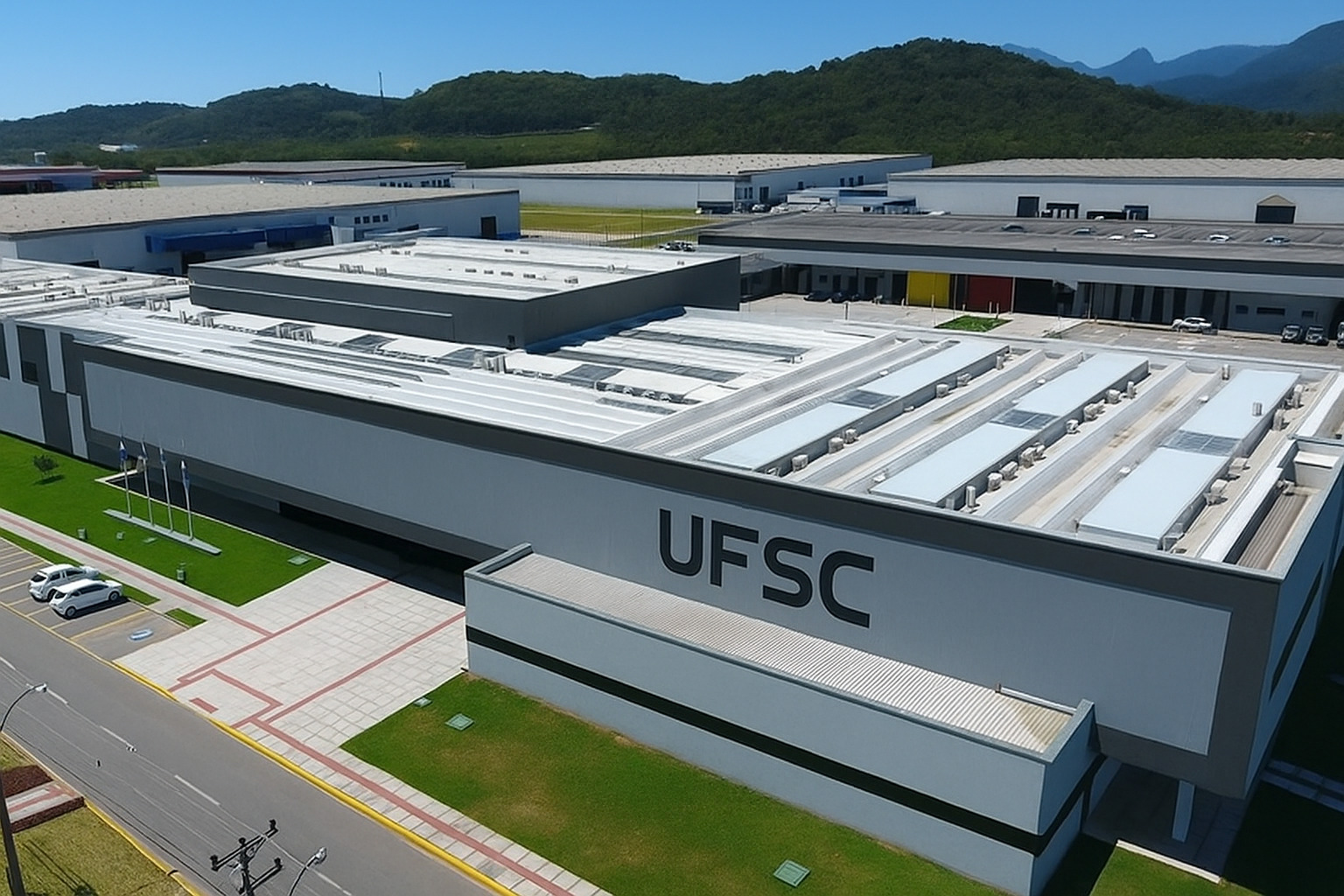
Fapesc and UFSC Initiative Creates Research Space for Green Hydrogen and Strengthens Scientific Innovation in the Energy Transition in Santa Catarina
Brazil occupies a strategic position in the global energy transition, as it has a relatively clean matrix. In addition, the country has been increasingly investing in renewable sources.
In this context, Santa Catarina takes another decisive step to stand out as a hub of scientific innovation. This occurs with the inauguration of a new space dedicated to research and the development of sustainable technologies.
The Research and Innovation Support Foundation of the State of Santa Catarina (Fapesc), in partnership with the Federal University of Santa Catarina (UFSC), inaugurated a laboratory focused on the study of green hydrogen and the modernization of the state’s energy matrix.
-
Renewable energy advances over protected areas in Brazil, and a survey by the Energy Transition Observatory reveals silent impacts that challenge environmental conservation and pressure sensitive traditional territories.

-
Rio Grande do Sul accelerates energy transition: State invests in renewable technologies and consolidates decarbonization strategies and pathways to attract billions in new industrial investments.

-
With 160,000 m² of collectors, an area larger than 20 football fields, Silkeborg, in Denmark, hosts a solar thermal plant that heats 19,500 homes and could become the largest solar heating plant in the world.

-
A study reveals the expansion of renewable energy procurement in Brazil and shows how companies are taking advantage of opportunities to reduce expenses, ensure energy efficiency, and strengthen strategic environmental commitments.

The MultiLab – Multiuser Laboratory for Green Hydrogen Studies – is located on the UFSC campus in Florianópolis. Thus, the inauguration represents more than just an investment in scientific infrastructure.
In practice, it strengthens the connection between universities and public institutions, precisely in the search for sustainable solutions.
With an investment of R$ 2.5 million, Fapesc enabled the project through the Edital 15/2023 of the MultiLab SC Program. Thus, the initiative promotes the collective use of scientific equipment in areas such as automation, engineering, and renewable energies.
The History and Roles of Fapesc and UFSC in Scientific Advancement
Since its creation in 1996, Fapesc has acted as a driving force for science, technology, and innovation in Santa Catarina. For this reason, its foundation addressed the need to structure public policies capable of boosting scientific development.
Over time, Fapesc strengthened partnerships with universities, research centers, and the productive sector. Consequently, its actions became even more relevant in light of the climate emergencies and the search for alternative energy sources.
Furthermore, the foundation adopted an active approach, creating thematic and structuring calls for proposals, promoting open innovation. This way, it managed to connect academic production with the real demands of society and industry.
Thanks to this strategy, Santa Catarina has become recognized as one of the most innovative states in the country.
On the other hand, UFSC also plays a fundamental role in scientific and technological advancement. With over six decades of history, the university has established itself as a reference in higher education, research, and extension.
By training thousands of engineers, researchers, and qualified professionals, UFSC directly contributes to the development of strategic projects. Therefore, the collaboration with Fapesc reaffirms the university’s commitment to applied science and the construction of sustainable solutions for current challenges.
The Role of MultiLab in the Energy Transition
The laboratory was born with a clear goal: to develop technologies focused on green hydrogen, one of the most promising solutions to replace fossil fuels.
This type of hydrogen is produced from water electrolysis, using solar or wind energy. Thus, the process is clean and aligned with economic decarbonization goals.
For this reason, governments, companies, and scientific institutions have been directing efforts to explore this potential.
At MultiLab, researchers have access to a highly advanced structure. The space simulates microgrids with solar panels, batteries, fuel cells, electrolyzers, and inverters.
Therefore, it is possible to study all stages of generation, storage, and consumption of hydrogen.
This integrated approach allows simulating operations close to industrial reality, which facilitates the practical application of results.
In addition, the laboratory conducts detailed tests on critical components, such as fuel cells and electrolyzers. From this data, scientists develop improvements in energy efficiency and the reliability of technologies.
As a result, the knowledge generated at MultiLab directly contributes to applicable solutions for both the public sector and private initiative.
A Public Policy for Sustainable Innovation
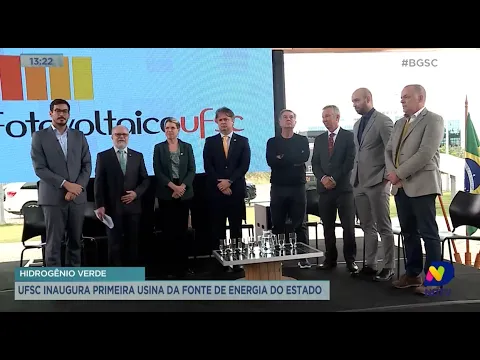
During the inauguration of the laboratory, the president of Fapesc, Fábio Wagner Pinto, stated that MultiLab integrates a solid public policy.
According to him, the project reflects the state government’s effort to consolidate a cleaner, modern energy matrix prepared for the future.
Thus, the investment made represents more than the construction of a structure: it reflects a long-term strategic vision.
At the same time, UFSC’s rector, Irineu Manoel de Souza, celebrated the inauguration as a significant advancement for the university and the state.
According to him, the structure of MultiLab expands the possibilities for applied research, innovation, and the training of new talents.
For this reason, the laboratory was designed as an open, accessible, and interdisciplinary environment, bringing together students, professors, researchers, and industry professionals.
Partnerships and International Projection
Complementarily, MultiLab already has important international partnerships.
Universities such as Sevilla, Almería, and La Plata, as well as centers like the Fraunhofer Institute (Germany) and SINTEF (Norway), are part of the laboratory’s collaboration network.
Thus, scientific exchanges gain scale and quality, providing advances in joint research and technological innovation.
In addition to academic institutions, the laboratory has also attracted the interest of companies such as Newcharge, Reivax, and Atlas Power.
As a result, the productive sector actively participates in the development and testing of new solutions.
This proximity between university and industry strengthens the innovation ecosystem in Santa Catarina, promoting economic growth based on knowledge.
Through the MultiLab SC Program, Fapesc allocated R$ 111 million to structure 50 scientific projects. The initiatives involve 19 higher education institutions in various regions of Santa Catarina.
Thus, the program promotes the decentralization of research and the expansion of access to cutting-edge laboratories, which strengthens science throughout the state.
A Response to the Climate Emergency
In the face of environmental and social emergencies, Santa Catarina responds with structured actions connected to knowledge.
Therefore, MultiLab represents more than a physical space — it symbolizes a new way of thinking about science: applied, collaborative, and aimed at the common good.
The union between Fapesc and UFSC demonstrates how investment in public research can generate positive and lasting impacts.
The energy transition requires planning, innovation, and articulation among different sectors.
Therefore, by bringing together government, universities, and companies, the state provides a clear example of how to face the challenges of the 21st century with intelligence, strategy, and environmental commitment.
In this scenario, MultiLab assumes a leading role. It transforms academic knowledge into practical solutions and inspires other states and countries to follow similar paths.
After all, the future of energy depends on initiatives that unite science, technology, and social responsibility.










Seja o primeiro a reagir!