





 Portuguese
  English
  Spanish
  3 min of reading
  0 comments


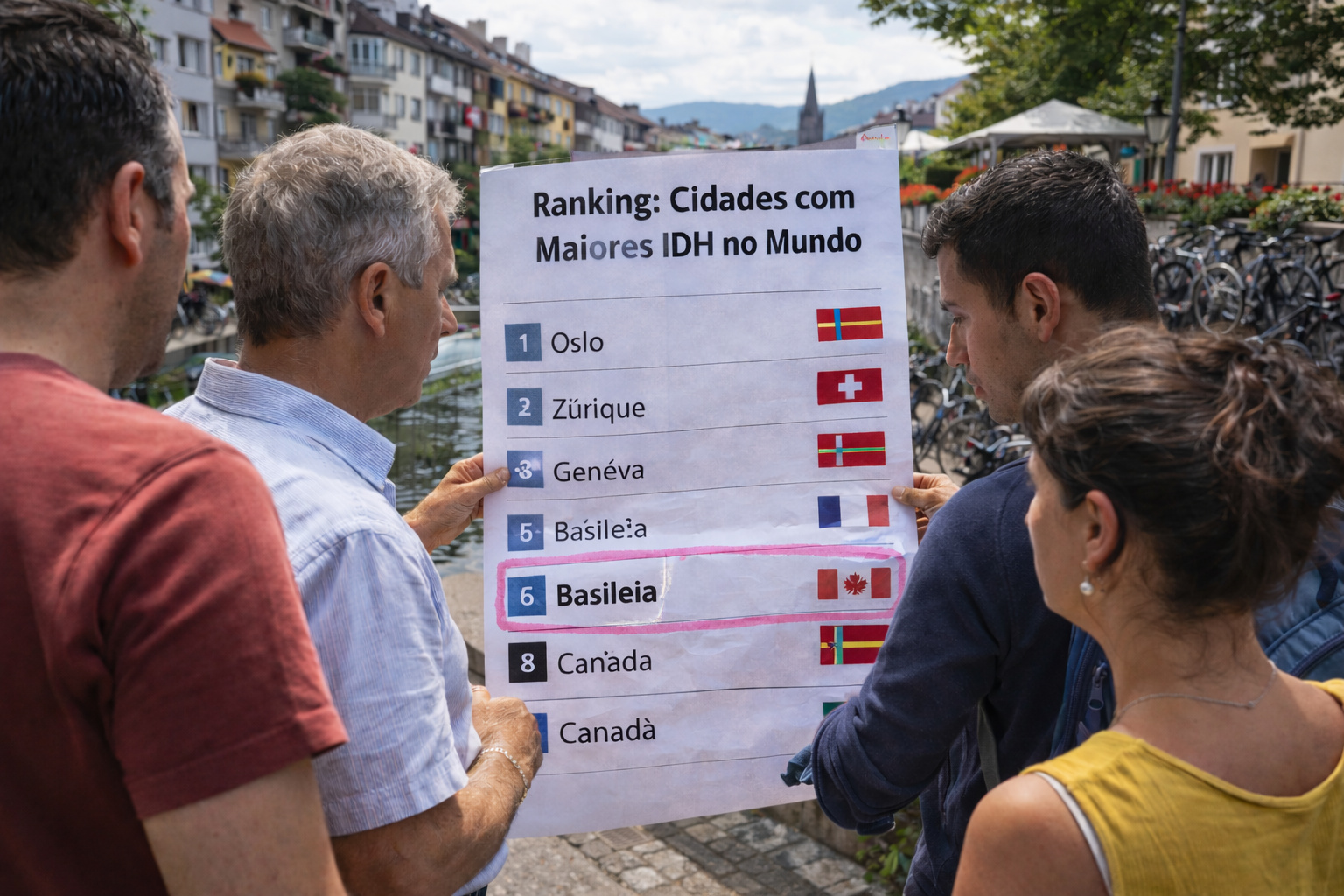
Swiss City Redefines The Concept of Periphery with Efficient Public Services and Economic Stability
An urban reality little associated with the traditional European imagination has caught attention since 2022 on social media, especially after the circulation of videos showing working-class neighborhoods in Basel and popularizing the expression “Swiss favela” as an ironic form of international comparison.
With high social indicators and constant recognition in global reports, Switzerland remains among the countries with the best quality of life on the planet, as pointed out by the 2023/2024 Human Development Report from the United Nations Development Programme (UNDP).
In this scenario, Basel, located in the northwestern corner of the country, shows that even simpler areas maintain complete infrastructure, consolidated urban security, and universal public services, which explains why many claim that even the favelas in Switzerland surpass development in the rest of the world.
-
Friends have been building a small “town” for 30 years to grow old together, with compact houses, a common area, nature surrounding it, and a collective life project designed for friendship, coexistence, and simplicity.

-
This small town in Germany created its own currency 24 years ago, today it circulates millions per year, is accepted in over 300 stores, and the German government allowed all of this to happen under one condition.

-
Curitiba is shrinking and is expected to lose 97,000 residents by 2050, while inland cities in Paraná such as Sarandi, Araucária, and Toledo are experiencing accelerated growth that is changing the entire state’s map.

-
Tourists were poisoned on Everest in a million-dollar fraud scheme involving helicopters that diverted over $19 million and shocked international authorities.


Universal Infrastructure Redefines The Concept of Periphery
Unlike what happens in various global capitals, neighborhoods like Klybeck do not face structural shortages, as access to drinking water, residential heating, and efficient public transportation is guaranteed broadly and continuously.
Moreover, recent cantonal reports indicate low crime rates, reinforcing that urban organization and institutional stability are part of local routine.
The difference between working-class zones and more valued neighborhoods lies primarily in the size of the apartments and architectural simplicity, rather than the absence of public services or urban maintenance.

Multicultural Profile and Economic Stability
The social composition of these regions is predominantly formed by immigrants from Turkey, the Balkans, Asia, and Latin America, which contributes to an active multicultural dynamic and economically integrated community.
This scenario translates into the presence of ethnic restaurants, local markets, and small businesses that strengthen the neighborhood economy without compromising urban organization.
Even workers with base salaries around 4,000 Swiss francs per month can maintain a decent standard of living, as according to consolidated data from 2023 from the Federal Statistical Office of Switzerland, economic stability balances the high cost of living.
International Border Influences Economic Routine
Basel occupies a strategic position by directly bordering France and Germany, a characteristic that consolidated, throughout the 2010s, a transnational consumption routine among its residents.
Many residents cross the border regularly to do shopping in euros, taking advantage of exchange rate differences that help reduce household expenses and optimize family budgets.
This practice, known as shopping tourism, remains common in 2024 and occurs within an organized urban environment, with active commerce and low crime rates.
Urban Planning and Social Integration
The periphery of Basel shows no signs of structural abandonment, as residential complexes intended for workers and refugees adhere to strict protocols for cleanliness, maintenance, and social coexistence.
Tree-lined streets, comprehensive public transportation, and selective waste collection regarded as a social norm reinforce the solid urban planning present throughout the city’s infrastructure.
Although the term “Swiss favela” has gained traction on social media, it does not represent precariousness; rather, it symbolizes how solid infrastructure, social integration, and efficient governance redefine the contemporary concept of periphery.
Given this scenario, to what extent could other cities worldwide adapt this model to face their own urban challenges?










Seja o primeiro a reagir!