





 Portuguese
  English
  Spanish
  6 min of reading
  0 comments


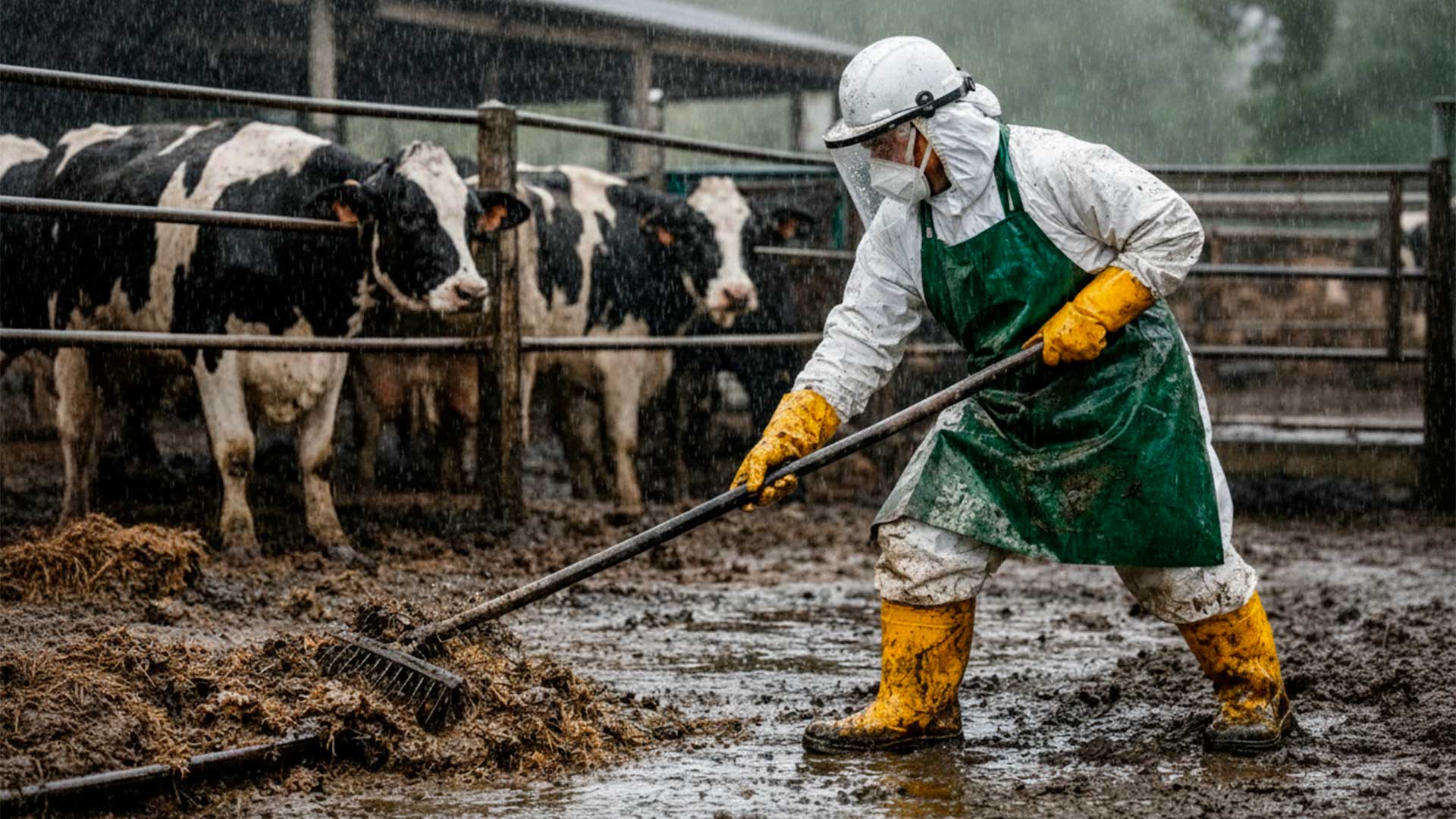
Labor Court Decision in Minas Gerais Recognizes Exposure to Biological Agents and Establishes Precedent That May Impact Thousands of Rural Properties Nationwide
A recent decision by the Labor Court has generated significant repercussions in the Brazilian rural sector. A farmer was ordered to pay a medium-level health risk additional (20%) to a worker who was cleaning a barn and milking cows. The case, judged by the 1st Labor Court of Uberlândia (MG) and confirmed by the Regional Labor Court of the 3rd Region (TRT-3), may open the door for thousands of similar actions in the field.
The ruling was issued by Judge Alessandra Duarte Antunes dos Santos Freitas and was based on the Annex 14 of Regulatory Norm No. 15 (NR-15), which deals with biological agents. According to the decision, habitual contact with animal feces and urine poses a health risk to the worker, even if the initial expert report did not identify health risks.
This decision reignites the debate about working conditions in the field and highlights the responsibility of rural employers regarding the health protection of their employees. Experts say that the case signals a trend toward stricter oversight of labor relations in agribusiness.
-
The noise law will no longer be in effect at 10 PM starting in June with a new rule valid during the 2026 World Cup.

-
The Chamber opens a debate on driver’s licenses at 16 years old as part of a reform that includes around 270 proposals to change the Brazilian Traffic Code and may redesign rules for licensing, enforcement, and circulation in the country.

-
The new Civil Code could revolutionize marriages in Brazil with “express divorce” and changes that could exclude spouses from inheritance.
-
Banco do Brasil sues famous influencer for million-dollar debt and intensifies debate on delinquency, risks of seizure, and direct impact on Gkay’s credibility.


Contact with Animal Waste Was Considered Biological Risk
The worker, who operated on the rural property performing tasks such as milking cows and cleaning installations, filed a labor action claiming daily exposure to potentially harmful agents. According to information from TRT-3, the forensic examination found that the employee maintained permanent contact with animal waste, a situation that fits within health-risk activities.
The judge grounded her decision in Annex 14 of NR-15, which classifies as medium-risk unhealthy any work performed in “stables and barns” with permanent contact with infectious material. The legal document establishes that these activities expose the worker to biological agents harmful to health.
A crucial point highlighted by the judge was the qualitative nature of biological risk. Unlike other hazardous agents, such as noise or heat, exposure to animal waste does not need to be measured quantitatively. According to information from the legal portal Migalhas, proving habitual contact with harmful agents is sufficient to characterize unhealthy conditions.
The decision also considered that the employer did not present proof of providing Personal Protective Equipment (PPE) capable of neutralizing biological agents. This factor was decisive for recognizing the right to the additional payment.
Initial Expert Report Was Dismissed Due to Evidence
Although the technical examination conducted during the process concluded that the activities did not fit the definition of unhealthy as per NR-15, the judge adopted a different understanding. Based on Article 479 of the Civil Procedure Code, which allows the judge to dismiss the expert report through analysis of the evidentiary set, the judge considered other elements to support her decision.
Among the evidence analyzed were witness testimonies and documents proving the work routine. The lack of records showing adequate PPE delivery weighed significantly in the judge’s conviction regarding the presence of health risks.
The 6th Panel of TRT-3 upheld the ruling in its entirety, ordering the rural property owner to pay the health risk additional of 20% on the salary throughout the entire work period. With the minimum wage for 2025 set at R$ 1,518.00, according to information from VLV Lawyers, the medium-level additional amounts to R$ 303.60 monthly.
The case is already in execution, which means that the amounts are being calculated for payment to the worker. This outcome demonstrates that the Labor Court has prioritized the protection of rural employees’ health, even in the face of opposing technical reports.
Decision May Influence Other Labor Actions in the Field
Labor law experts believe that this decision is likely to serve as a reference for other similar processes, especially on dairy farms and in intensive production systems. According to an analysis published by Dal Piaz Lawyers, the cleaning of barns and handling waste are common activities on thousands of Brazilian farms.
The recognition of unhealthy conditions in these tasks may have significant financial implications for rural producers. In addition to the monthly additional payment, there are consequences for vacation, 13th salary, FGTS, and severance payments. In case of non-payment, the amounts may be legally collected with interest and monetary corrections.
According to information from the Employee Guide portal, the worker has up to five years after the end of the contract to claim retroactive amounts for unpaid health risk additional payments. This means that labor liabilities can accumulate quickly in properties that do not implement adequate preventive measures.
The decision also reinforces the importance of professionalizing personnel management in the field. Rural producers need to be attentive not only to safety regulations but also to the complete documentation of PPE provision and safety training.
Rural Employers Should Strengthen Health Protection for Workers
In light of this scenario, experts recommend that rural producers adopt preventive measures to avoid labor liabilities. The first is to conduct a technical assessment of working conditions by qualified professionals, such as engineers or safety technicians.
Providing adequate PPE is essential, but it is not enough to simply hand out equipment. It is necessary to maintain documented records of the delivery, with the worker’s signature and a description of the items provided. Moreover, the equipment must genuinely neutralize the risks and not just symbolically represent protection.
Another important measure is to conduct periodic training on the proper use of PPE and safe work practices. According to guidelines published on the Conexão Trabalho website, these trainings should be documented and repeated regularly, especially when there are changes in work routines.
Modifying installations can also help reduce exposure to biological agents. Ventilation systems, waterproof flooring, and suitable cleaning locations are examples of improvements that can minimize risks. In some instances, the automation of cleaning processes can completely eliminate the need for human contact with waste.
For properties that already have workers performing these tasks without the additional payment, it is advisable to seek legal guidance to regularize the situation. Spontaneous regularization can prevent higher amounts in potential judicial condemnation.
Trend of Stricter Oversight in Agribusiness
The judicial decision reflects a growing trend of increased oversight of working conditions in the field. The Brazilian agribusiness sector is undergoing a process of professionalization of labor relations, with demands increasingly aligned with those applied in urban and industrial environments.
According to an analysis from the Ministry of Labor and Employment, NR-15 is among the regulations undergoing revision and updating. Annex 14, which addresses biological agents, has been the subject of technical studies since 2019, according to information from Fundacentro, an institution linked to the federal government.
These studies indicate possible changes to how unhealthy conditions are characterized by exposure to biological agents. However, experts believe that the trend is toward greater protection for workers, not the relaxation of regulations.
Collective labor agreements have also included specific clauses regarding unhealthy conditions in the rural sector. According to the decision analyzed, the category’s own convention already provided for the additional payment for professionals in contact with animal waste, reinforcing the legitimacy of the worker’s claim.
And what do you think about this decision? Do you believe that the health risk additional is justified for those who work in barn cleaning, or do you see it as yet another burden that could harm rural production? Share your opinion in the comments.








Seja o primeiro a reagir!