





 Portuguese
  English
  Spanish
  5 min of reading
  0 comments


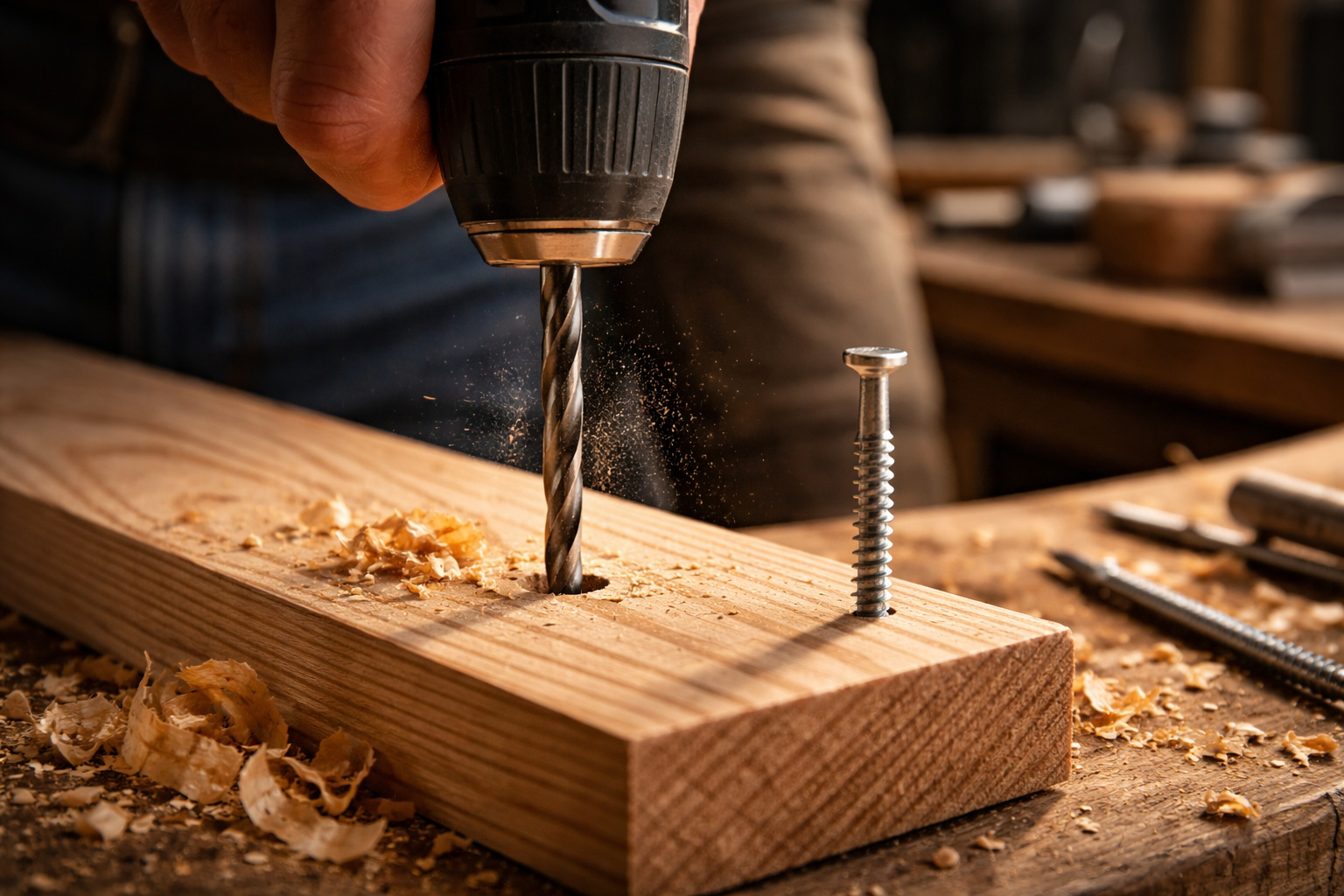
Guide Holes in Wood Prevent Cracking When Using Screws, Reduce Pressure on the Fibers, and Ensure a Firmer Hold in Furniture and Carpentry Structures.
In carpentry and woodworking, a seemingly simple detail can make a big difference in the quality and durability of a wooden piece. This detail is called a guide hole, a technique used by professional carpenters before inserting screws into boards, beams, or furniture pieces. The principle is simple: before placing the screw, a small hole is made in the wood using a drill bit. This initial hole creates a pathway for the screw to enter more easily and with less pressure on the wood fibers.
Without this preparation, the screw needs to carve its own path as it is threaded, compressing the surrounding fibers of the material. In many cases, this pressure can cause cracks or fissures in the wood, especially in drier, harder pieces or those close to the edges. For this reason, the guide hole is considered a basic practice in carpentry, especially in work that requires precision and structural strength.
Why Wood Can Crack When Screws Are Introduced
Wood is a natural material made up of long, compact fibers. These fibers give strength to the piece but also create an internal structure that reacts to pressure.
-
Only 46 meters remain for Brazil and Paraguay to connect via the Bioceanic Route bridge, the project that will link the Atlantic to the Pacific by land and change the logistical map of four countries in South America.

-
The bridge that holds the largest stone railway arch in the world: built over 100 years ago, destroyed in the war, and rebuilt to continue operating to this day, it still carries trains over the Soča River in Slovenia.

-
Italian giant of 130 tons arrives at the Senna Tower construction site and accelerates foundations: Mite CFA 3436 drills up to 50 m, 750 hp engine, investment of R$ 20 million, unique in Latin America.

-
The adobe house in Monteiro Lobato takes shape with bamboo and clay from the land, a stone foundation, and a roof for the wind; cracks are normal, and finishing with lime turns it into a “common house.”

When a screw is inserted directly into the wood without preparation, it pushes the fibers aside as it advances. This displacement generates internal tension in the material.
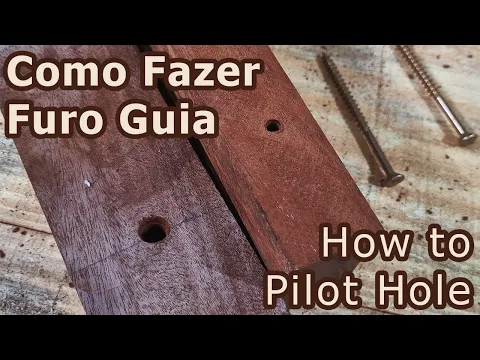

If the wood is very dry, rigid, or close to the edges of the piece, this pressure can exceed the resistance of the fibers. The result is the emergence of cracks that propagate along the board. This problem occurs more frequently in certain types of wood, especially:
- hardwoods
- thin pieces
- board edges
- areas near the corners of the piece
In addition to compromising the aesthetics of the work, cracks can significantly reduce the structural strength of the wood.
How the Guide Hole Solves This Problem
By making a guide hole before inserting the screw, the carpenter creates an initial space that allows the screw to enter with less effort. This small hole removes part of the material that would be compressed by the screw, reducing the pressure exerted on the wood fibers.
This way, the screw can advance more easily without causing excessive tension in the surrounding material. The result is a more controlled fastening, which drastically reduces the risk of cracks and ensures greater stability in the connection of the pieces.
Technique Also Improves Screw Alignment
In addition to preventing cracks, the guide hole also helps keep the screw perfectly aligned. When a screw is inserted directly into the wood without a pre-drilled hole, it can slightly deviate from its path when encountering resistance from the fibers of the material. This deviation can compromise the precision of the assembly.
The guide hole functions as an initial path for the screw, directing its entry into the wood and ensuring it follows the correct direction.
This detail is especially important in fine woodworking, furniture assembly, and structures that require precise fits.
In Which Types of Wood Is the Guide Hole Most Important
Although the technique is useful in almost any type of wood, it becomes even more important in certain specific situations. Hardwoods, such as ipe, jatobá, cumaru, or oak, have very dense and resilient fibers. Inserting screws directly into these materials can require excessive force and increase the risk of cracking.
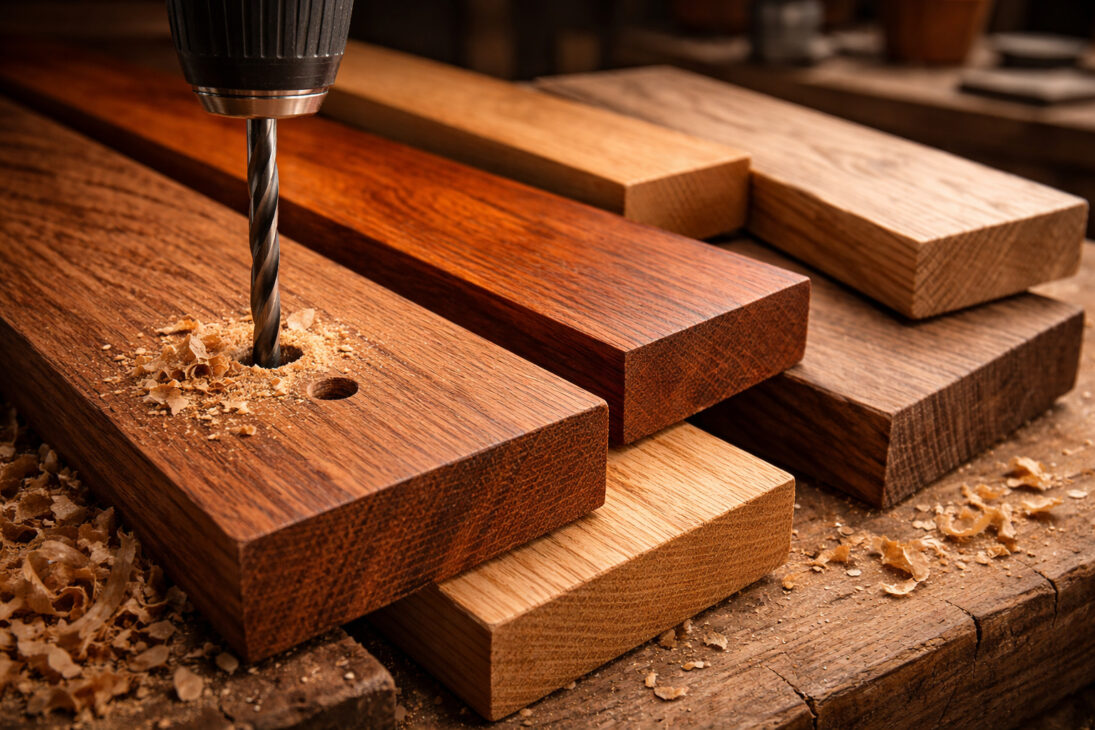
Very dry wood pieces are also more vulnerable, as the fibers lose some of their natural elasticity. Another common case occurs when the screw needs to be placed close to the edge of a board. In these areas, there is less material around to absorb the pressure from the screw.
In these conditions, the guide hole practically eliminates the risk of damage.
How Carpenters Choose the Correct Hole Size
The diameter of the guide hole should normally be slightly smaller than the diameter of the screw. The idea is to remove only part of the material, allowing the screw threads to still grip tightly to the wood.
If the hole is too large, the screw might lose grip and the fastening will be weak. If it is too small, the pressure reduction effect will be limited. Therefore, carpenters usually choose drills with a diameter corresponding to the screw core, without considering the thickness of the threads.
This balance ensures a strong fastening without compromising the integrity of the wood.
Technique Is Used in Furniture, Structures, and Civil Construction
The use of guide holes is common in various areas that work with wood. In woodworking, the technique is employed in the assembly of furniture, cabinets, tables, and decorative structures. The goal is to ensure that the pieces are fixed without damage and with a clean finish.
In structural carpentry, the method is also used in wood constructions, such as decks, pergolas, roof structures, and stairs.
In larger projects, the guide hole helps ensure that structural screws are installed correctly, maintaining the integrity of the pieces. This practice is considered a professional standard in most woodwork.
A Simple Detail That Makes a Big Difference in the Result
Although it seems like just a small additional step during assembly, the guide hole can determine the final quality of a carpentry job. By reducing pressure on the wood fibers, the technique prevents cracks, improves screw alignment, and increases the durability of the structure.
Furthermore, the practice demonstrates the technical care involved in working with wood, something that distinguishes improvised work from projects executed with carpentry knowledge. In many cases, the difference between a piece that lasts for years and another that presents structural flaws starts precisely in simple details like this.
The guide hole is a classic example of how small traditional carpentry techniques can significantly improve the final result of a wood project.










Seja o primeiro a reagir!