





 Portuguese
  English
  Spanish
  3 min of reading
  0 comments


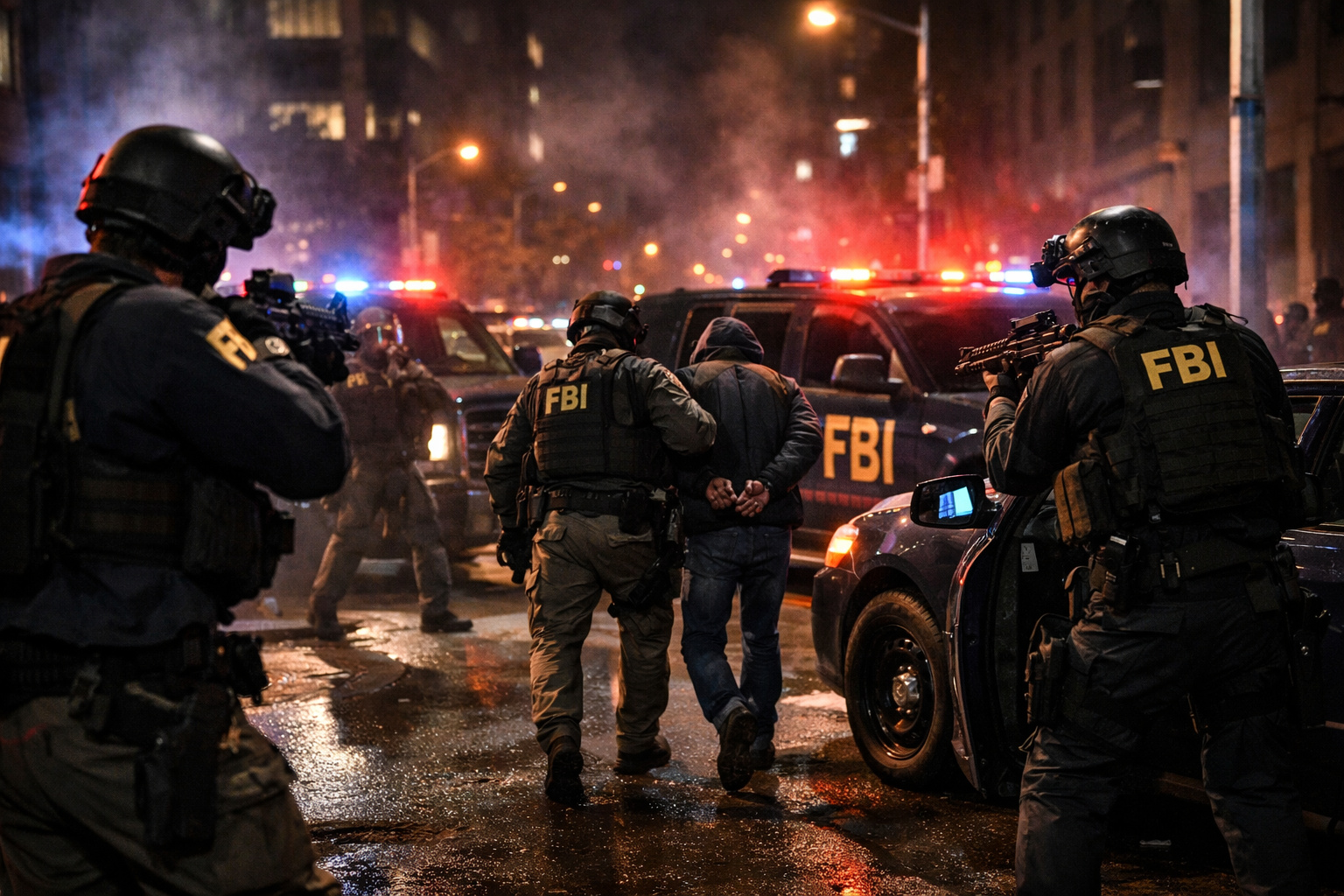
Digital Investigation, Swift Action by Authorities, and Federal Cooperation Averted Stabbing Attack and Reinforced Debate on Preventive Security in the United States

The FBI announced this Friday (2) that it prevented a terrorist attack linked to ISIS that would occur on New Year’s Eve in the United States. Authorities arrested an 18-year-old accused of planning attacks with knives and hammers against civilians in North Carolina.
According to the U.S. Department of Justice, the suspect intended to act in public places, such as a supermarket and a fast-food restaurant. The goal, according to the investigation, was to inflict the greatest number of possible victims during the New Year’s celebrations. Therefore, the case raised significant concern among security authorities.
Online Posts Revealed Support for the Extremist Group
Initially, the FBI identified the young man through posts on social media. In these messages, he expressed explicit support for ISIS, glorified violent actions, and declared loyalty to the terrorist organization. Additionally, he expressed willingness to carry out an imminent attack.
-
If the USA were to go to war with Brazil, Washington’s greatest fear would not be the attack itself, but facing a vast territory, prolonged resistance, and a costly, chaotic, and unpredictable occupation.
-
In 2013, Nicaragua sold the concession for a canal to rival Panama to a Chinese billionaire who lost 85% of his fortune, disappeared, and was declared bankrupt. Now the project resurfaces with a new route, a new Chinese partner, and a cost of $64.5 billion.

-
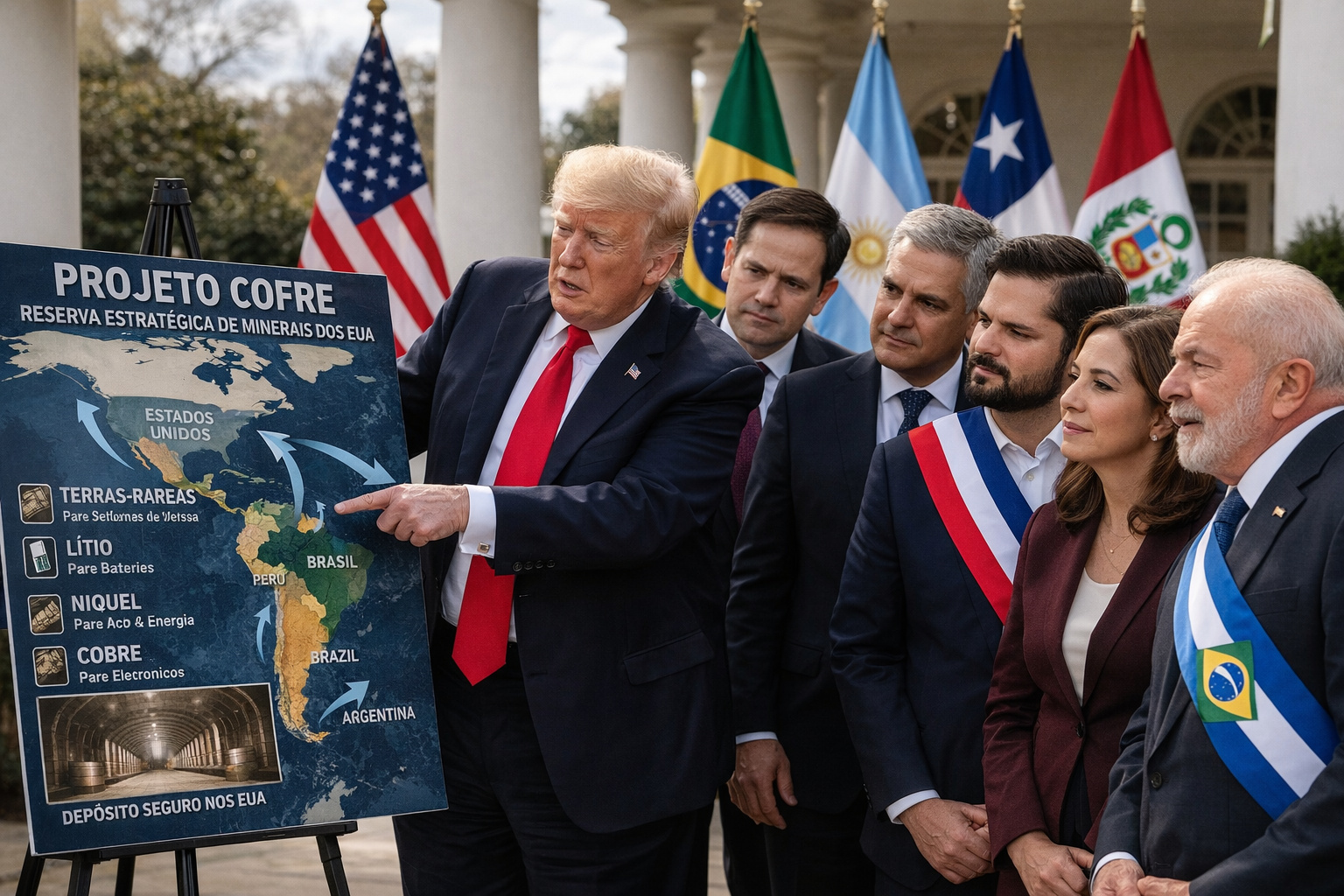
The USA announces a mysterious billion-dollar vault project to store critical minerals, but what intrigues experts is not just the plan itself, but why Latin America, including Brazil, has entered the center of this global dispute against China.
-
Trump Announces Bombing of U.S. Military Targets on Iranian Island Responsible for About 90% of Iran’s Oil Exports, Warns of Further Attacks if Navigation in Strategic Strait of Hormuz Is Threatened
Subsequently, investigators advanced in their monitoring. As a result, the suspect began exchanging messages with an FBI undercover agent, believing he was communicating with a member of the extremist group. During the conversations, he confirmed his plans and sent images of knives and hammers he intended to use in the attack.
In light of this, authorities considered the immediate threat. Therefore, they decided to accelerate the operation to prevent any violent action.
Search Warrant, Seizures, and Arrest
Based on the gathered evidence, the FBI executed a search warrant at the suspect’s residence on December 29. During the operation, agents seized knives, hammers, tactical gloves, a vest, and handwritten notes. These records detailed the planning of the attack and directly mentioned New Year’s Eve.
Shortly after the operation, agents arrested the young man. Subsequently, the Department of Justice filed formal charges on Wednesday, December 31. The accusation points to attempt to provide material support to a foreign terrorist organization, a crime considered federal in the United States.
If convicted, the accused could face up to 20 years in prison. Thus, the case reinforces the importance of preventive action and continuous digital monitoring, especially on symbolic dates.
Public Security and Radicalization Remain at the Center of the Debate
At the same time, experts highlight that the episode demonstrates how online radicalization continues to be a real threat. Digital platforms, according to analysts, still serve as an environment for recruitment, propaganda, and planning of extremist acts.
For this reason, authorities emphasize the need for cooperation among security forces, technology companies, and civil society. Furthermore, they advocate for ongoing investments in intelligence and prevention. In this way, actions like this can prevent tragedies before they materialize.
In light of threats that arise in the digital environment and nearly become real tragedies, do you believe that social media is being monitored sufficiently to prevent new attacks like this?










Seja o primeiro a reagir!