





 Portuguese
  English
  Spanish
  5 min of reading
  0 comments


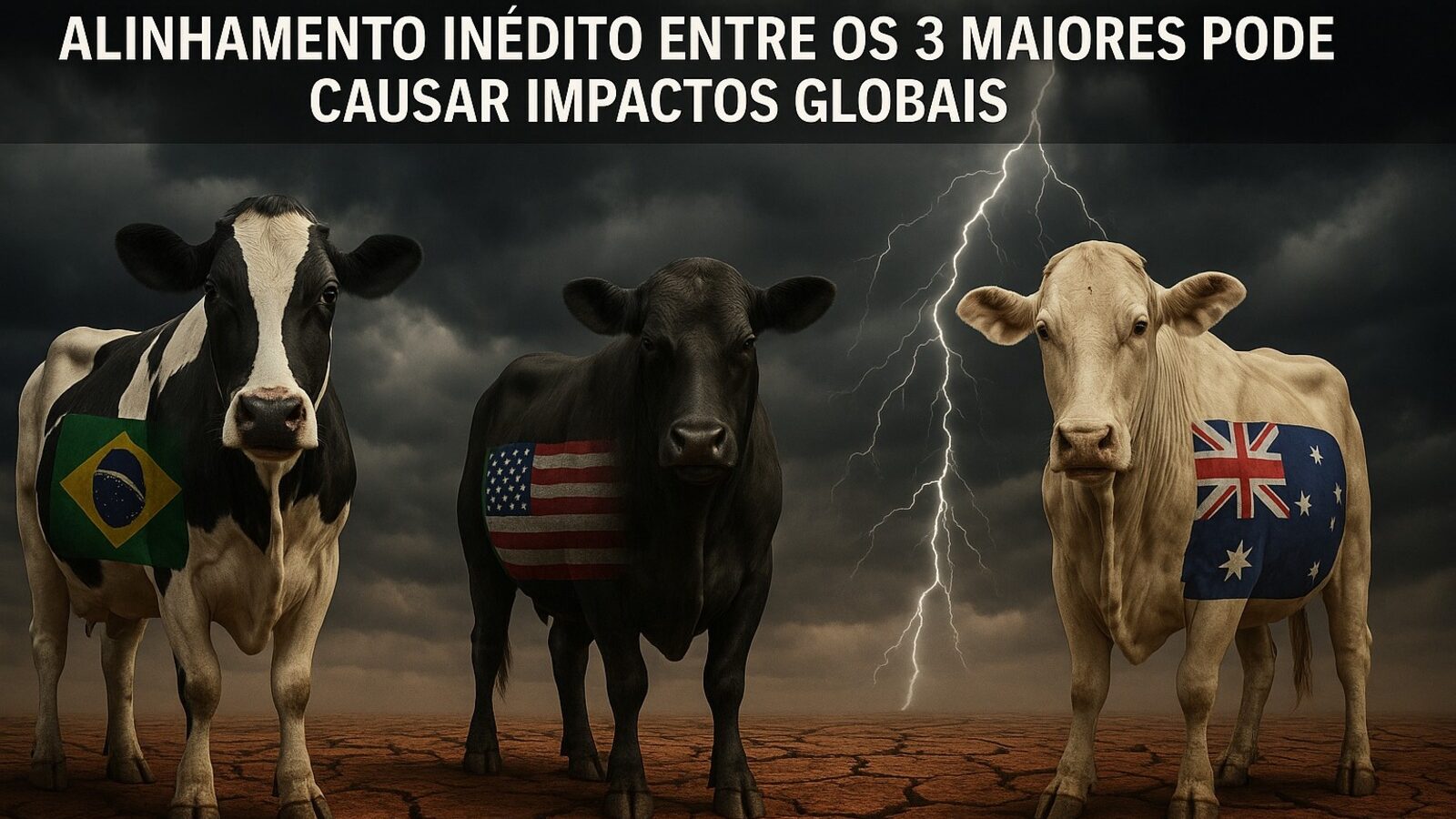
For The First Time, The United States, Brazil, And Australia Align The Livestock Cycle, Reducing Beef Supply And Pressuring Global Prices
For the first time in modern history, the United States, Brazil, and Australia are moving together in the same stage of the livestock cycle. This alignment occurs among the three largest beef exporters on the planet. According to analysts, this phenomenon will bring profound changes to the balance of global supply in the coming years.
According to an article published by Compre Rural, recent reports confirm that the three countries are retaining females for reproduction, decreasing the immediate availability of animals for slaughter. This decision is expected to reduce the global beef supply, putting pressure on prices starting in 2026.
U.S. analyst Dennis Smith, in a publication in Beef Magazine, stated that nothing like this has ever been seen before.
-
Unemployment rises again to 5.8% at the beginning of 2026, raising alarms about the end of temporary positions and its impact on the Brazilian job market.

-
Document organization can cut invisible costs in small businesses, a simple step that prevents waste, rework, and losses in daily operations.

-
Chinese giant worth nearly R$ 4 billion that manufactures cables for electric cars, solar energy, and robotics wants to open a factory in SC.
-
Many employers do not know, but the law guarantees domestic workers a 25% increase in salary during trips, 50% for overtime, 20% for night shifts, and 17 additional benefits that can lead to labor lawsuits if not paid.


For him, the simultaneous retention of heifers by three major exporters will substantially reduce beef on the international market.
United States: Lowest Herd in 50 Years
In the United States, the cattle herd has reached its lowest level in over half a century. This outcome results from a combination of factors: prolonged drought, expensive inputs, and intense slaughter in recent years.
With the improvement of pastures and more controlled costs, ranchers plan to start the expansion phase in 2026. However, since this process requires the retention of heifers, there will be less cattle available for slaughter in the short term.
According to the Department of Agriculture (USDA), U.S. production is expected to fall by 2.5% in 2026, reaching 31.1 billion pounds, the lowest volume since 2019.
Therefore, U.S. consumers will face more expensive beef. Smith highlights that retail prices will reach historic highs, forcing a reduction in consumption because not everyone will be able to afford it.
The analyst believes this shift is historic. He notes that the production decline was modest at the beginning of the year, but it is already accelerating drastically. For Smith, the price increase, which has so far been supported by demand, will start to be driven by the lack of supply.
Brazil: Adjustments And Additional Challenges
Brazil, the world’s largest beef exporter, is also making adjustments to its herd. After years of intense exports to China, the sector is reorganizing production.
The expectation is to maintain global leadership, but with difficulties. This is because the U.S. government, under Donald Trump, imposed heavy tariffs against Brazilian beef. This barrier makes the product more expensive and reduces competitiveness in strategic markets.
Another point cited by experts is the low proportion of confined animals. Only 20% of Brazilian beef comes from grain-fed cattle.
This model limits the ability to meet demand for premium cuts, which are highly valued in the international market.
If the trend is confirmed, Brazil will face dual pressure: less beef available and stronger trade barriers. Nevertheless, it will remain a central player in the new livestock cycle.
Australia: Reconstruction After Drought
Australia, the third largest global exporter, is facing a similar situation. After years of severe drought, many ranchers liquidated their herds. Now, the country is beginning the phase of retaining females, aiming to repopulate pastures.
This movement, however, will also reduce the beef available for export in the short term. The challenge is greater because only 4% of Australian beef comes from confined cattle. This dependence on pasture makes production highly vulnerable to climate.
With less beef available, Australia, like Brazil and the U.S., will have a direct role in driving up global prices.
Scarcity Of Premium Beef
A central point highlighted by Smith is the decline in the supply of grain-fed animals. In the United States, this model represents the largest portion of production. In Brazil, it corresponds to 20%. In Australia, only 4%.
The consequence will be a rise in prices for premium beef, especially high-quality cuts aimed at demanding markets. This rationing of supply is expected to reach unprecedented levels.
The analyst warns that there is no way to predict how high prices will rise. Consumption will therefore be limited by the purchasing power of the final consumer.
Global Impacts
The coincidence of cycles among the three exporting giants creates a global supply shock. Less beef available, combined with increasing demand, leads to inevitable appreciation.
This process is likely to change trade routes, export policies, and even consumption habits. Importing countries will have more difficulty meeting their needs, as alternatives are restricted by tariffs and logistical costs.
Analysts predict that premium cuts could reach historical prices. Additionally, consumers in various parts of the world will have to adapt to scarcer and more expensive beef.
Price Protection Strategies
In light of this scenario, Smith recommends price protection strategies. One of the main strategies is the use of put options.
This mechanism guarantees a minimum trading value without preventing additional gains in case of appreciation.
However, there are risks that could change the scenario. Among them, a potential recession in the United States could reduce domestic consumption.
Another factor is the impact of health issues, such as outbreaks of diseases in the herd. There is also the threat of slaughterhouse closures, which could stifle production.
These elements show that, although the trend points to higher prices, ranchers need to exercise caution.
An Unprecedented Cycle
The alignment of the livestock cycle among the United States, Brazil, and Australia represents a historic milestone. For the first time, the three largest exporters are moving in sync.
This movement reduces global supply, pressures prices, and creates a new balance for the sector. Therefore, the international beef market is entering a decisive phase, with direct impacts on the field, trade, and consumption.
The coming years, according to experts, will be crucial to gauge the strength of this transformation. What is known is that beef has never faced such a singular cycle with such broad effects for the entire world.
With information from Compre Rural.








-

-

-

-

11 pessoas reagiram a isso.