





 Portuguese
  English
  Spanish
  5 min of reading
  8 comments


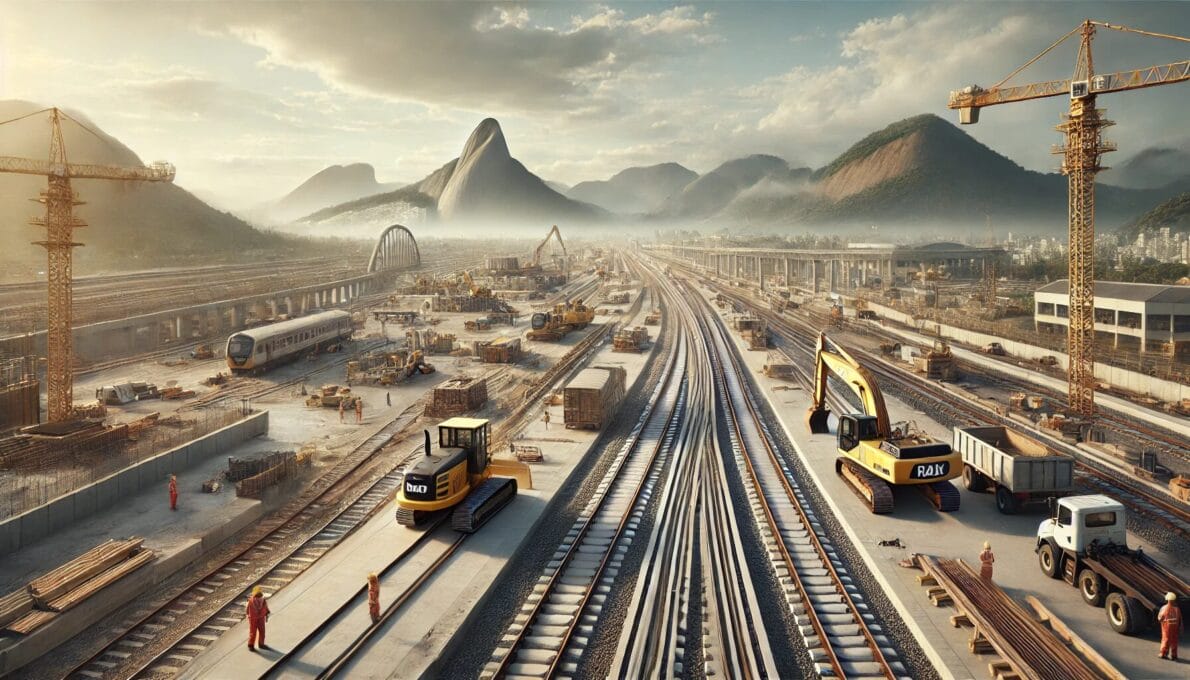

New EF-118 Railway Could Transform the Economy of Rio de Janeiro, Creating 68 Thousand Jobs and Injecting Billions into the Local Economy. Will This Be the Solution for Regional Infrastructure Development?
A billion-dollar project capable of profoundly altering the economy of Rio de Janeiro is gaining momentum.
The construction of the EF-118 Railway promises to be more than just a new railway line:
It could be the key to generating thousands of jobs and attracting unprecedented investments to the region. But what will be the true impact of this megaproject?
-
Larger than entire cities in Brazil: BYD is building a 4.6 km² complex in Bahia with a capacity for 600,000 vehicles per year, but the discovery of 163 workers in conditions analogous to slavery has shaken the entire project.

-
With an investment of R$ 612 million, a capacity to process 1.2 million liters of milk per day, Piracanjuba inaugurates a mega cheese factory that increases national production, reduces dependence on imports, and repositions Brazil on the global dairy map.

-
Brazilian city gains industrial hub for 85 companies that is equivalent to 55 football fields.

-
Peugeot and Citroën factory in Argentina cuts production by half and opens a layoff program for more than 2,000 employees after Brazil drastically reduced purchases of Argentine vehicles.


With an expectation of generating 68 thousand jobs and moving R$ 2.5 billion in the economy, the EF-118 project has everything to boost development in different sectors in Rio de Janeiro.
According to the Federation of Industries of the State of Rio de Janeiro (Firjan), the railway will connect the Port of Açu, in São João da Barra, to the entire national railway network, facilitating the flow of goods and encouraging competitiveness in the state.
Economic Impact of the EF-118: Reinforced Jobs and GDP
The construction of the EF-118 stands out not only for the investment value but also for the direct impact on local communities.
Firjan projects that the GDP of Rio de Janeiro could see a jump with the addition of up to R$ 2.5 billion, boosting the economy of municipalities in northern Rio de Janeiro.
Job creation is one of the main pillars of the project.
It is estimated that the total wages of the workers involved will amount to R$ 1 billion, which means a substantial gain for families in the region.
This amount is expected to strengthen local commerce and services, with more money circulating and increased purchasing power for the population.
According to data from Firjan, the project translates into opportunities for both direct and indirect workers, increasing the potential for development and attracting new businesses.
Tax Revenue: Significant Return for the State
In addition to jobs and GDP growth, the EF-118 could significantly contribute to tax revenue in Rio.
Firjan estimates that the project could generate R$ 457 million in taxes from state and federal taxes, offering a direct return to public coffers and helping to maintain investment in regional economic growth.
In a recent meeting held in September, authorities and representatives of civic entities discussed the future of the project and the allocation of resources.
Firjan Norte led efforts to ensure that the necessary funds are applied to the railway, and a petition was sent to the National Land Transportation Agency (ANTT) to request the allocation of investments returned by the Central Atlantic Railway (FCA), which has been suspended since 2013, to finance the EF-118.
Collaboration Between Government and Community: A Joint Effort
Authorities and civic representatives, including Francisco Roberto de Siqueira, president of Firjan Norte, argued that the union of efforts between government and society is essential to enable the construction of the railway.
“Only with the support of legislators, mayors, and local leaders can we overcome the challenges and guarantee the economic benefits of this project,” Siqueira emphasized.
The participation of regional politicians and authorities reinforces the commitment to the project.
Among them, Felipe Knust, the Secretary of Economic Development of Campos, represented the mayor of Campos, Wladimir Garotinho, in signing a letter of support.
The presence of representatives from neighboring cities also highlighted the importance of the EF-118 for the economic growth and integration of northern Rio de Janeiro.
Port of Açu: The Logistical Link for the Growth of Rio de Janeiro
The construction of the EF-118 will be a logistical asset for the Port of Açu, one of the main port complexes in the country.
The new railway line not only strengthens the capacity for the export and import of goods but also makes the Port of Açu a strategic hub for distribution.
According to the subsecretary of Mobility of Campos, Sérgio Mansur, the railway represents a qualitative leap in the state’s infrastructure, meeting the growing demand for cargo in the region and increasing the industrial competitiveness of Rio de Janeiro.
With the interconnection of the EF-118 to the national network, the transport of goods will become faster and more efficient, adding economic value and accelerating the industrial growth of the state.
Railway Expansion and Impact on Regional Infrastructure
The revitalization and expansion of the railway network are strategic aspects for Rio de Janeiro.
The return of investments from the FCA to the government in 2013 included more than 153 kilometers of lines, of which only 41 kilometers are still in use.
The reactivation of these lines, combined with the construction of new segments, allows the EF-118 to considerably expand the cargo transport capacity and integration of Rio de Janeiro regions with other areas of Brazil.
Furthermore, this expansion translates into significant operational gains by increasing the logistical efficiency of the state and improving the circulation of products.
According to Firjan data, the EF-118 represents a unique opportunity for Rio de Janeiro to become an important logistics hub, contributing to the economic transformation of the state and potentially the entire Southeast region.
The Future of the Economy of Rio de Janeiro Passes Through the EF-118
In light of the benefits promised by the EF-118 Railway, new perspectives arise for Rio de Janeiro.
With job creation, infrastructure investments, and increased tax revenue, the railway presents itself as a game changer for the state.
However, it remains to be seen whether the project will overcome bureaucratic barriers and become a reality in the coming years.
Do you believe that the EF-118 will be the necessary boost for the economic growth of Rio de Janeiro? Share your opinion in the comments!








Quais são as vagas disponíveis ?
Não acredito. O RJ é um território hostil. Ninguém quer investir nesse RJ dominado pela bandidagem.
Essa ferrovia e de Suma importância para interior do rj,norte e noroeste,essa via tem que passar em cidades como Itaperuna e adentrar MG ,onde há exportações de minérios Ipatinga ETC.extranho povo vota em peso no PL e nenhum prefeito eleito nessa região,briga por uma obra gigantesca.pena isso.