





 Portuguese
  English
  Spanish
  4 min of reading
  13 comments


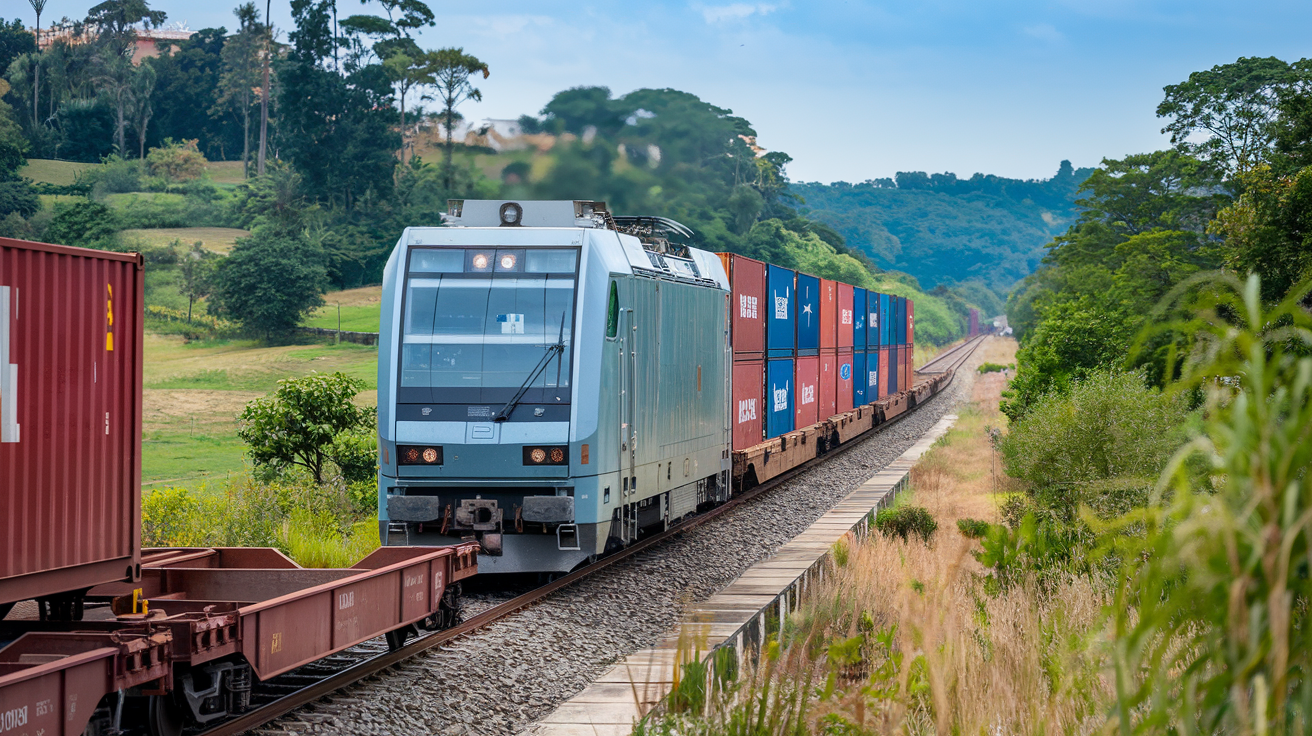


The 118 Railway (EF-118), known as Vitória-Rio, will receive an investment of R$ 3.28 billion from the federal government. The project aims to connect the ports of Espírito Santo and Rio de Janeiro to the national railway network, using an innovative concession model that promises to transform cargo transportation in the country.
In an initiative that promises to revolutionize national logistics, the federal government is preparing a billion-dollar investment in a new railway, aiming to integrate strategic regions and boost economic development.
This ambitious project, awaited for decades, finally takes shape and promises to transform the railroad landscape in Brazil.
The 118 Railway (EF-118), also known as Vitória-Rio or the Southeast Railway Ring, is about to become a reality.
-
Piauí will produce a new fuel that replaces diesel without needing to change anything in the truck’s engine and reduces pollutant gas emissions by half: truck drivers from all over the Northeast are already celebrating the news that will arrive later this decade.

-
A new Brazilian shopping center worth R$ 400 million will be built in an area equivalent to more than 4 football fields, featuring 90 stores, 5 cinemas, a supermarket, a college, and parking for 1,700 cars, potentially generating 3,000 jobs.

-
Larger than entire cities in Brazil: BYD is building a 4.6 km² complex in Bahia with a capacity for 600,000 vehicles per year, but the discovery of 163 workers in conditions analogous to slavery has shaken the entire project.

-
With an investment of R$ 612 million, a capacity to process 1.2 million liters of milk per day, Piracanjuba inaugurates a mega cheese factory that increases national production, reduces dependence on imports, and repositions Brazil on the global dairy map.

With a contribution of R$ 3.28 billion from the federal government, the railway will connect the ports of Espírito Santo and Rio de Janeiro to the national railway network, strengthening transportation infrastructure in the Southeast.
According to the federal government, the auction for the concession is expected in the first quarter of 2026, with the contract signing in the third quarter of the same year.
Innovative Concession Model
The EF-118 project features a unique concession model in the Brazilian railway sector.
The federal government will contribute R$ 3.28 billion towards the construction of the railway, with most of these funds being allocated to the winner of the bidding in the first four years.
The selection criterion will be the greatest reduction of the pre-determined aid value set by the government, meaning the company offering the largest discount on the projected funding will win.
Marcelo Fonseca, superintendent of Infrastructure Concession at the National Land Transportation Agency (ANTT), emphasizes that this approach aims to enable the venture and attract private investments, increasing the project’s internal rate of return.
The concession will last for 50 years, ensuring stability and security for investors.
Division of the Railway Route
The EF-118 route is divided into three main segments:
North Section/Anchieta Branch: Approximately 80 km long, this section between Santa Leopoldina and Anchieta will be built by the mining company Vale as a counterpart for the early extension of its railways, integrating into the concession contract of the Vitória-Minas Railway (EFVM).
Central Section: A new route of around 170 km connecting São João da Barra (RJ), passing through the Açu Port, to Anchieta (ES).
South Section: Approximately 325 km long, connecting São João da Barra to Nova Iguaçu (RJ) and may be executed as an additional investment, if activated by the federal government. This section is expected to utilize existing parts of the Centro-Atlântica Railway (FCA).
Economic and Operational Impact
The implementation of the EF-118 is estimated to require investments of R$ 4.6 billion, in addition to R$ 4.4 billion in operational costs, such as personnel expenses.
The forecast is that the railway will be operational by 2033, after eight years of construction starting in 2025.
With a total length of 475 km, the EF-118 will cross 23 municipalities in the states of Rio de Janeiro and Espírito Santo, promoting regional and national integration.
The main cargo to be transported includes hot briquetted iron (HBI), pig iron, iron ore intended for export, and coking coal, products of great relevance to the Brazilian economy.
Unprecedented Union Participation
Leonardo Ribeiro, National Secretary of Railway Transport, emphasizes that the direct participation of the Union in the funding is a novelty in the railway sector.
According to him, this model ensures transparency and security for investors, allowing for a more agile execution of the project.
“We are adopting a model that we hope will mark the beginning of a new era for railways in the country, integrating logistics and increasing efficiency in cargo transportation”, Ribeiro states.
Next Steps
After the public hearings held in January 2025, ANTT will analyze the contributions received, with the expectation of publishing the bidding notice in the fourth quarter of 2025.
The auction will take place in the first quarter of 2026, and the contract signing is expected in the third quarter of the same year.
With the implementation of the EF-118, Brazil takes a significant step towards modernizing its transportation infrastructure, promoting national integration and sustainable economic development.
Do you believe that the EF-118 will be the mark of a new era for Brazilian railways, revolutionizing cargo transportation in the country? Leave your opinion in the comments!





Com certeza! É urgente investir em ferrovias cada vez mais.
Mentira! MENTIRA! JÁ começou a campanha para Presidente, vão DESVIAR 10% para a política e a estrada vira mato
PARE de lançar essas notícias pré campanha, DÁ NOJO!
Ano que vem e ano de eleição… Já esqueceram…
Tem que aumentar cooptação de recursos para que os empresariado e as empreiteiras possam contribuir com as campanhas….