





 Portuguese
  English
  Spanish
  5 min of reading
  0 comments


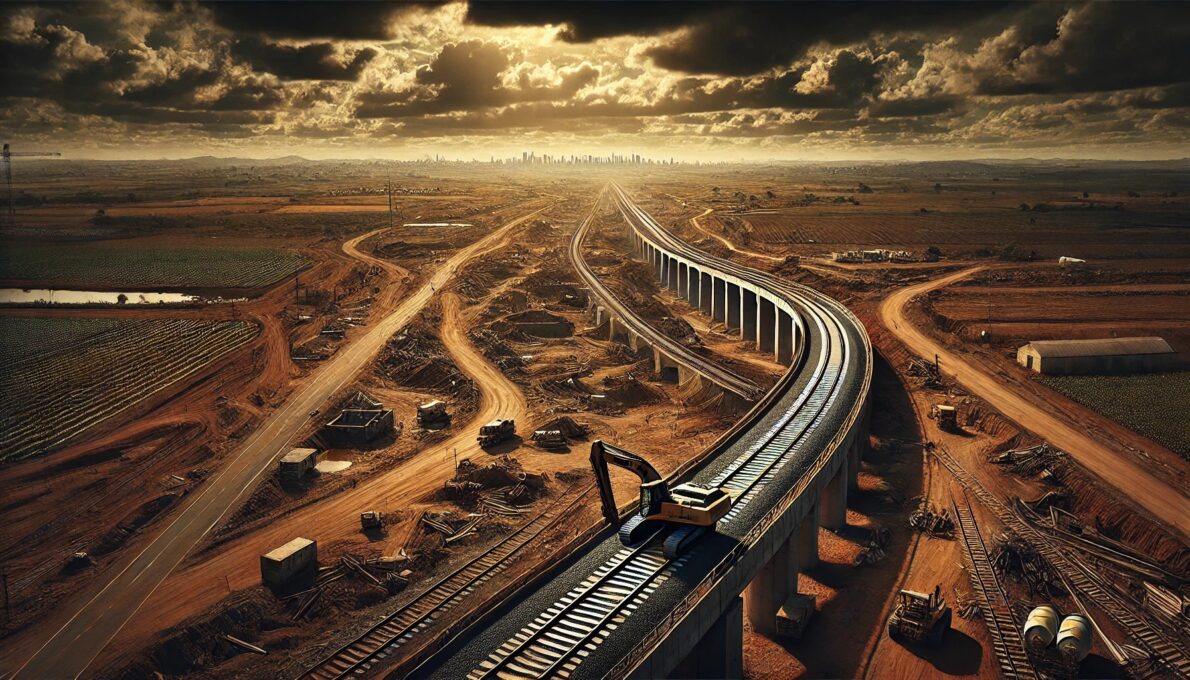
With Incomplete Works and Blocked Resources, the Transnordestina Railroad Remains a Promise for Economic Development in the Northeast but Faces Bureaucratic and Financial Challenges.
The Transnordestina Railroad is one of those megaprojects that brings with it great promises of economic development, especially for the Northeast of Brazil. However, this project, which started in 2006, continues to face a series of delays and challenges, serving as a clear example of the so-called unfinished works of the Transnordestina. With 18 years of promises and little concrete action, the railroad has become a delicate issue for governments and for the population awaiting the long-awaited progress it should bring.
What Is the Transnordestina Railroad?
The Transnordestina Railroad was conceived as one of the main solutions to boost development in the Northeast region, connecting the interior of the country with the ports of Pecém (CE) and Suape (PE). The idea is simple: facilitate the flow of agricultural and mineral production, reduce transportation costs, and, of course, attract new investments to the region. With about 1,753 km of planned extension, the railroad passes through important cities in the Northeast, promising to transform the region’s logistics landscape.
However, the reality is far from being as simple as the original project suggested. To this day, much of the work remains unfinished, facing difficulties ranging from the release of funds to logistical and bureaucratic problems.
-
In A European City, The Country’s Largest Railway Junction Was Modernized Without Closing Its Doors, Kept Trains Running During Years Of Construction, Now Serves Up To 60,000 Passengers Per Day, And Installed Solar Panels That Generate About 30% Of Its Energy
-
Famous Brazilian Railway May Become a Parking Lot
-
The Country of “Punctual As a Train” Admits It Has Lost Control: High-Speed Trains Delay, Stop, Disappear from the Map and Turn 6-Hour Trips into 10, While Deutsche Bahn Promises Restructuring in 2026 But Faces 19th Century Infrastructure, Staff Shortages and Sections Closed for Months

-
With an Investment of R$ 700 Million in One of the Country’s Main Rail Networks, VLI Reinforces Infrastructure, Receives 8 New Locomotives, and Expands the Corridor Connecting 7 States, Boosting Jobs and the Transportation of Grains, Ore, and Oil Products to the Port of Santos
R$ 1 Billion Resource Delayed and Works on the Transnordestina Megaproject Remain Halted in Some Sections
Recently, the megaproject of the Transnordestina Railroad was once again the focus of discussions due to the delay in the release of a R$ 1 billion resource aimed at accelerating construction. This amount was to be used to start sections in important cities in Ceará, such as Aracoiaba, Baturité, Caucaia, Itapiúna, and Pecém. However, the funds, which were supposed to be released between September and October 2023, remain blocked in bureaucratic processes.
According to the Superintendence of Development of the Northeast (Sudene), the amount is under analysis at the Banco do Nordeste (BNB), and there is no exact forecast for when this stage will be completed. This slowness has been one of the biggest obstacles to the project’s progress, leaving many parts of the railroad stalled and contributing to the growing frustration of the population and investors.
The R$ 3.6 Billion Addendum and the Future of the Railroad
The R$ 1 billion amount is part of a larger addendum, totaling R$ 3.6 billion, aimed at finally completing the unfinished works of the Transnordestina. The project is divided into eleven lots, four of which have not yet been initiated. Meanwhile, works continue to advance slowly in the municipalities of Acopiara, Piquet Carneiro, Quixeramobim, and Quixadá, all in Ceará.
During a visit to Ceará in August 2023, the Minister of Transport, Renan Filho, urged Transnordestina Logística S/A (TLSA), the company responsible for construction, to expedite the process. In response, the company stated that it depends on the release of funds to speed up work.
To try to resolve the issue, the federal government set up a task force involving various agencies, such as the Presidency of the Republic, the Ministry of Transport, the Banco do Nordeste, and the National Steel Company (CSN).
The Role of the Government in Completing the Megaproject
The federal government, along with Sudene and other agencies, is moving to try to facilitate the completion of this megaproject. The National Secretary of Funds and Financial Instruments of the Ministry of Integration and Regional Development (MIDR), Eduardo Corrêa Tavares, stated that the release of the resource is being treated as a priority by the Lula government. The expectation is that the addendum will be signed by the end of October 2023, but, as we have seen over the years, promises and deadlines are not always fulfilled when it comes to the Transnordestina Railroad.
Sudene also reported that after the signing of the addendum, the federal government will work to raise additional resources through the Northeast Development Fund (FDNE), one of the main sources of financing for large works in the region. However, the release of this funding still depends on the analysis of the Banco do Nordeste, which has not yet provided a clear forecast of when the process will be completed.
The Impact of the Transnordestina Railroad on the Northeast
When (or if) the Transnordestina Railroad is completed, the impact on the Northeast could be immense. The railroad will facilitate the flow of agricultural production, such as soybeans and corn, as well as mineral products, such as iron. The direct connection with the ports of Pecém and Suape will reduce logistics costs, increasing the region’s competitiveness on the national and international stage.
The completion of the railroad could attract new investments to the Northeast, helping to create jobs and boost the region’s economy. Efficient transport infrastructure is one of the main factors that large companies consider when deciding to invest in a state. Therefore, the finalization of the Transnordestina Railroad could be a watershed moment for the development of one of Brazil’s most impoverished regions.
The Megaproject That Still Dreams of Coming to Life
The Transnordestina Railroad is undoubtedly one of the largest infrastructure projects ever planned for the Northeast. However, the reality of the unfinished works of the Transnordestina shows how much the country still faces challenges in completing large-scale projects. With funding held up in bureaucratic processes and a lack of rapid decision-making, the future of the railroad remains uncertain.
While the federal government, along with companies and banks, tries to unlock the necessary funds for the project’s completion, the population of the Northeast continues to await the fulfillment of the promises of development that this megaproject represents. It remains to be seen whether the coming months will bring the much-anticipated speed so that the Transnordestina Railroad can finally be completed and begin delivering the promised benefits to the region.










Seja o primeiro a reagir!