





 Portuguese
  English
  Spanish
  5 min of reading
  0 comments


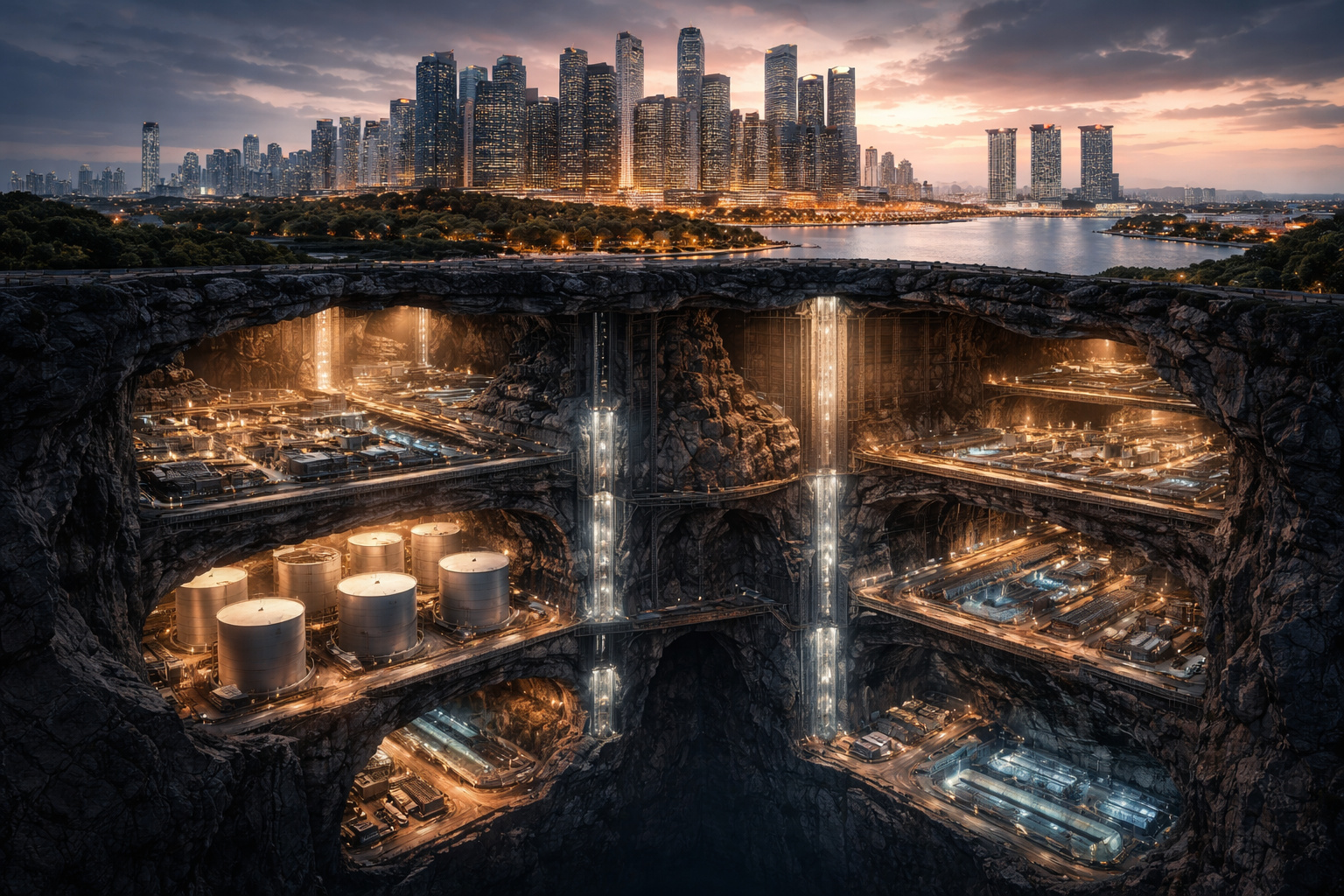
Singapore builds underground city with caves 150 meters deep to free urban space by relocating refineries, ammunition, and sewage.
Singapore, one of the most densely populated cities in the world, is building an underground city to expand its urban space and address land scarcity. The country has a total area of 736 square kilometers. To give an idea of what this means: New York has 778. Jakarta has 661. The difference is that New York and Jakarta have the luxury of growing sideways. Singapore is surrounded by the South China Sea, the Strait of Malacca, and Malaysia, and has practically exhausted all the reclaimable territory from the ocean in the last 60 years, during which it has reclaimed 150 km² of sea to create land, expanding the island by 25% since independence in 1965. Now the country is opening a new front. Not upward, not sideways, not toward the sea, but downward.
According to the Urban Redevelopment Authority of Singapore, the agency responsible for urban planning in the country, Singapore is the only city in the world with a Master Plan dedicated exclusively to underground space. The goal is clear: to move underground everything that does not need to be on the surface — oil refineries, ammunition depots, sewage systems, high-voltage cables, industrial load tunnels — to free up what is above for housing, parks, communities, and public space. The calculation is simple: every hectare freed beneath the city is one more hectare of life on the surface.
Space scarcity in Singapore: why the country can no longer grow sideways
Since independence, Singapore has addressed its space scarcity in two ways: reclaiming land from the sea with sand imported from neighboring countries and building vertically. However, both approaches have reached clear limits.
-
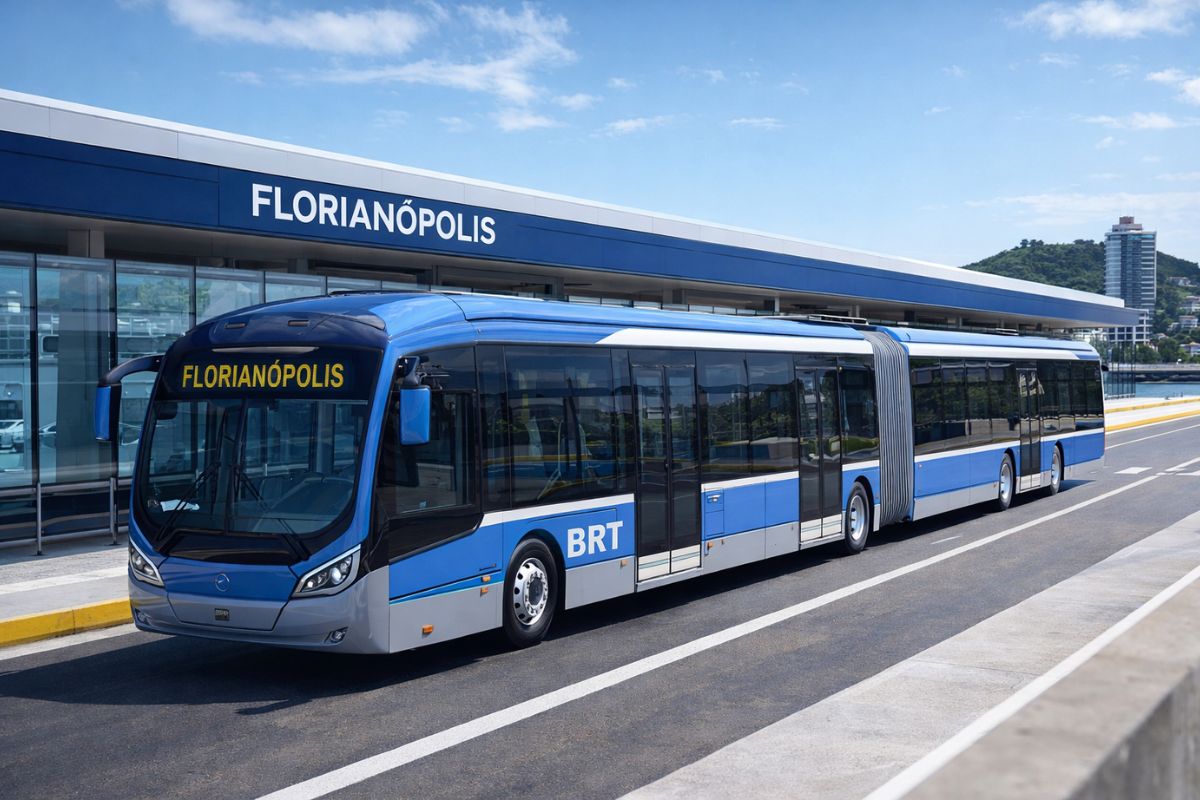
Florianópolis will receive a million-dollar BRT that will begin construction in 2026 with nearly 400 million in funding from the federal government and the Inter-American Development Bank, and the map already shows the routes for the exclusive bus corridors.
-
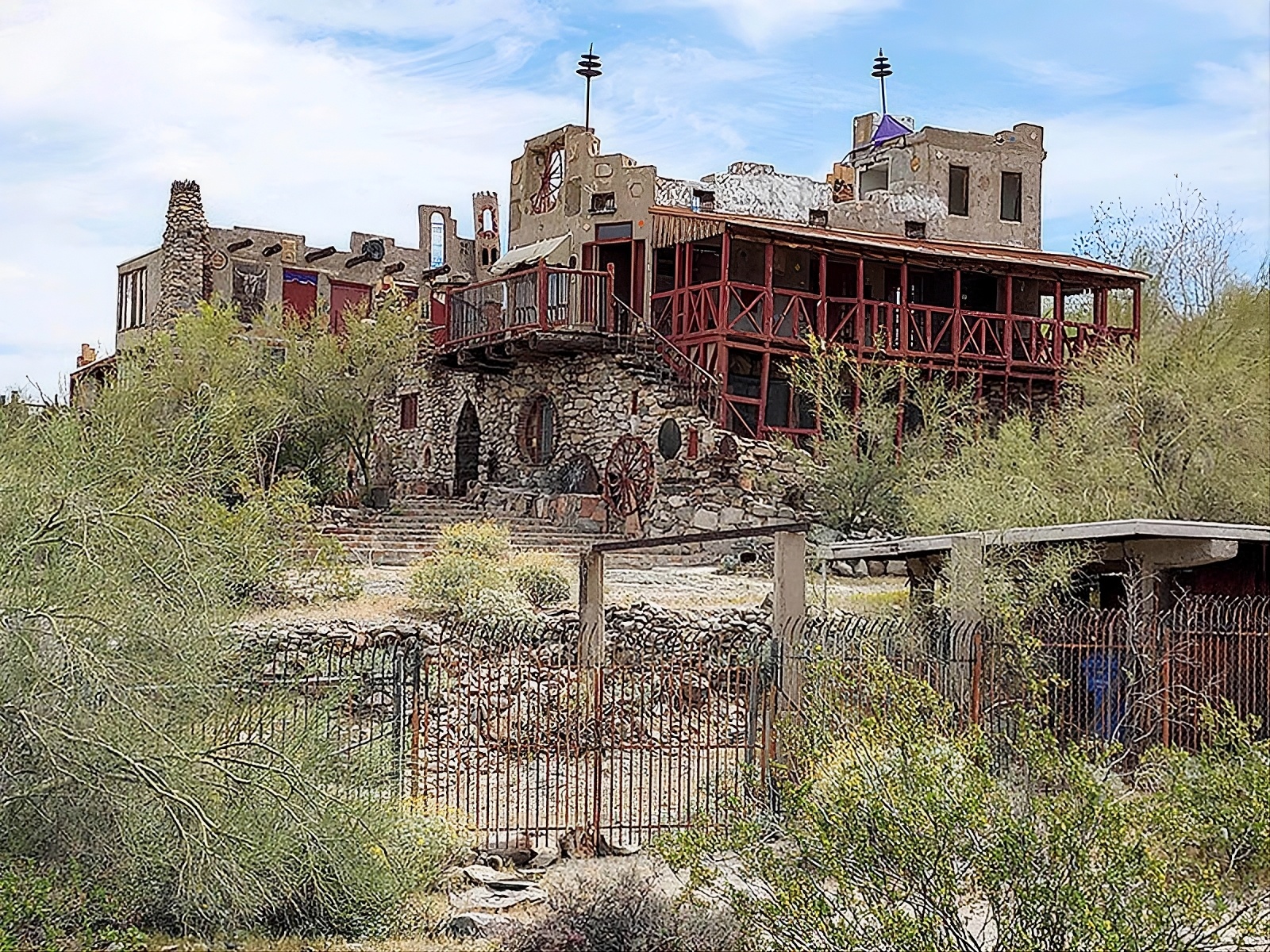
Without a blueprint, without an engineer, and using scrap from the dump, a father spends 15 years building an 18-room castle for his daughter, featuring tram tracks, 13 fireplaces, and over 700 m², which may now be demolished.
-
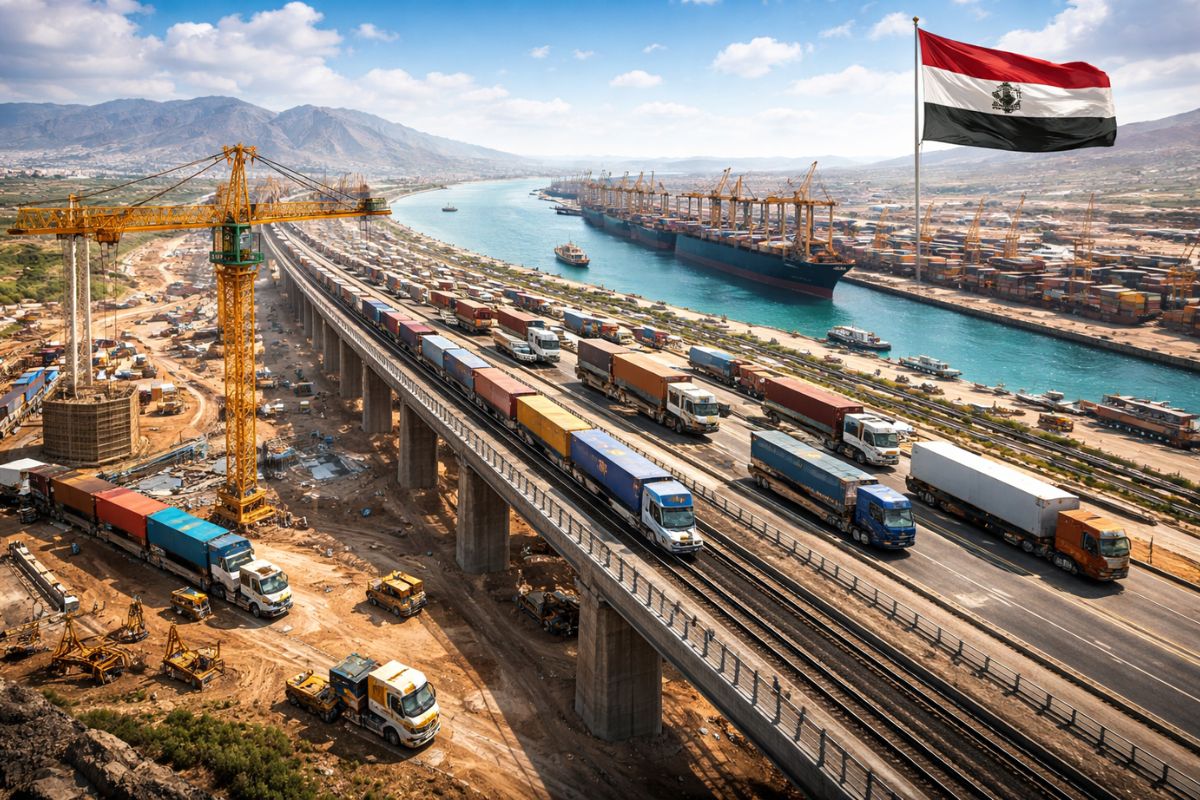
A megaproject worth R$ 89 billion is advancing in Iraq and promises to change the game in global trade by creating a new corridor between Asia and Europe, reducing traditional routes and repositioning the country as a logistics powerhouse.
-
Goodbye bedside table: floating shelves become a trend in 2026 by freeing up space in the bedroom, improving circulation, bringing visual lightness, and integrating technology without taking up floor space.


Indonesia, Malaysia, and Cambodia have progressively restricted the export of sand to Singapore, making land expansion more expensive and politically sensitive. At the same time, vertical limits are defined by structural restrictions, airspace, and the already existing urban density.
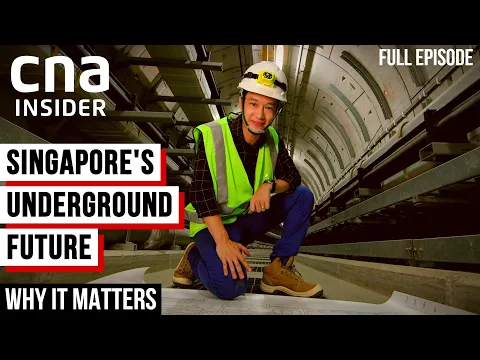

The underground, on the other hand, remains virtually unexplored. The island rests on granite formations from the Bukit Timah Formation, with compressive strength of up to 300 megapascals — about six times stronger than conventional concrete. This is an ideal geological base for deep excavations and large-scale caves.
In 2007, the government created an inter-agency task force to structure underground planning. The central principle is straightforward: move underground only what is significant and feasible, prioritizing infrastructures that free up the maximum possible area on the surface. It is a logic of spatial exchange — replacing rock with city.
Underground ammunition depot freed up an area equivalent to 400 football fields
The first large-scale project that proved this strategy was military. Singapore needs to store ammunition within its urban territory. In conventional above-ground depots, safety regulations require isolation areas around the facilities, preventing any urban use in the vicinity.
The solution was to transfer this infrastructure underground. The Underground Ammunition Facility (UAF) was built beneath the old Mandai Quarry, taking a decade to complete and inaugurated in 2008.
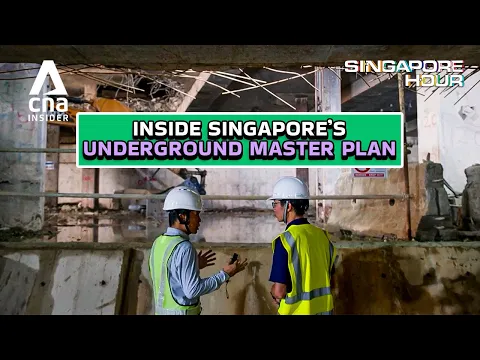
The underground chambers are about 100 meters long by 26 meters wide and are connected by tunnels capable of accommodating cargo trucks. The exact depth has not been officially disclosed.
The impact was immediate: by moving storage underground, about 300 hectares of surface area were freed, equivalent to approximately 400 football fields. The granite rock itself replaces the need for external safety zones, reducing unused area by up to 90%.
Additionally, the underground environment halved the energy consumption needed for cooling.
Caves 150 meters deep store oil beneath the sea
The second project took underground engineering to an even more complex level. The Jurong Rock Caverns are five caves excavated about 150 meters deep and below the seabed in the Jurong Island region. They store crude oil, condensates, and petrochemical products.
Each cave is approximately 27 meters high, 20 meters wide, and 340 meters long, dimensions comparable to a nine-story building lying horizontally within the rock. The total system, connected by about 8 km of tunnels, has a storage capacity of up to 1.47 million cubic meters, equivalent to about 600 Olympic-sized swimming pools.
Inaugurated in 2014, the project cost about 1.7 billion Singapore dollars in its first phase. In exchange, it freed up approximately 60 hectares of surface area that were previously occupied by industrial tanks.
The operation relies on a specific physical principle: the pressure of the groundwater around the caves acts as a natural barrier, preventing leaks and maintaining system stability.
Sewage system with 200 km of tunnels operates by gravity and frees urban space
The largest underground project in the country does not involve oil or defense, but basic urban infrastructure. The Deep Tunnel Sewerage System (DTSS) is a network of about 200 kilometers of tunnels excavated up to 55 meters deep. Designed to operate entirely by gravity, the system eliminates the need for intermediate pumping stations.
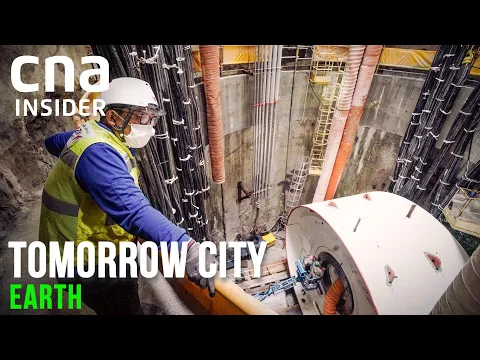
The first phase was completed in 2008. The second is in the final stages of execution. When complete, the system will be able to treat up to two million cubic meters of wastewater per day.
The Tuas plant, one of the main facilities associated with the system, will have the capacity to treat about 800,000 cubic meters daily.
The spatial impact is direct: about 150 hectares of surface occupied by traditional treatment stations and associated infrastructure will be freed for other urban uses.
Layered city: how Singapore organizes the underground by depth
The result of this strategy is a city structured in vertical layers. At the most superficial levels are utility networks and urban passages. Between 15 and 40 meters deep operate the MRT subway lines and road tunnels. Between 40 and 60 meters are the deep sewage systems and electrical transmission cables.
Below 100 meters are the oil and ammunition storage caves. To manage this complexity, the government develops a three-dimensional model of the underground, known as the Digital Underground, which allows for mapping and planning new works without interference between existing systems.
A legal change was essential to enable the model: since 2015, legislation has defined that private property does not extend indefinitely downward. The deep underground belongs to the State, allowing for large projects without individual negotiations.
The underground future of Singapore and upcoming projects under study
The underground plan is not complete. New initiatives are under development. Among them are caves for storing construction materials, underground reservoirs for drinking water, and deep drainage systems to face extreme weather events.
Changi Airport also integrates this logic. Terminal 5 is being designed with about 18 kilometers of underground tunnels for operational integration.
Singapore no longer has physical boundaries to expand. What remains is the rock beneath its feet. And the country has decided that this is enough to build the next layer of the city.







Seja o primeiro a reagir!