





 English
  Francês
  Alemão
  Italiano
  Japonês
  Norueguês
  Portuguese
  Spanish
  3 min of reading


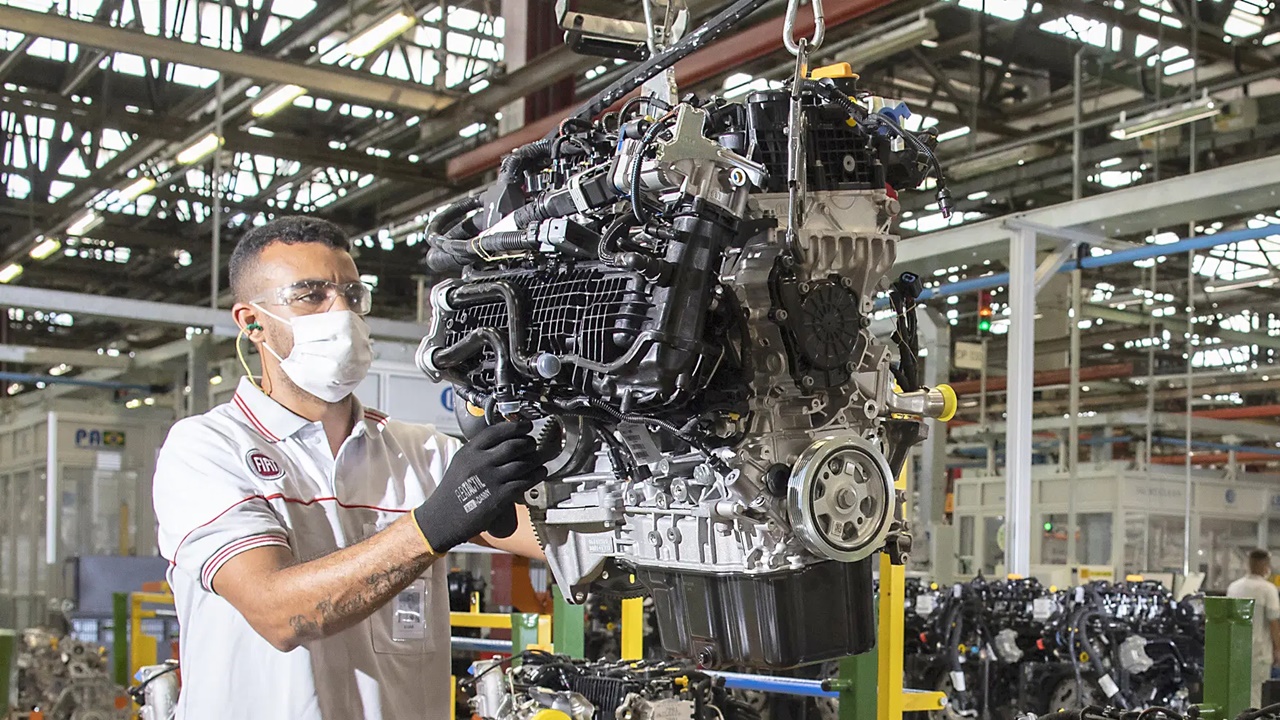
Ethanol Was Once a Much Cheaper Alternative – Compared to Gasoline Prices – and Can Ensure the Survival of Combustion Engines in Light of the Current Race Among Electric Car Manufacturers
Neither the past of those who had the world’s first ethanol car nor the future were able to motivate Fiat to continue developing the E4 engine, an alcohol version of the 1.3 GSE Turbo engine that is debuting now in Brazil with the Fiat Toro 2022.
Read Also
- Immediate Job Openings to Work on the Construction of the Jaguatirica II Thermoelectric Plant
- After Sony, Ford, LG, and Mercedes-Benz Leave the Country, the World’s Largest Cement Manufacturer Will Cease Production and Leave Brazil
- Direct Sale of Ethanol from Mills Will Stimulate Competition and Curb Gasoline Price Increases at Fuel Stations
- Ethanol and Gasoline Prices Soar, Petrobras Raises CNG by 39%, and Adjustment Could Hit Brazilian Wallets Even Harder in the Coming Weeks
The ethanol-powered 1.3 GSE Turbo engine, announced two years ago, alongside the investment of R$ 500 million to produce a new family of turbo engines (which also includes the 1.0 GSE Turbo debuting in Project 363) in Brazil, the so-called E4 engine, would focus on high energy efficiency in burning vegetable fuel.
At that time, Fiat informed that it was developing an engine “with turbo technology aimed solely at the combustion of ethanol” and that it would have a “national patent.” The goal would be “to reduce the consumption gap of ethanol compared to gasoline, which is currently at 30%.”
-
‘Interlocking brick’ made of earth arrives in the construction industry with cost reductions of up to 40% on the project.

-
Espírito Santo will receive the largest engineering project in its history with the duplication of BR 262, which will have 50 viaducts, 28 bridges, and 2-kilometer tunnels cutting through the most challenging mountainous region of the entire state.

-
A project of nearly 9 million reais already has the first kilometer paved in Santa Catarina and promises to completely transform the access between Jaraguá do Sul and Rio dos Cedros in an area where tourism is growing at a rapid pace.

-
A couple builds a system to bring water from the spring to their land, climbs a hill with materials on their backs, and creates a simple, cheap, and sustainable solution to ensure their own water supply.


The Idea of a Turbo Ethanol Engine Was Old
QUATRO RODAS discovered at the time that the idea of a turbo alcohol engine was old, from the times of the 1.4 T-Jet engines, and that there was a patent for a “high-efficiency ethanol engine” registered with the INPI (National Institute of Industrial Property) since February 1, 2013.
However, the E4 engine project ended up serving as a laboratory for the creation of the flex version of the 1.3 GSE turbo engine. Today, Stellantis dismisses the production of engines powered exclusively by alcohol, largely due to consumer acceptance. After all, it would be offered in cars like the Fiat Toro and Jeep Compass, which are in a price range where fuel cost is not a major concern.
How Does the 1.3 GSE Turbo Engine Avoid the Problems of Flex Engines?
Fiat has never hidden that the project was based on the 1.3 GSE turbo engine, which is quite modern in itself. The automaker’s goal was to modify it sufficiently to elevate its efficiency with ethanol to an unprecedented level – one that flex engines are far from achieving.
But the version that debuts now with the new Toro, and which will soon be in the 2022 Jeep Compass, is flex and was designed to have the best fuel efficiency with both gasoline and ethanol.
After Chevrolet, Ford, and Volkswagen, the Multinational Fiat Suspends Vehicle Production in Its Factory and Places 1,900 Employees on Collective Vacation
Following Ford’s exit from Brazil, the global supply crisis, and the pandemic that forced automakers like Chevrolet, Honda, Audi (Volkswagen), Scania, Volvo, and Mercedes-Benz, Renault, and Nissan to suspend vehicle production, it is now Fiat’s turn, and the automotive industry in the country may be on the verge of collapse.
Last Monday, Fiat’s factory in Betim stopped the second production shift due to a lack of supplies, sending 1,900 employees into an initial 10-day vacation.
Fiat did not disclose the volume of vehicles that will not be produced nor the most affected models during this stoppage. In March, the automaker also had to halt production for the same reason.
Fiat and Chevrolet face similar problems due to the shortage of available components in the global market. Industries that depend on raw materials to manufacture their products can no longer meet the demand for their goods in sufficient quantities.








Seja o primeiro a reagir!