





 Portuguese
  English
  Spanish
  5 min of reading
  2 comments


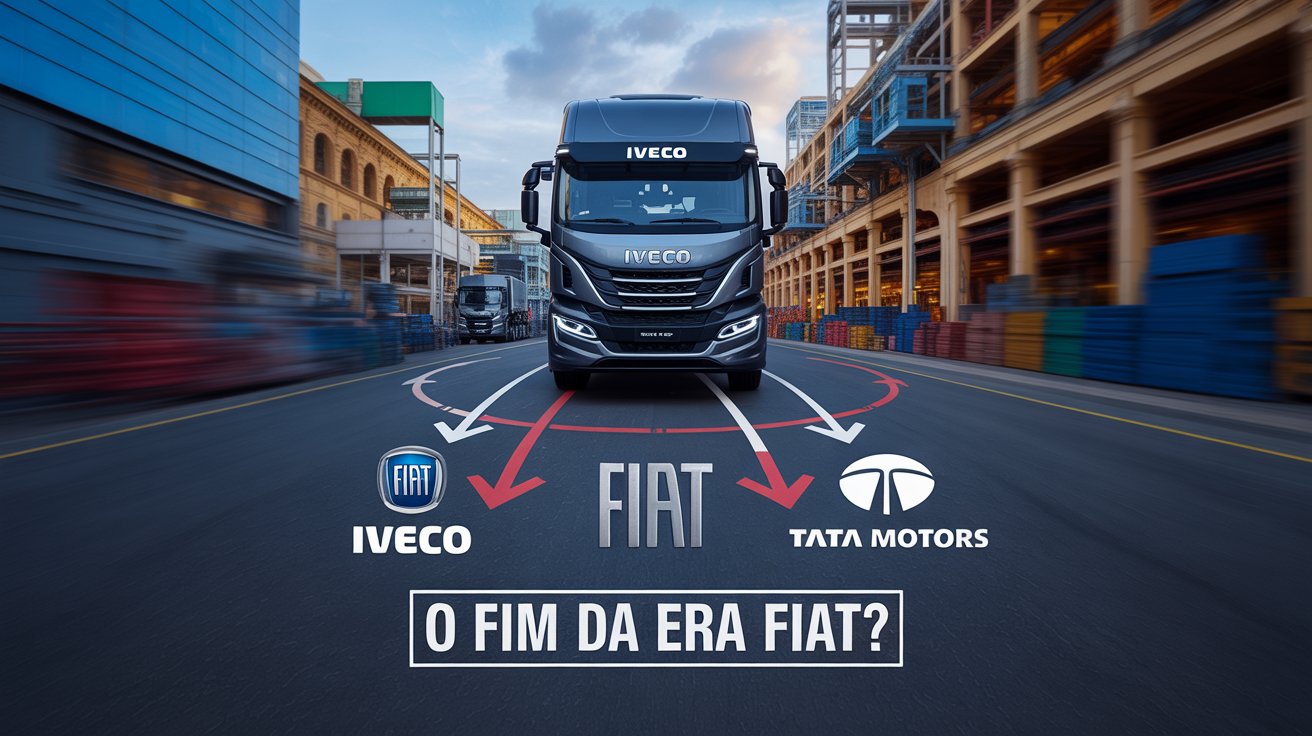


Billion-Dollar Deals Redesign The Global Automotive Sector, Transferring Control From Iveco To Global Giants And Signaling New Directions For The Truck And Terrestrial Defense Industry.
The European industrial landscape has undergone a significant turn after the completion of the sale of the traditional Iveco, a well-established brand among Brazilians, marking the end of a long cycle of Fiat’s operations in the sector.
The transaction, officially announced in July 2025, involved the transfer of control of Iveco’s civilian operations to the Indian group Tata Motors for €3.8 billion, equivalent to about R$ 24.3 billion.
Simultaneously, the company’s military division came under the command of Leonardo, the Italian giant in the defense segment, for €1.7 billion (R$ 10.9 billion).
-
Unemployment rises again to 5.8% at the beginning of 2026, raising alarms about the end of temporary positions and its impact on the Brazilian job market.

-
Document organization can cut invisible costs in small businesses, a simple step that prevents waste, rework, and losses in daily operations.

-
Chinese giant worth nearly R$ 4 billion that manufactures cables for electric cars, solar energy, and robotics wants to open a factory in SC.
-
Many employers do not know, but the law guarantees domestic workers a 25% increase in salary during trips, 50% for overtime, 20% for night shifts, and 17 additional benefits that can lead to labor lawsuits if not paid.


Historic Change For Fiat And The Industrial Legacy
The restructuring encompassed the entire line of trucks, buses, and engines produced by Iveco, including the subsidiary FPT Industrial and the French coachbuilder Heuliez.
With the transaction, the central structure of these operations will start to function in the Netherlands, under the direct control of Tata Motors, a conglomerate that also oversees the production of global brands like Jaguar and Land Rover.
Founded in 1975, Iveco was born from the merger of five European manufacturers and, for decades, was one of Fiat’s pillars in the automotive sector, actively participating in the industrialization and modernization of commercial transport in various regions of the world.
More recently, the brand was under the management of the holding company Exor, controlled by the traditional Agnelli family, a symbol of Italian industry.
Now, with the sale, an historic cycle for Fiat and for the European automotive industry itself comes to an end.
In Brazil, Iveco has maintained a significant industrial presence since 1997, when it opened one of the main factories outside Europe, located in Sete Lagoas, Minas Gerais.
This unit is responsible for the production of light and medium trucks from the Tector line, the heavy S-Way, and the utility Daily, vehicles that have gained space in cargo transport across the country.
The same complex also houses the brand’s Product Development Center in Latin America, the first outside the European continent.
With the integration into the Tata Motors group, experts point out that the Minas Gerais unit is likely to gain even more prominence in the company’s strategy for South American markets.
Sale Of Military Division To Leonardo Reinforces Role In Terrestrial Defense
The separation of Iveco’s defense division has opened space for Leonardo, a company based in Rome with a solid presence in the aerospace, electronics, naval, and terrestrial defense sectors, to take control of the IDV (Iveco Defence Vehicles) and Astra brands.
According to official information, Leonardo will integrate iconic models such as the LMV Lince, the Centauro II, and the Guarani 6×6, the latter developed specifically for the Brazilian Army.
The IDV also stands out for advancements in autonomous solutions, through the IDV Robotics division, employing about 2,000 people with direct operations in Europe and Latin America.
“The operation is strategic to expand Leonardo’s presence in international defense programs,” the company stated in an official note, highlighting the expectation of consolidating its prominence in high-tech military sectors.
The sale and incorporation process still depends on approval from regulatory bodies, with completion expected by March 2026.
After the finalization of the transactions, Iveco’s shareholders will receive extraordinary dividends, as detailed in a market announcement.
Tata Motors Expands Dominance In Commercial Transport
With the acquisition of Iveco, Tata Motors, one of the largest automotive groups in the world, strengthens its global position in the heavy transport segment and expands its industrial operations in Europe and South America.
Founded in 1945 in Mumbai, the company is part of the Tata Group conglomerate, which operates in diversified sectors such as steel, energy, hospitality, technology, and telecommunications.
In recent decades, Tata has adopted an aggressive internationalization strategy, acquiring the truck division of South Korea’s Daewoo in 2004 and, in 2008, the British brands Jaguar and Land Rover, previously under Ford’s control.
Currently, it maintains industrial operations and development centers in countries such as India, the United Kingdom, Thailand, South Africa, and various regions of Europe.
The Indian manufacturer became globally known for launching the Tata Nano, announced in the 2000s as the world’s cheapest car.
Although the project did not achieve the expected commercial success, it helped to project Tata’s image as an innovative company willing to invest in affordable solutions for emerging markets.
With the addition of Iveco, Tata Motors’ portfolio strengthens, gaining even more relevance in commercial cargo transport.
New Phase Of Iveco Under Indian Command
After decades integrating the Fiat group, Iveco begins a new phase, now under the command of one of Asia’s leading industrial conglomerates.
The market’s expectation is that the synergy between operations will contribute to consolidating the brand as a global reference in commercial transport, especially in light of the challenges posed by the transition to electrified vehicles, advanced connectivity, and sustainable logistics solutions.
Additionally, the movement reinforces the trend of globalization in the automotive sector, with traditional European companies being absorbed by Asian groups seeking expansion and competitiveness.
Iveco, now headquartered in the Netherlands, will focus exclusively on the civilian segment, leaving the defense sector under Leonardo’s responsibility.
Outlook For Brazilian And Global Markets
The end of Fiat’s industrial era with the sale of Iveco has direct and indirect impacts on the Brazilian market, especially due to the importance of the Sete Lagoas factory in supplying trucks and utilities in Latin America.
Industrial sectors and experts are closely monitoring the integration into the Tata Motors group, evaluating how the change may influence the national production chain, investments in technology, and job generation.
In light of this transformation, the question remains: will the new phase of Iveco under Indian command bring more innovation and prominence for Brazil in the global landscape, or will the brand lose ground to traditional competitors and new international players?









VENDER A JÁ CONSOLIDADA IVECO, ESPECIALMENTE NO BRASIL POR APENAS 5,5 BILHÕES DE EUROS, OU 36,5 BILHÕES DE REAIS É UMA VERDADEIRA PECHINCHA!
SÓ PRA COMPARAR; OS ESTÁDIOS CONSTRUIDOS OU REFORMADOS NO BRASIL PARA A COPA DO MUNDO DE 2014, EM MÉDIA FORAM GASTOS 1,5 BILHÕES POR ESTÁDIO…
ISSO É UMA PIADA; A VENDA DA IVECO TERÁ SIDO UMA PECHINCHA!!!
Tá certo, mais com certeza sem corrupção esses estádios custariam apenas vinte por cento desse valor.