





 Portuguese
  English
  Spanish
  6 min of reading
  26 comments


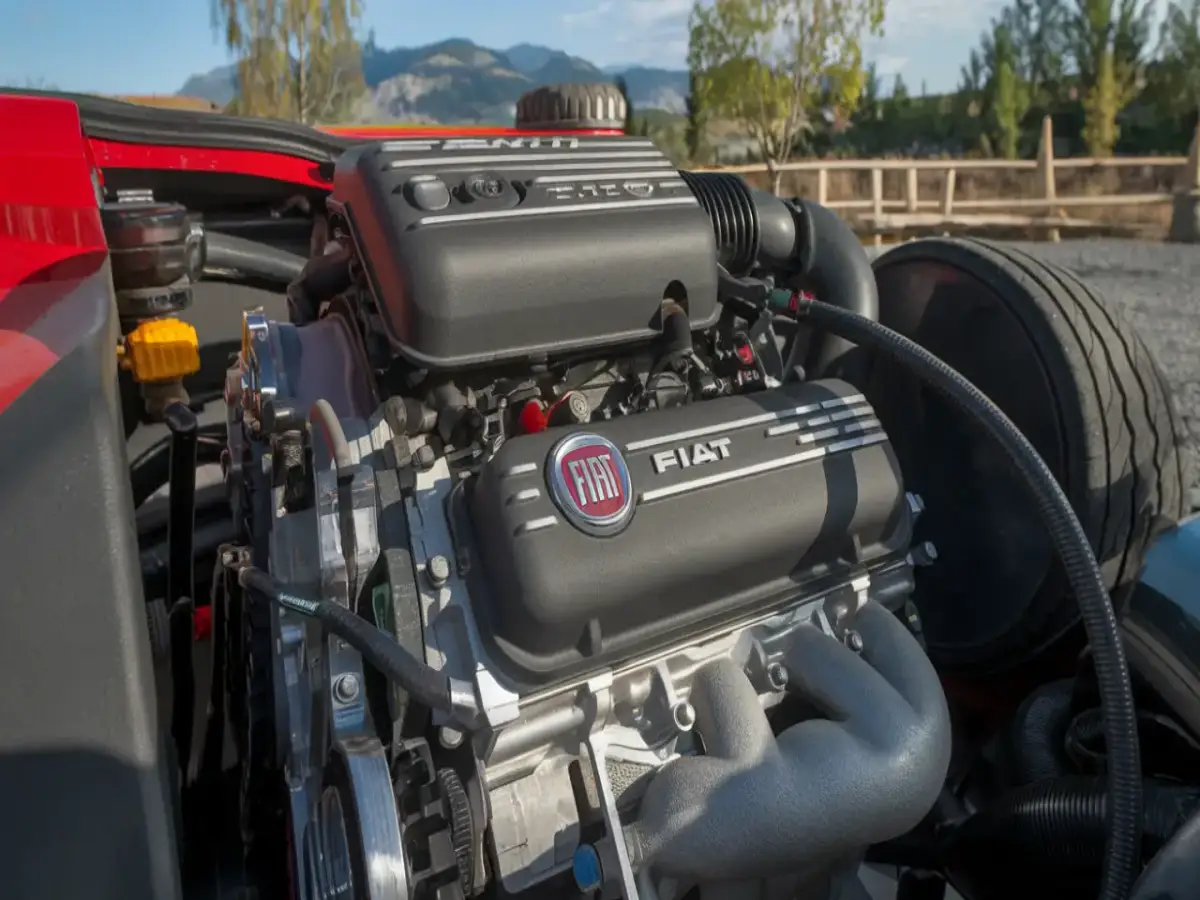


Awarded Globally by the Automotive Industry, Fiat’s Compact and Powerful Twin-Cylinder Engine Surprised Automotive Engineering by Combining Lightness, Optimized Torque, and Advanced Technology
When it comes to automotive innovation, the names that usually come up are Japan and Germany, countries traditionally associated with cutting-edge engineering. However, Fiat challenges this perception with an impressive creation: the 0.9 TwinAir engine. This small technological marvel revolutionized the compact engine market and won important awards, proving its efficiency and ingenuity. Speaking of the Italian brand, did you know that for R$ 61 thousand, Fiat’s new popular car is the cheapest in Brazil and goes 700 km on a single tank?
Launched in 2011, the 0.9 TwinAir engine caught global attention by winning the prestigious Engine of the Year award. As if the recognition wasn’t enough, it also won four awards in the same edition, a rare feat in the automotive industry. Even though it is considered a relatively old engine nowadays, the TwinAir remains relevant thanks to its combination of technology, efficiency, and surprising performance for a compact engine.


An Award-Winning and Surprising Engine
The twin-cylinder engine, with 875 cm³ of displacement (rounded to 900 cm³), features impressive technical characteristics. With a cylinder diameter of 80.5 mm and a stroke of 86 mm, it manages to balance power and fuel economy. Fiat developed two versions of this engine: one turbocharged and another naturally aspirated, both offering excellent performance in different situations.
-
OMODA & JAECOO grows in Europe in 2026 with an integrated strategy of sales, innovation, local production, and technological advancement in the United Kingdom, Italy, and Spain.

-
OMODA & JAECOO expands after-sales service in Brazil with competitive maintenance, a 7-year warranty, and high availability of parts for technological SUVs.

-
OMODA & JAECOO appoints Alessandra Souza as executive marketing director in Brazil and accelerates brand expansion with a focus on innovation, networking, and hybrid portfolio.

-
Jaecoo 7 with super hybrid SHS system exceeds 1,200 km of combined range with a 1.5 turbo engine, high-density battery, and intelligent energy management.


The key to the TwinAir engine’s success is its versatility. Designed for urban and compact vehicles, it provides surprising torque at low RPM, an essential requirement for traffic in large cities. No wonder Fiat installed this engine in various models from its partner brands, such as Lancia, Alfa Romeo, and Chrysler.
The Engineering Behind the Fiat 0.9 TwinAir Engine
One of the most curious features of the TwinAir engine is its twin-cylinder layout. Unlike traditional engines, where the pistons move oppositely to balance motion, Fiat adopted a design where both pistons move up and down simultaneously. Although this configuration naturally creates a more intense vibration, Fiat found a clever solution: the use of a counterbalanced shaft.
This shaft rotates in a 1:1 ratio with the crankshaft, meaning it completes one full turn for each crankshaft rotation. Additionally, the shaft incorporates sturdy counterweights that help minimize vibrations and stabilize the engine during operation.
The Lightweight Turbo: Power at Low RPM
Another highlight of the 0.9 TwinAir engine is its lightweight turbocharger, specifically designed to optimize performance at low RPM. Fiat reduced the weight not only of the turbine but also of the shaft and the compressor wheel. While a traditional turbo typically has 10 to 12 blades, the TwinAir operates with just 8 blades.
This reduction allows the turbo to spool up much faster, reaching impressive 265,000 RPM. With less friction and resistance, the turbo responds almost instantly, providing high torque even at low RPM.
Multiair Technology: The Heart of Fiat’s Innovation
The true differentiator of the Fiat 0.9 TwinAir engine lies in the application of the revolutionary Multiair technology. Developed to precisely control airflow through the intake valves, this solution represents a significant advance over conventional systems, such as BMW’s Valvetronic. While other systems can only alter the height of the valve opening, Multiair goes further, allowing complete adjustments to the timing, duration, and intensity of the opening.
The operation is simple yet genius: the camshaft activates a hydraulic piston, which pushes fluid (oil) toward another piston. This second piston opens the intake valve. The solenoid valve determines the exact moment when the fluid can flow or not into the secondary piston. If the solenoid valve is open, the fluid is diverted, and the valve remains closed. Otherwise, the circuit is closed, and the valve opens according to need.
This flexibility allows the Multiair system to adjust the intake valve openings in real time, optimizing airflow according to the engine’s operating conditions. At low RPM and partial load, for instance, the valves can be opened more briefly and controlled, providing more efficient torque.
It is worth noting, however, that Multiair also has its limitations. The system relies on hydraulic pressure generated by the camshaft’s movement. At very low RPM, the available pressure may not be sufficient to fully open the valves. Even so, the benefits far outweigh these limitations, making Multiair one of Fiat’s most important innovations in recent years.
Urban Efficiency: Balanced Performance and Reduced Consumption
The Fiat 0.9 TwinAir engine, combined with the Multiair system and lightweight turbo, offers impressive performance at low RPM. This feature is ideal for urban vehicles, where the driving experience is marked by frequent stops and smooth accelerations. The high torque at low RPM allows the TwinAir to respond quickly to urban traffic demands, providing an agile and efficient driving experience.
Moreover, the reduction in total engine weight contributes to improving the vehicle’s dynamic performance. A lighter engine means less weight over the front axle, improving the weight distribution and maneuverability of the car. This is especially relevant in compact vehicles, where every kilo counts towards a more comfortable and balanced drive.
In terms of fuel consumption, the TwinAir engine stands out as an efficient solution for daily use. Thanks to the combination of the lightweight turbo and the Multiair system, it is capable of delivering satisfactory performance without compromising efficiency. In situations of low load and moderate RPM, the consumption is considerably lower than that of larger engines, making it an attractive option for urban drivers.
Comparison with Conventional Engines
When analyzing the Fiat 0.9 TwinAir engine compared to larger displacement engines, the technological advancement implemented by Fiat becomes evident. While traditional engines rely on fixed valve control systems and conventional turbos, the TwinAir uses innovative solutions to maximize torque and minimize consumption.
For instance, the use of a turbocharger allows the engine to produce high torque at low RPM, something that would be impossible in a conventional aspirated engine of the same displacement. This provides the driver with an instant feeling of power, even in light to moderate accelerations.
The Multiair system offers unmatched flexibility in controlling the intake valves. While conventional engines have a fixed valve opening profile, the TwinAir can dynamically adjust the duration and intensity of the opening, ensuring optimized airflow in all operating conditions.
These combined technologies allow the TwinAir engine to deliver balanced and efficient performance, overcoming the typical limitations of compact engines. Furthermore, they ensure a significant reduction in fuel consumption and pollutant emissions, positioning the TwinAir as a sustainable and innovative solution for the automotive market.
Main Features of the Fiat 0.9 TwinAir Engine:
- Configuration: 2 cylinders in line.
- Displacement: 875 cm³ (rounded to 900 cm³).
- Technology: Multiair System (electronic control of intake valves).
- Turbocharged: In some versions, to enhance torque at low RPM.
- Power: Varies by version (between 85 and 105 hp).
This twin-cylinder engine was primarily designed for urban use, where efficiency and agility are paramount. It is used in models such as the Fiat 500 and other compact vehicles from the brand.
Fuel Consumption of the Fiat 0.9 TwinAir Engine:
The fuel consumption of the Fiat 0.9 TwinAir engine varies according to the vehicle model and driving conditions. Below are the official consumption figures for some models equipped with this engine:
| Model | Urban Consumption | Highway Consumption | Combined Consumption |
|---|---|---|---|
| Fiat 500 0.9 8V TwinAir Start&Stop (86 hp) | 4.6 L/100 km | 3.4 L/100 km | 3.8 L/100 km |
| Fiat Punto 0.9 8V TwinAir Start&Stop (105 hp) | 5.0 L/100 km | 3.8 L/100 km | 4.2 L/100 km |
| Fiat 500L 0.9 TwinAir Start&Stop (105 hp) | 5.7 L/100 km | 4.3 L/100 km | 4.8 L/100 km |
Note: These values are based on official data provided by manufacturers.
Did you enjoy learning more about the innovative Fiat 0.9 TwinAir engine and its surprising technologies? Share your thoughts in the comments! Have you ever driven a car with this engine or know someone who has? We want to know what you think about the performance, fuel consumption, and efficiency of this small automotive revolution!










Este site conseguiu o impossível: está PIORANDO a casa dia….265.000 RPM
PARABÉNS HAHAHA
5 km por litro?
265.000 rpm? Tá certo isso?