





 Portuguese
  English
  Spanish
  4 min of reading
  0 comments


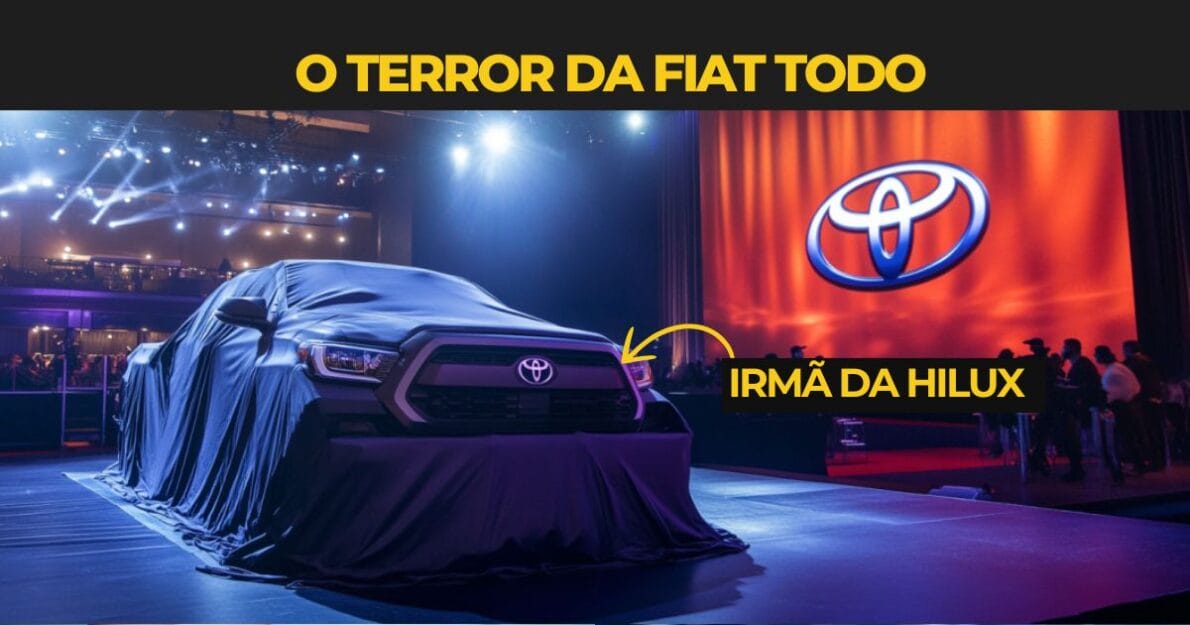
Toyota Stout, new pickup from the Japanese manufacturer, promises to overthrow Fiat Toro and Ford Maverick in the Brazilian market. With a design inspired by the EPU concept, hybrid engineering, and production in Brazil, the pickup is set to revolutionize the segment.
The pickup market in Brazil has never been more competitive. And things are about to heat up even more with the arrival of a new model that promises to challenge the sales leaders.
While many are used to seeing the Fiat Toro dominating the streets and the Ford Maverick gaining more and more space, a heavyweight competitor is emerging on the horizon, ready to change the game for good.
But who could have predicted that Toyota, with all its tradition, would bring a new mid-size pickup to challenge the giants?
-
OMODA & JAECOO grows in Europe in 2026 with an integrated strategy of sales, innovation, local production, and technological advancement in the United Kingdom, Italy, and Spain.
-
OMODA & JAECOO expands after-sales service in Brazil with competitive maintenance, a 7-year warranty, and high availability of parts for technological SUVs.

-
OMODA & JAECOO appoints Alessandra Souza as executive marketing director in Brazil and accelerates brand expansion with a focus on innovation, networking, and hybrid portfolio.

-
Jaecoo 7 with super hybrid SHS system exceeds 1,200 km of combined range with a 1.5 turbo engine, high-density battery, and intelligent energy management.

This is the Toyota Stout, a model that combines innovation, cutting-edge technology, and the promise of robustness already endorsed by the brand.
The vehicle comes with the clear goal of surpassing its competitors and leading the mid-size pickup segment.
Expected to hit the market in 2026, the Toyota Stout has been developed in Brazil and is already in advanced production stages, consolidating the country as a strategic base for the pickup’s manufacturing.
Platform and Production: A New Standard of Quality
The Toyota Stout will be built on the TNGA-C platform, the same as the Corolla Cross, ensuring a reliable and efficient base.
However, the differential of the pickup will be in the rear structure, designed exclusively for the model.
With an extended wheelbase, the vehicle offers more space and versatility, characteristics that please both urban audiences and those who need a utility for work in the field.
A large part of the production will take place in Brazil, demonstrating Toyota’s commitment to local development.
Suppliers are already involved in the project for crucial components such as suspension systems, headlights, and interior finishes, ensuring that the Stout aligns with the strict quality standards of the Japanese manufacturer.
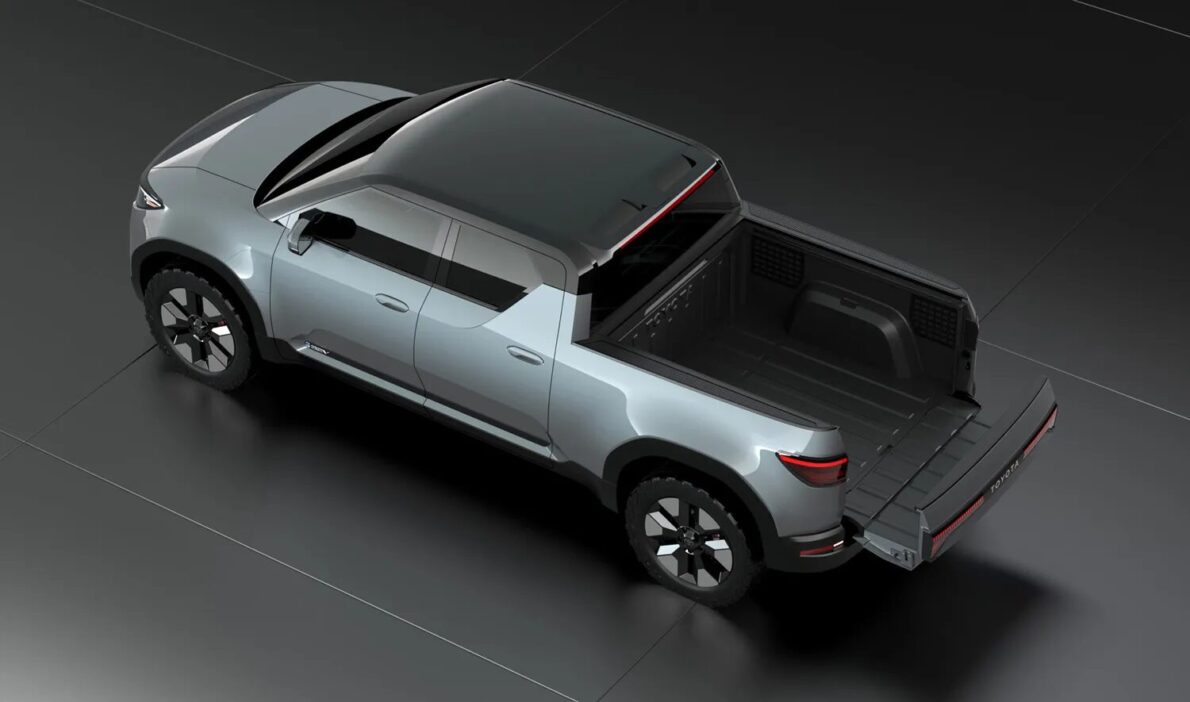
Toyota Stout Has Design Inspired by the EPU Concept
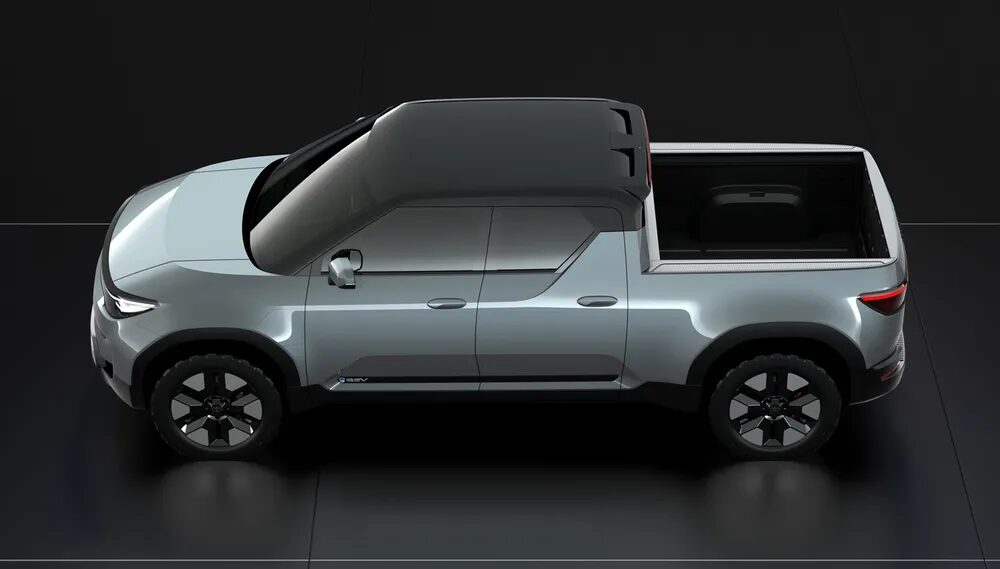
The look of the Toyota Stout also promises to catch attention. Inspired by the electric EPU concept, the modern and aerodynamic design not only provides visual appeal but also contributes to energy efficiency.
The sophisticated and functional lines make the Stout visually stand out against its competitors, while attracting both urban and rural consumers seeking a practical vehicle with style.
This inspiration from the EPU concept reinforces the positioning of the pickup as a model ahead of its time, aligned with global automotive industry trends.
Hybrid Engineering: Technology and Sustainability
If the design impresses, the engineering is no less remarkable. The great advantage of the Toyota Stout will be its plug-in hybrid (PHEV) version.
Combining a combustion engine with lithium-ion batteries, the pickup will offer a range of up to 50 km in fully electric mode, ideal for those seeking economy and energy efficiency.
The hybrid engineering also reduces emissions, aligning with current demands for more sustainable vehicles.
The setup will consist of a 2.0 Dynamic Force engine, operating in the Atkinson cycle, delivering a total power of 223 horsepower, ensuring robust performance for a mid-size pickup.
In addition, the new generation e-CVT transmission will provide smooth and efficient driving, making it an attractive option for consumers looking for both technology and practicality.
Flex Versions: An Option for All Tastes
In addition to the hybrid version, the Toyota Stout will also have entry-level versions with a 2.0 Dynamic Force engine, but without the electric system.
Using the Otto cycle, these models will deliver 175 horsepower, with torque of 20.8 kgfm.
These flex versions will be ideal for those seeking robustness without the need for hybrid technologies, maintaining the practicality of a pickup that can handle different terrains with ease.
Intense Competition: Fiat Toro and Ford Maverick in the Sights
It is no secret that the Brazilian mid-size pickup market is dominated by models such as the Fiat Toro and the Ford Maverick.
However, the Toyota Stout comes to shake up this structure with a significant differential: the tradition of Toyota in producing extremely reliable and durable vehicles.
This reputation will certainly attract many consumers, especially those facing challenging roads who demand a strong and trustworthy vehicle.
Combining modern design, hybrid engineering, and affordable flex versions, the Stout is ready to be a versatile option in the market.
Whether for daily use in cities or as a utility vehicle in the countryside, it offers a wide range of possibilities, establishing itself as a strong competitor in this growing segment.
Promising Future: What to Expect from the Toyota Stout?
The Toyota Stout, with a planned launch for 2026, is highly anticipated.
Its potential to dominate the mid-size pickup segment is real, especially considering the technological innovations and Toyota’s strong position in the market.
With hybrid and flex versions, the Stout will cater to different consumer profiles, further reinforcing the appeal of the Japanese brand.
If the Stout meets all expectations, it will not only be “the younger sister of the Hilux,” but a new standard for the pickup market in Brazil. Are Fiat Toro and Ford Maverick ready to face this new rival?







Seja o primeiro a reagir!