





 Portuguese
  English
  Spanish
 3 min of reading


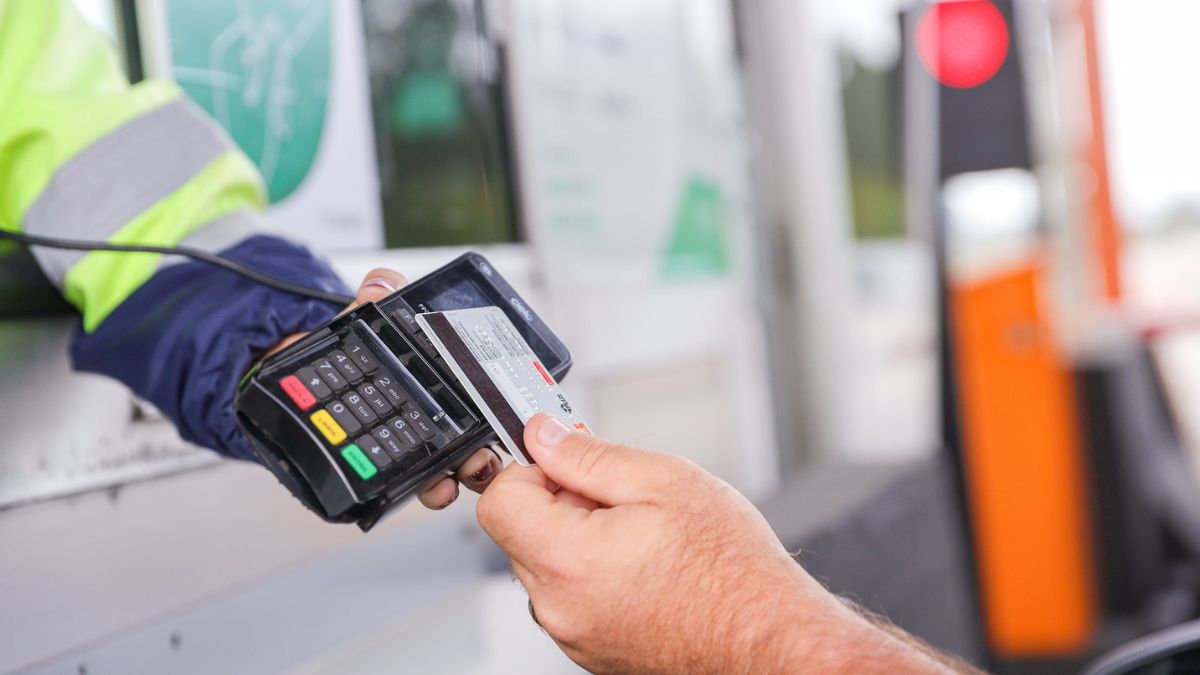
Federal Highways of São Paulo, Rio de Janeiro, Paraná, Minas Gerais and Santa Catarina Will Now Count on This New Technology at the Arteris Toll Booths
Your travels on the highways managed by Arteris will be faster with the innovation that the company has introduced: proximity payment at the toll booth. This new technology allows payment with credit and debit cards and is already being implemented on some highways managed by the company in the states of São Paulo, Minas Gerais, Rio de Janeiro, Santa Catarina, and Paraná. The goal is for this payment system to be available on all served highways.
The proximity payment is a technology implemented in 2021 that is now stronger than ever. Thus, Arteris saw this method as a way to optimize toll payment and make life easier and more practical for those traveling on the highways. Check out more about how this new payment method will work in today’s article.
Understand a Little More About How the Proximity Payment Works That Will Be Used at the Arteris Toll Booths


Arteris Expands Its Expertise in Highway Management With Greater Convenience at the Toll Booth
The large highway manager Arteris has started tests for proximity payment using credit and debit cards, reducing the time passengers spend in line. The adoption of this new method makes the company one of the pioneers in the field to implement such technology, and the goal is for it to be present on all managed roads by the company in the coming years.
-
With an investment of R$ 612 million, a capacity to process 1.2 million liters of milk per day, Piracanjuba inaugurates a mega cheese factory that increases national production, reduces dependence on imports, and repositions Brazil on the global dairy map.

-
Brazilian city gains industrial hub for 85 companies that is equivalent to 55 football fields.

-
Peugeot and Citroën factory in Argentina cuts production by half and opens a layoff program for more than 2,000 employees after Brazil drastically reduced purchases of Argentine vehicles.

-
A Brazilian city gains a factory worth R$ 300 million with the capacity to process 200 thousand tons of wheat per year, a mill of 660 tons/day, silos for 42 thousand tons, and an industrial area of 276 thousand m².

Tests are being conducted at 500 booths of the federal concessionaires Fernão Dias (São Paulo and Minas Gerais), Régis Bittencourt (São Paulo and Paraná), Fluminense (Rio de Janeiro), Planalto Sul and Litoral Sul (Paraná and Santa Catarina). In addition to credit and debit cards, people will be able to pay with smartwatches with NFC technology and smartphones, all designed to facilitate the process.
“We are constantly studying solutions that bring comfort to users, always combining technology with our experience in highway management. According to our studies, proximity payment was the best alternative found to offer an additional option to drivers, without compromising traffic flow and safety at the toll plaza.”.
Andre Bianchi, Director of Operations at Arteris (2022)
The NFC Technology and Payment by the New Method of Arteris
The NFC technology is the acronym for the English term Near Field Communication, which means proximity field communication. Many types of credit, debit cards, and electronic devices come with this technology and enable transactions. Thus, if your cell phone or smartwatch has NFC, they can be used for payment at Arteris toll booths.
Arteris is one of the largest highway management companies in Brazil, responsible for 3,200 kilometers of roads in the Southeastern states (São Paulo, Minas Gerais, and Rio de Janeiro) and Southern states (Santa Catarina and Paraná). It manages 5 major federal concessions that are extensive: Fernão Dias, Régis Bittencourt, Litoral Sul, Planalto Sul, and Fluminense. Additionally, it is a subsidiary of the Paulista concessionaires Intervias and ViaPaulista.
Under the command of international companies from Spain and Canada (Albertis and Brookfield), the company has already injected over R$ 20 billion into projects that have contributed to Brazil’s advancement. Thus, it achieved the milestone of a 51% reduction in fatalities on highways between 2010 and 2020, meeting the goals set by the United Nations (UN) for safer traffic.








Seja o primeiro a reagir!