





 English
  Francês
  Alemão
  Italiano
  Japonês
  Norueguês
  Portuguese
  Spanish
  4 min of reading
  0 comments


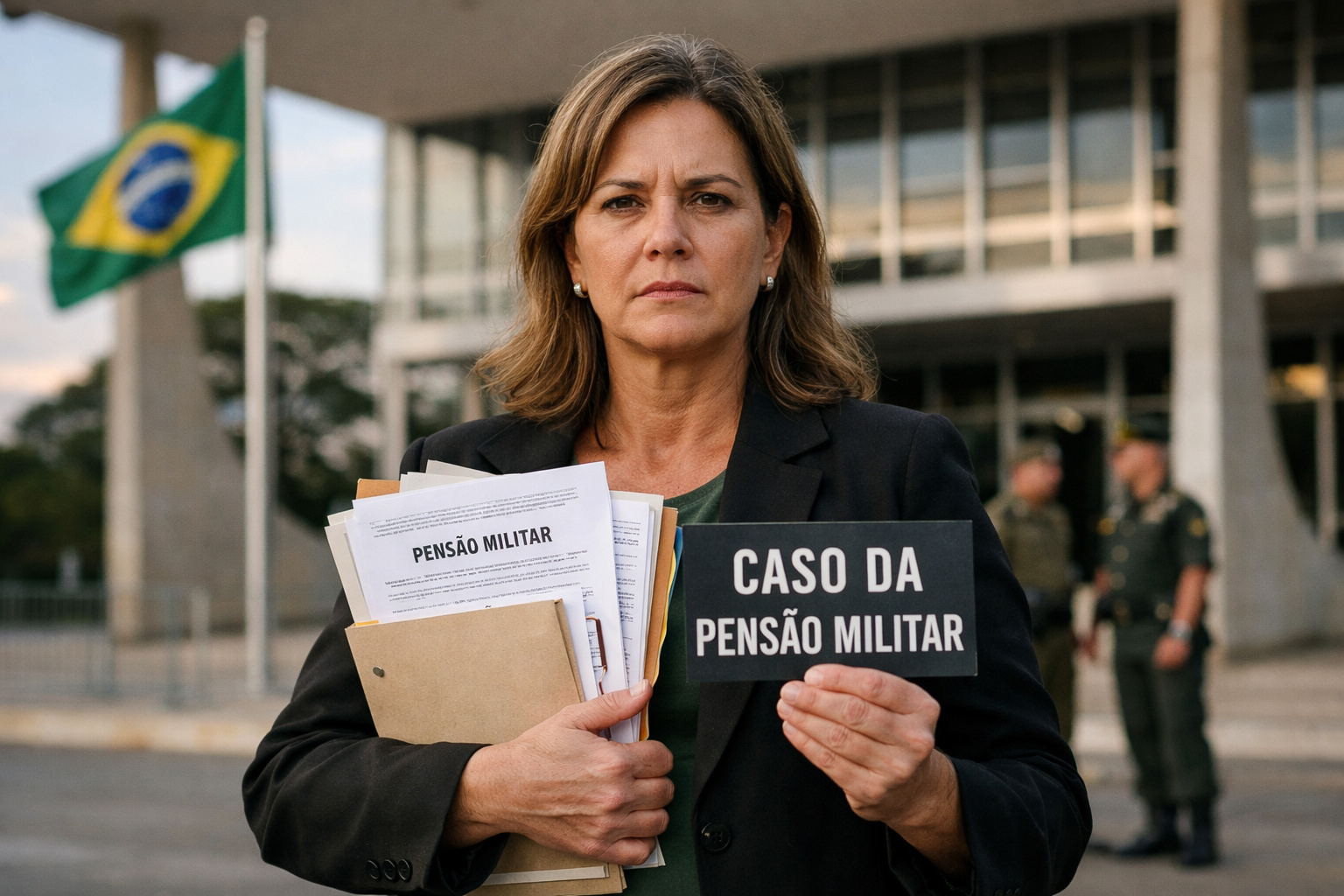
Supreme Federal Court Understanding Opens Door for Analysis of Plea Agreement in Military Justice and Revives Legal Debate on Military Pensions and Application of ANPP in Military Proceedings
A recent decision by the Supreme Federal Court (STF) has once again highlighted the legal limits of military criminal proceedings in Brazil. Minister Dias Toffoli ordered the suspension of a criminal action involving a daughter of a deceased serviceman accused of fraud related to receiving a military pension, authorizing the Military Public Prosecutor’s Office to analyze the possibility of entering into a Plea Agreement (ANPP) in this case.
The decision reinforces an understanding that has been discussed in the higher courts: there is no express legal prohibition for the application of the ANPP in Military Justice, provided that the legal requirements set forth in the legal system are respected.
The information was disclosed by the legal portal ConJur, which detailed the grounds of the decision and the history of the case analyzed by the STF. According to the case reported, the investigation involves a woman accused of falsely declaring herself single to continue receiving the military pension left by her father, while actually married to a foreigner and residing outside the country.
-
The Senate approves a bill that criminalizes misogyny, hatred, or aversion towards women, and includes the crime in the Racism Law with a penalty of up to 5 years.

-
Chamber Approves Bill That Allows Pepper Spray for Women Over 16 and Imposes Strict Rules for Purchase, Possession, and Use as Self-Defense

-
Chamber Approves Law to Combat Leucaena, Fast-Growing Plant That Dominates Land and Threatens Native Species in Various Regions of the Country

-
Asset Division: Know What Cannot Be Divided in Case of Divorce


According to the accusation, the declaration would have allowed the benefit to continue being paid, which could constitute a crime of fraud against property under military administration.
Request for Plea Agreement Had Been Rejected by Military Justice
During the progress of the case, the defense of the accused requested that the case be referred to the Coordination and Review Chamber of the Military Public Prosecutor’s Office to evaluate the possibility of entering into the Plea Agreement.
This type of agreement, provided for in Article 28-A of the Code of Criminal Procedure, allows certain criminal offenses to be resolved without the continuation of judicial action, as long as the accused meets certain conditions imposed by the Public Prosecutor’s Office.
However, the request was initially denied by the first instance of Military Justice. Subsequently, the defense appealed to the Superior Military Court (STM), which upheld the decision against applying the benefit.
The denial occurred because the military court has a consolidated understanding that the ANPP should not be applied in Military Justice proceedings. This position was formalized after the judgment of an Incident of Resolution of Repetitive Demands (IRDR) and subsequently consolidated in the Summary 18 of the STM.
According to the court, the prohibition aims to preserve principles such as equality, legal certainty, procedural speed, and legality within the Armed Forces.
Despite this, dissatisfied with this understanding, the accused’s defense brought the discussion to the Supreme Federal Court, arguing that the absolute prohibition on plea agreements is not supported by legislation.
STF Points to Absence of Prohibition in Criminal Legislation
Upon analyzing the appeal presented, Minister Dias Toffoli considered that the generalized prohibition established by the military court could not prevail precisely because there is no express legal provision preventing the application of the ANPP in Military Justice.
In his decision, the magistrate highlighted that Article 28-A of the Code of Criminal Procedure, which establishes the plea agreement, does not bring any specific restriction for military proceedings.
Furthermore, Toffoli reminded that Article 3 of the Code of Military Criminal Procedure (CPPM) establishes that when there are gaps in military legislation, common criminal law provisions can be applied directly.
Thus, according to the minister, the combination of these two legal rules—along with the absence of an express prohibition—allows the benefit to be assessed in each specific case.
In the magistrate’s view, automatically preventing the analysis of the agreement based solely on an administrative summary of the military court violates the principle of strict legality, which requires clear legal provisions to restrict rights in the penal realm.
Recent Precedents Reinforce Supreme Court Understanding
Toffoli’s decision is also supported by recent precedents from the Supreme Federal Court that move in the same direction.
One of these cases was analyzed by the 2nd Chamber of the STF, in a judgment reported by Minister Edson Fachin in HC 232,254, in which it was recognized that common criminal law can be applied in Military Justice proceedings when compatible with constitutional principles.
Another example cited involves a decision by Minister Flávio Dino, who ordered that the Military Public Prosecutor’s Office evaluate the possibility of entering into an ANPP in a case against a former Army soldier accused in Manaus of possessing 0.84 grams of marijuana.
These precedents indicate a trend of relaxation in the interpretation of military procedural rules, allowing already established legal instruments in common justice to also be considered in certain situations in the military context.
At the end of the case analysis, Minister Dias Toffoli granted the writ of habeas corpus and ordered the suspension of the criminal action so that the Military Public Prosecutor’s Office could evaluate the possibility of an agreement.
In the decision, the minister stated:
“In light of these considerations, in accordance with the caput of Article 192 of the RISTF, I grant the order to suspend the criminal action, so that the Military Public Prosecutor’s Office proposes the Plea Agreement, provided the legal requirements are met in the specific case.”
The accused is represented by attorneys Eugênio Malavasi, Alan Holanda, Lucas Ruivo, Marco Aurélio Magalhães Júnior, Juliana Regueira, and Mariana Melzer.
The process is being handled by the Supreme Federal Court under the number RHC 268.704.









Seja o primeiro a reagir!