





 Português
  Inglês
  Espanhol
  5 min de leitura
  64 comentários


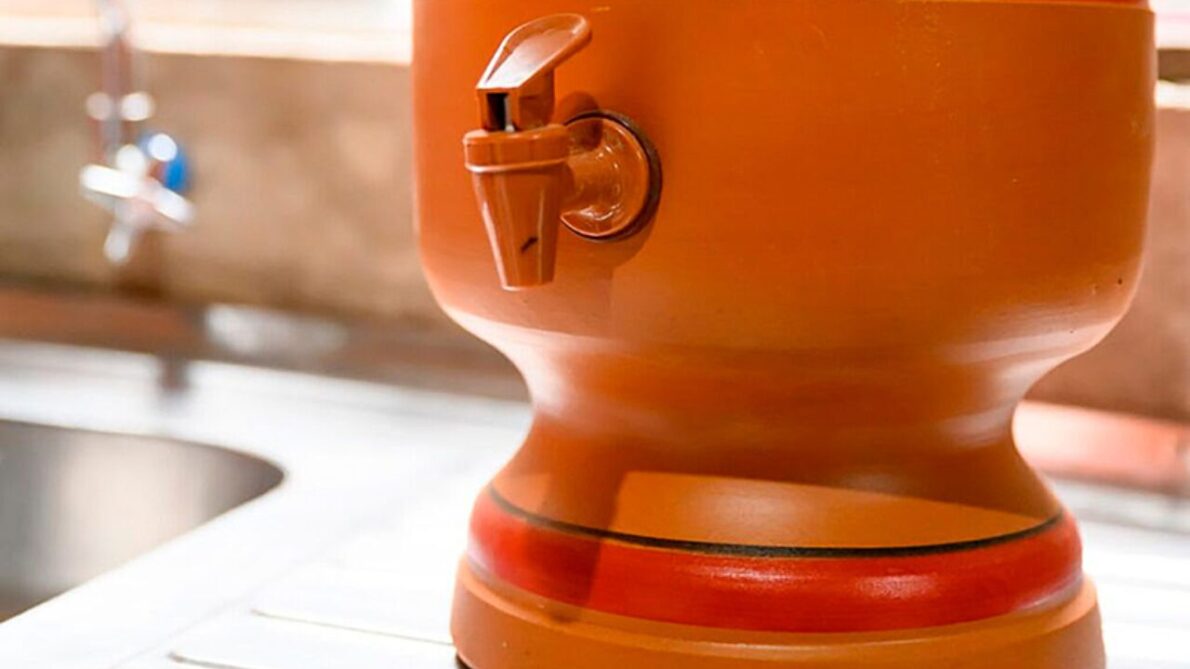


The Clay Filter Is An Efficient And Traditional Solution For Purifying Water, Removing Impurities, Heavy Metals And Keeping The Water Fresh And Safe.
The clay filter, a traditional icon present in Brazilian homes, continues to be one of the safest and most effective ways to ensure pure and fresh water. Even amidst the advancement of modern technologies, the clay filter stands out for its simplicity and efficiency. With a proven capacity to eliminate up to 95% of chlorine, pesticides, parasites and heavy metals such as iron, lead, and aluminum, this method of water purification is still widely used and recommended.
The Surprising Effectiveness Of The Clay Filter
When it comes to water purification, the clay filter has a special place, especially because of its ability to remove a wide variety of impurities.
Thanks to the ceramic candles that make up its filtration system, the filter manages to retain much of the contaminants present in the water.
-
A bright yellow mushroom imported from Asia escaped from a cultivation farm in the United States in 2010 and is now aggressively spreading across 25 states, destroying entire communities of native fungi in American forests.

-
Buried under China, a colossal machine weighing 20,000 tons began operating as the largest neutrino detector on the planet and, in just 59 days, surpassed results that science took half a century to achieve.

-
Iran enters the center of a climate alert after the war emitted 5.6 million tons of CO2 in two weeks, surpassing the annual pollution of entire countries.

-
Lunar exploration may change after a Chinese probe finds a “cavity” of radiation that reduces the impact on astronauts by up to 20% at certain times on the Moon.


Studies show that it removes 95% of lead and nearly 100% of the parasite cryptosporidium, which can cause severe intestinal infections.
Another differentiator is how the clay filter keeps the water fresh.
Because it is made of porous ceramic, it can reduce the water temperature by up to 5°C, providing a pleasant sensation of freshness, especially on warmer days.
This additional benefit is one of the factors that explain the preference of many consumers for the clay filter, even in the face of more modern technological alternatives.
The Tradition Of The Clay Filter In Brazil
The use of the clay filter in Brazil dates back to the early 20th century.
It was around 1910 that the first models began to be manufactured, a result of the influence of Italian and Portuguese immigrants who brought the technique to the country.
The production of the famous São João filter, made with red clay and a porous candle, began between 1926 and 1928, in the city of Jaboticabal, in the interior of São Paulo, by Cerâmica Lamparelli.
After World War II, in 1947, Cerâmica Lamparelli was acquired by the Stéfani family, which maintained the production of the filter with the same quality and technique.
Despite the adversities and the decrease in demand over time, Cerâmica Stéfani established itself as the largest producer of clay filters in Brazil and possibly the world.
Although the market has faced challenges in recent decades, especially with the popularization of modern filtration systems, the clay filter is still widely used in various regions of the country.
Its efficiency, combined with low maintenance costs and reliability, ensures its presence in many homes, especially in areas where tap water may not be 100% safe.
How Does The Filtration System Of The Clay Filter Work?
The secret to the efficiency of the clay filter lies in the simplicity of its mechanism. Filtration occurs naturally, by gravity.
Water passes slowly through the ceramic candles, where impurities are retained, and then drips into the lower reservoir.
This slow process ensures that microorganisms and sediments remain trapped in the candles, resulting in clean and safe water for consumption.
Unlike other filtration systems, which use pressure to force water passage, the clay filter allows for more effective purification.
Pressure-based systems, such as those installed directly on faucets, may allow some contaminants to pass due to the speed of the process, compromising water quality.
Maintenance And Necessary Care
To ensure that the clay filter maintains its effectiveness, it is essential to follow some basic maintenance care.
The candles, for example, should be replaced periodically, as over time they accumulate dirt and impurities that can hinder filtration.
The replacement interval for the candles varies according to use, but it is recommended to replace them every six months or according to the water quality in the region.
Another important point is cleaning the filter.
Many users make the mistake of using chemical products for cleaning, which can damage the ceramic and compromise the filtration capacity.
The recommendation is to wash the filter with water and a soft brush, without using soap or other products.
It is also essential to ensure that the water stored in the filter is always kept in a clean place, free from contamination.
This prevents the treated liquid from being exposed to new impurities, preserving its potability.
Clay Filter: A Sustainable And Effective Choice
Despite the numerous options available on the market, the clay filter remains a reliable choice for water purification.
Its ability to eliminate a wide range of contaminants, combined with simplicity and cost-effectiveness, makes this method still highly valued by many consumers.
In addition, its durability and low maintenance requirements are other attractions that reinforce its popularity.
In a scenario where water quality is an increasing concern, the clay filter remains a firm solution that is efficient, sustainable, and accessible, providing safety and well-being for millions of Brazilians who choose this traditional yet proven effective alternative.

Scientific studies on this filter were published in The Drinking Water Book, by Colin Ingram (June 2006). Ingram has 40 years of experience as a scientific writer, researcher, and technical publishing consultant. He conducted extensive research programs on all aspects of drinking water and has evaluated and tested water purification products. He lives on the southern coast of Oregon, United States.
Where To Buy A Genuine And Affordable Clay Filter In Brazil?
On Mercado Livre, you can find various options for clay filters from different brands and sizes. Just ACCESS THE SHOPPING LINK HERE or on the image below and make the purchase on the platform, and you will see various alternatives, with prices varying according to size, number of filtering candles, and filter design. An important tip is to always check seller ratings and product reputation to ensure quality.








Maravilhosa essa pesquisa sempre tivemos filtro de barro na minha infância agora vou valorizar ainda mais e ter um. Obrigada
Gostaria de ter esta prova da retenção do ferro, pois a água pode ter ferro 0.30(limite máximo na Portaria do MS) , 2.99 ppm ou até mais.
Filtro de Barro, teve seu tempo, hoje devido a contaminação das águas com certeza é um risco a saúde.
Entendo a preocupação, especialmente com o aumento da contaminação das águas nos dias atuais. No entanto, filtros de barro com velas de boa qualidade continuam sendo eficientes em remover impurezas e até alguns contaminantes. A chave é garantir que o elemento filtrante seja de confiança e faça manutenções regulares. Mesmo com a tecnologia evoluindo, muitas pessoas ainda optam por esse método por sua simplicidade e eficiência. Você já considerou combinar o filtro de barro com outros métodos de purificação para maior segurança?