





 English
  Francês
  Alemão
  Italiano
  Japonês
  Norueguês
  Portuguese
  Spanish
  4 min of reading
  2 comments


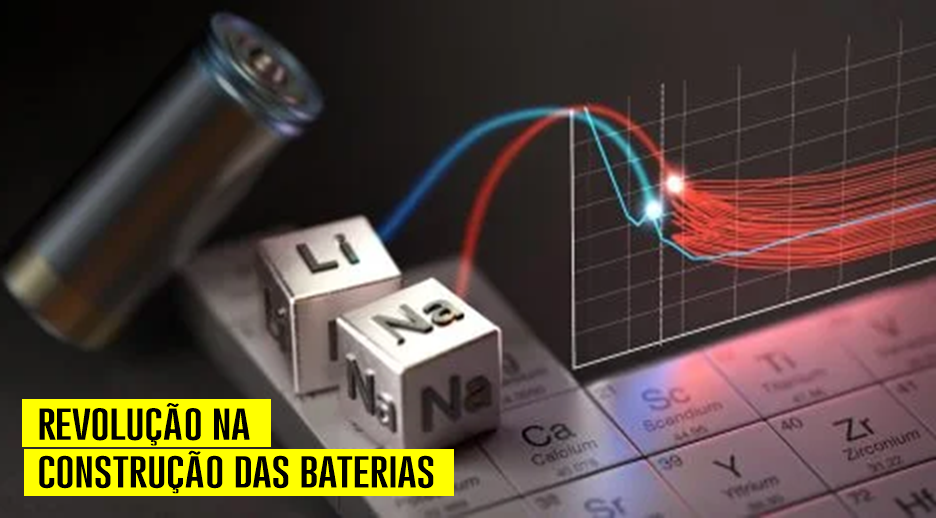


Researchers at Stanford University Are Exploring a Promising Natural Resource That Could Replace Lithium in Batteries.
In recent years, the search for alternatives to lithium-ion batteries has gained momentum, driven by the growing global demand for sustainable energy and the limitations associated with lithium mining and supply.
Sodium-ion batteries emerge as a possible solution, promising lower costs and a more resilient supply chain.
However, for this technology to become competitive in the market, it will be necessary to overcome considerable technical and economic challenges.
-
A “silent skill” is allowing Brazilians to earn up to R$ 22,000 per month without a degree and become indispensable for companies that rely on millions of data to survive.

-
Researchers at the Toyota Research Institute found that if a human uses robotic arms to flip a pancake 300 times in an afternoon, the robot learns to do it on its own the next morning, and this is currently the most promising method to solve the biggest bottleneck in modern robotics.

-
Goodbye iron: a common item in households is starting to lose space to technology that smooths clothes in minutes without an ironing board and with less energy consumption.

-
Antarctica reveals an unusual clue high in the Hudson Mountains, and what appeared to be just an isolated rock began to expose a secret hidden under the ice for ages.


According to a recent study led by researchers at the University of Stanford, achieving commercial viability for sodium-ion batteries will require significant technological advancements and favorable market conditions.
The research indicates that, despite the growing enthusiasm around this technology, the path to replacing lithium is still uncertain and fraught with obstacles.
Why Replace Lithium-Ion Batteries?
Lithium-ion batteries dominate the global energy storage market, generating around 50 billion dollars per year.
They power everything from smartphones and laptops to electric vehicles and large-scale energy storage systems.
However, the growing demand has led to a significant increase in lithium prices, as well as raising environmental and geopolitical concerns.
The pandemic highlighted the vulnerability of the global lithium supply chain, with prices surging due to disruptions in transport and production.
This reignited interest in alternatives that could offer a more stable and accessible supply chain.
Sodium-ion batteries, in this context, have gained attention as a viable option, attracting investments from startups, tech companies, and venture capital funds.
The Potential of Sodium-Ion Batteries
Sodium-ion batteries share many similarities with lithium-ion batteries. Both utilize ions to store and release energy, but sodium has a significant advantage: its abundance.
Unlike lithium, which is found in geographically limited locations, sodium is widely available in the earth’s crust and can be extracted more economically.
Additionally, sodium-ion batteries do not rely on critical minerals such as cobalt and nickel, which are widely used in lithium-ion batteries.
This means that supply chains for sodium may be less susceptible to geopolitical shocks, such as embargoes and trade restrictions.
However, despite these advantages, sodium-ion batteries still face considerable challenges.
Energy density—meaning the amount of energy that can be stored per unit weight—is considerably lower compared to lithium-ion batteries.
This means that, even if the material cost is lower, the cost per unit of stored energy is still higher, hindering their large-scale adoption.
The Challenges for Commercial Adoption
The research conducted by the Stanford team identified several barriers that need to be overcome for sodium-ion batteries to become competitive.
Among the main difficulties is the need to increase energy density without relying on expensive minerals like nickel.
Many sodium-ion battery projects still use metals that drive up production costs, reducing the expected economic advantage.
Another crucial factor is the industry’s learning curve. Although increased commercial-scale production tends to reduce prices over time, researchers emphasize that this cost decline alone will not be sufficient to make sodium-ion batteries competitive with lithium.
A continuous effort in innovation will be necessary to optimize manufacturing processes and the materials used.
Furthermore, the lithium-ion battery market continues to evolve rapidly, with constant advancements in efficiency and cost reduction.
Even though lithium prices have risen in recent years, they are still subject to fluctuations, and any significant drop could further hinder sodium’s entry into the market.
Stanford Research and Pathways to the Future
The research conducted by Stanford University, in partnership with the Precourt Institute for Energy and the SLAC-Stanford Battery Center, analyzed over 6,000 scenarios to assess the viability of sodium-ion batteries.
This initiative is part of the STEER program, which aims to evaluate emerging technologies and provide guidelines for investments in sustainable energy.
According to the researchers, for sodium to become a viable alternative, efforts will need to be concentrated in three main areas:
- Increasing Energy Density – Developing new materials and cell architectures that can store more energy in a smaller volume.
- Reducing Production Costs – Improving manufacturing processes and seeking alternatives to replace more expensive materials.
- Enhancing Safety and Longevity – Ensuring that sodium-ion batteries perform reliably over time, competing with the durability of lithium-ion batteries.
The Impact of Geopolitics on the Energy Transition
The transition to more sustainable energy sources also involves geopolitical considerations.
Currently, China dominates global graphite production, an essential component for lithium-ion batteries. In December 2024, the Chinese government imposed severe restrictions on graphite exports to the United States, as well as banning the export of three other critical minerals.
This scenario reinforces the need for technological diversification, to reduce dependence on strategic materials and strengthen global energy security.
The adoption of sodium-ion batteries could be an effective strategy in this regard, helping to mitigate risks associated with the concentration of suppliers of essential raw materials.
The Future of Sodium-Ion Technology
While sodium-ion batteries still face technical challenges, ongoing advancements in research and development hold promising prospects.
Companies and investors are increasingly interested in exploring this technology as a viable alternative to lithium, particularly in applications where cost is a critical factor, such as energy storage systems for power grids and lower energy-consuming devices.
The next steps for the popularization of sodium-ion batteries involve a collaborative approach among governments, industries, and research institutions.
Creating incentives for developing this technology, investing in production infrastructure, and establishing strategic partnerships can accelerate its adoption and ensure that sodium becomes a viable and competitive alternative in the global market.
Study published in the scientific journal Nature Energy.







Não tem como segurar o avanço para as baterias de ions de s****…quem conseguir primeiro vai se dar muito bem, barateando por demais o custo das baterias…e assim ajudando a solidificar na transição do petróleo para eletricidade…é só uma questão de tempo…e agora mais do que nunca…de pouco tempo…
Muito bom