





 Portuguese
  English
  Spanish
  3 min of reading
  4 comments


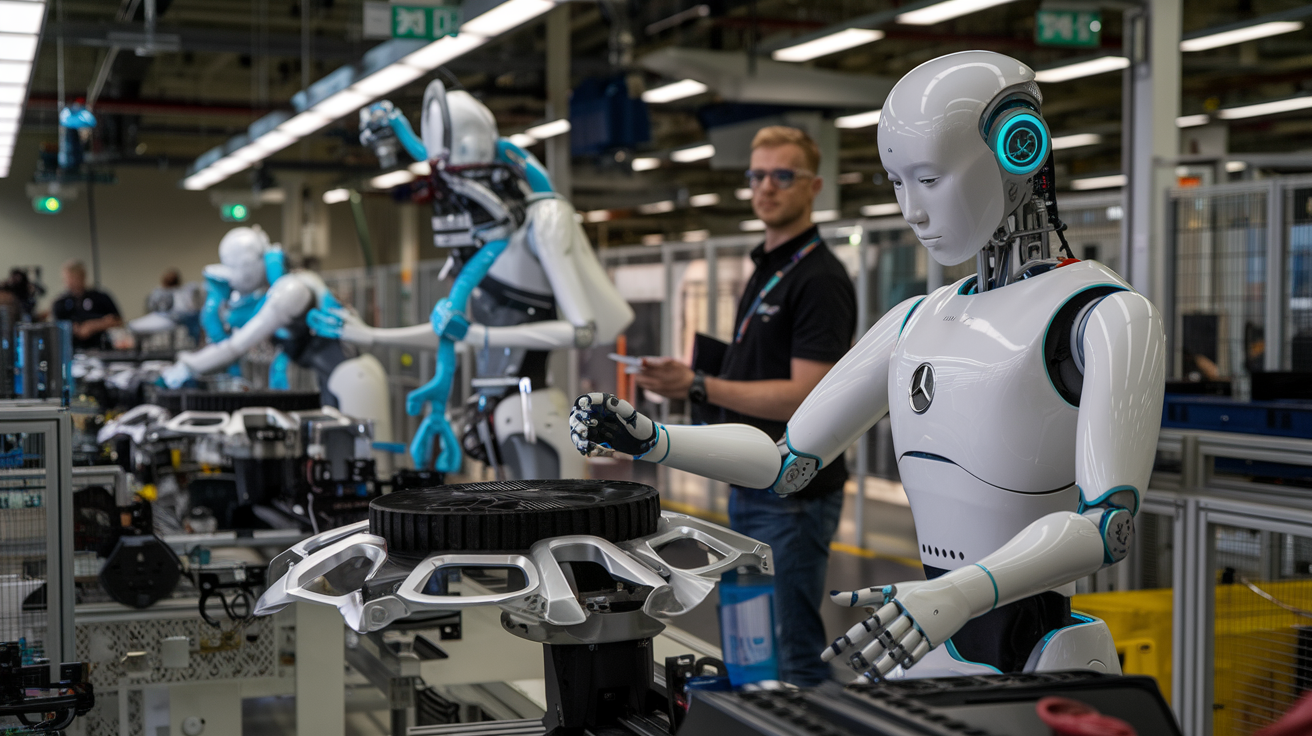


Mercedes Begins Using Humanoid Robots and May Herald the End of Manual Labor in Its Units. Understand How the Humanoid Robots at Mercedes’ Factory Work.
Mercedes-Benz has taken a bold step toward the future of the automotive industry by beginning to use humanoid robots on its assembly lines. Named “Apollo”, the robots are the result of a partnership with the American company Apptronik, which specializes in advanced robotics. The project marks a significant advancement in manufacturing automation, with the potential to deeply transform the work dynamics in factories — and possibly signal the beginning of the end for purely manual roles in the industry.
Designed to work alongside humans in repetitive tasks, the Apollo robots promise to enhance efficiency, reduce operational costs, and minimize accident risks, especially in demanding environments. Mercedes is testing the new technology at its facility in Texas, USA, as part of a global strategy to modernize its production and tackle challenges such as labor shortages and increased demand for high-tech vehicles.
Humanoid Robots at Mercedes’ Factory Perform Public Demonstration
The humanoid machines, which may bring an end to the era of manual labor at the company, conducted their first public demonstration in a real job task within a real work environment, autonomously assembling a motor part.
-
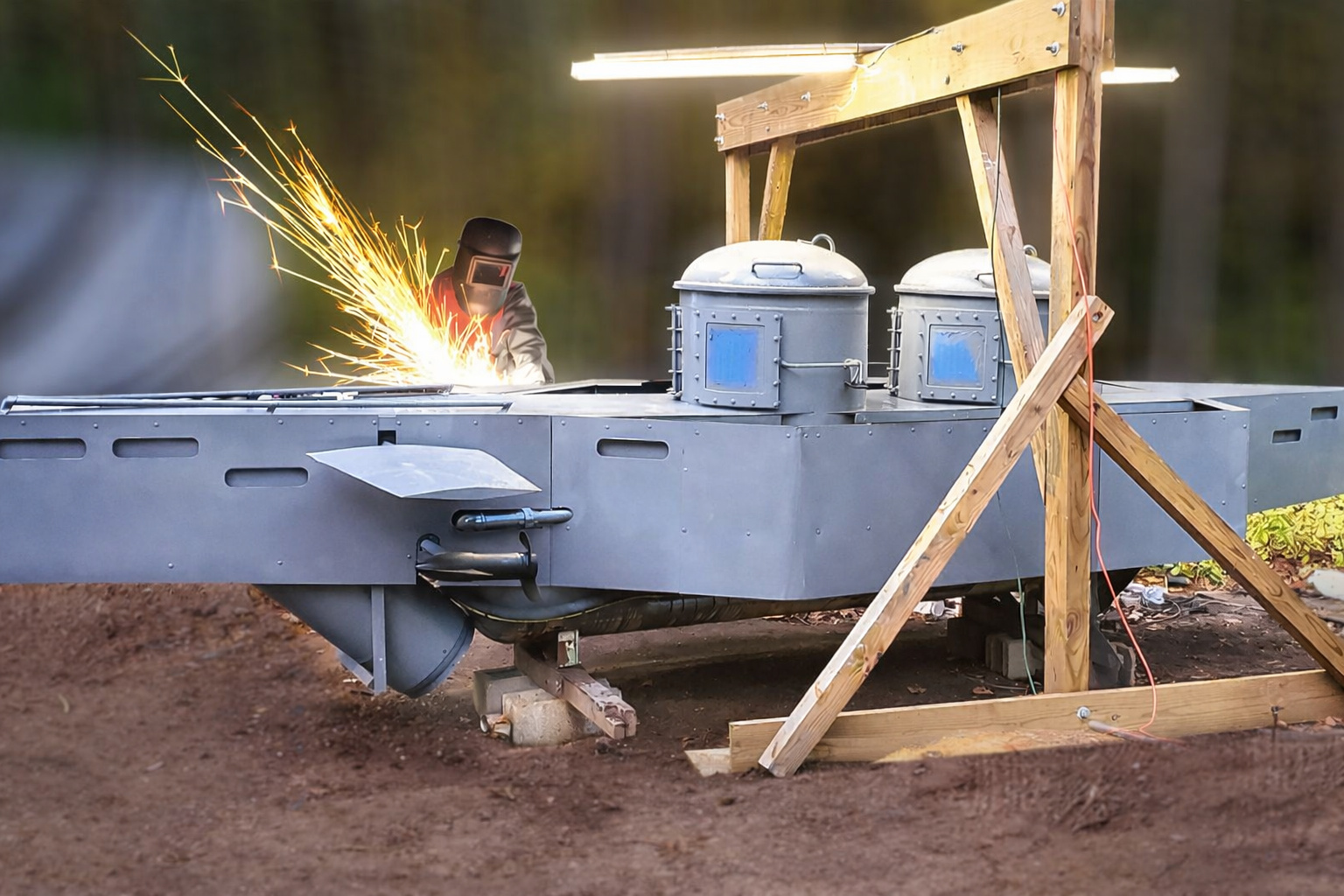
Man builds functional 5-meter submarine in his garage using gas cylinders, PVC pipes, and a refrigerator motor, and navigates with the vessel on a lake in Colombia.
-
Millions of people have been eating yam for centuries without knowing that this humble tuber contains a compound called diosgenin, which scientists have now discovered can improve memory and help control blood sugar levels.

-
Scientists from an international project drill 1,800 meters of ice in Antarctica using hot water and discover details about one of the most intriguing places on planet Earth.

-
Seen from space, a colossal volcano nearly 5,000 meters high in Russia has released 1,600 km of smoke over the Pacific, forming “devil’s horns” of lava and revealing the brutal force of the Ring of Fire.


Mercedes has begun using humanoid robots, representing a significant leap toward a future where robots can share the environment with human workers more efficiently and naturally.
According to Jeff Cardenas, CEO of Apptronik, it is a great day for the company, as he was visibly excited about the achievement. The company is eager to showcase this to the world. In addition to the technical demonstration, Mercedes announced a multi-million euro investment in the company, and humanoid robot tests are already being conducted at Mercedes facilities in Berlin and Hungary.
Companies in the industrial sector, especially automakers with years of experience in automation, have been closely monitoring the evolution of humanoid robots.
Moving away from traditional robotic arms, which require fixed and expensive structures, Mercedes starts to use humanoid robots that have a human-like shape, offering unmatched flexibility.
Mercedes Begins Using Humanoid Robots: Understand the Benefits
A robot with hands, arms, and legs can move through the same facilities as a human worker, use conventional tools, and perform tasks in spaces designed for people, without the need for drastic structural changes.
According to Jorg Burger, head of production and logistics at Mercedes-Benz, a humanoid robot is flexible, making it possible to integrate it into the assembly line, quality inspection, or internal logistics. It can also be moved from one location to another as needed.
For companies facing high costs when changing assembly lines with fixed robots, the ability for quick reconfiguration is a clear competitive advantage. Despite the modest appearance of the humanoid robots at Mercedes compared to robust industrial arms, the Apollo already demonstrates considerable strength, being capable of lifting up to 25 kilograms.
Now that Mercedes has begun using humanoid robots, the next step toward the end of manual labor is to understand which tasks this type of robot can perform usefully, and how it can learn and enhance its skills to take on more complex functions in the future.
Operations of the Humanoid Robots at Mercedes’ Factory
The Apollo robots are programmed to perform functions such as internal logistics, quality inspections, and assistance with repetitive tasks, optimizing workflow and reducing human errors.
Mercedes is beginning to use humanoid robots, involving a crucial training phase where Mercedes-Benz employees use teleoperation and augmented reality to instruct the machines.
This collaborative approach allows the robots to learn from human experience, adapting to the specific demands of the production line.
After training, the Apollo robots gain autonomy to perform their tasks, reducing the need for constant supervision. Additionally, the machines have the capability to automatically connect to power when the battery is low, ensuring continuous and efficient operation.








Por isso, sempre disse para o Pobre de Direita Capitalista sem Capital que o capitalismo tem de ser superado não vai servir para nova realidade e se a justiça social não for feita o mundo se tornará um caos.
No seu enteder o pobre não pode ser de direita tem de esquerda tem que ser um acomodado que vive de esmola do governo viver as custas dos outros isso está acontecendo principalmente por causa de governos de esquerda que quer o povo sempre **** ignorante pra ser doutrinado e se perpetuar no poder
Estamos caminhando para uma sociedade feita para os ricos. Os pobres desempregados não terão como comprar nada.
Estamos caminhando para uma capacitação, ou se adapta ou fica fora ,reflexo de muita reclamação e “direitos” que por fim a indústria da automação resolve,menos mimimi