





 Portuguese
  English
  Spanish
  5 min of reading
  0 comments


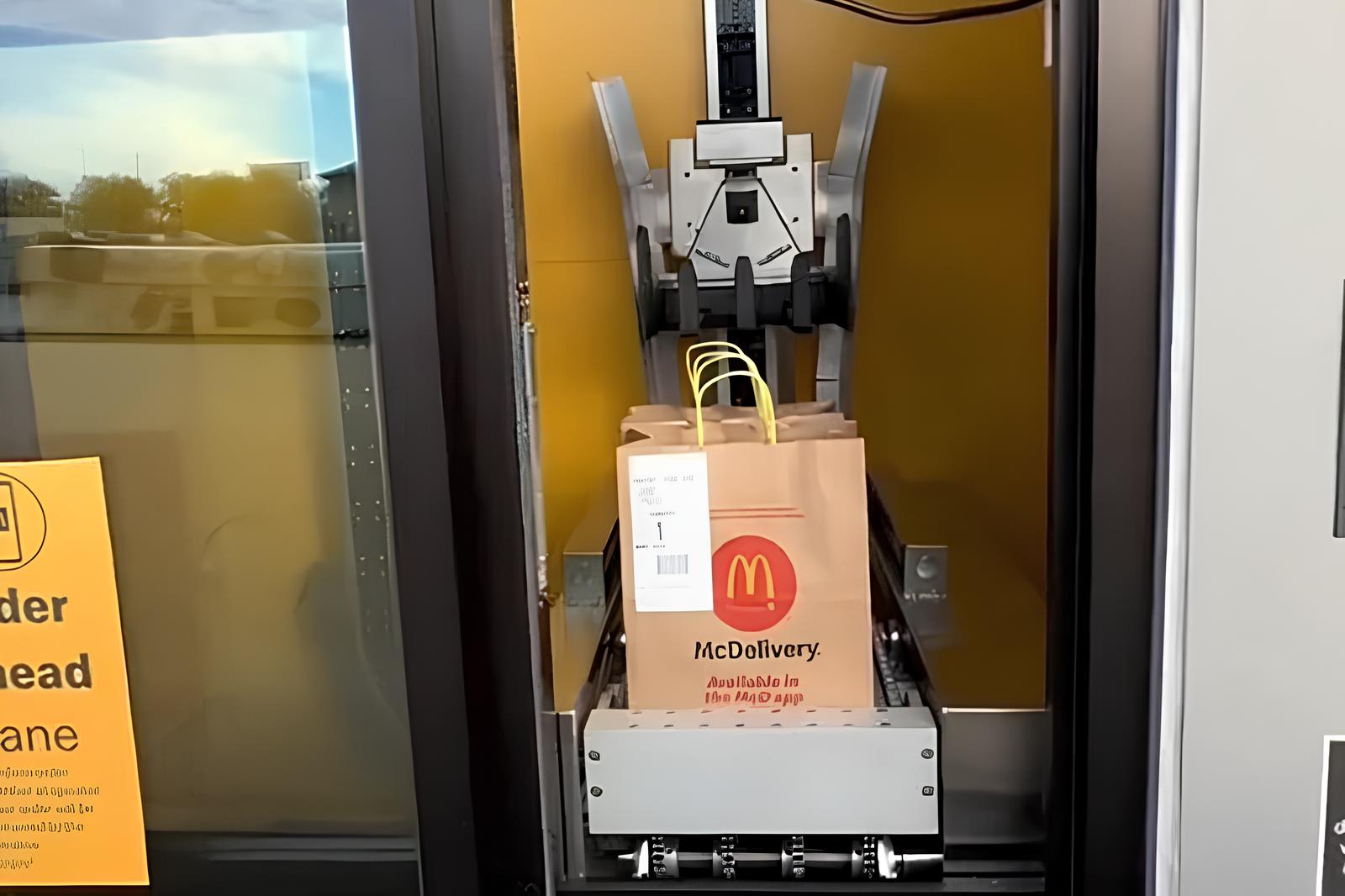
With the Advancement of Robots in Fast Food, Chains Like McDonald’s Accelerate the Transition to 100% Automated Restaurants. Experts Warn About the Impact on Employment and Reignite the Debate About the End of the Era of Manual Labor and Traditional Workforce
In 2022, McDonald’s took a step that seemed straight out of a futuristic movie: it opened in Texas, United States, its first 100% automated restaurant, operated exclusively by robots. Three years later, in 2025, the debate over the end of the era of manual labor and the future of the traditional workforce is gaining more strength, both among experts and internet users on social media.
This initiative from McDonald’s was not just a test of technological innovation — it signals a possible radical transformation in how basic services, like restaurant service, will be conducted in the coming decades. In this article, we explore the impacts of this automated model, real data on automation in the fast food sector, its social and economic implications, as well as perspectives for the global job market.
The Landmark of 2022: McDonald’s and the 100% Automated Restaurant
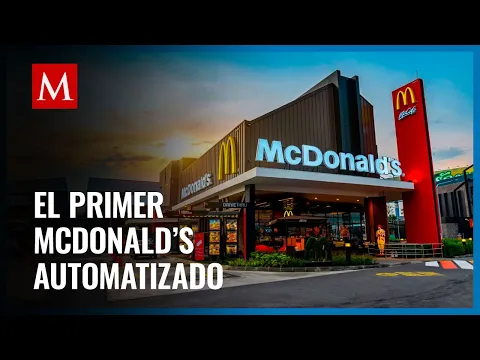
McDonald’s chose the city of Fort Worth, Texas, to open its first restaurant completely operated by automated systems. The unit’s proposal, developed in partnership with the McDonald’s Innovation Center, was to create an experience where the customer places an order through digital kiosks or apps, and the food is prepared and delivered by robots, without direct human interaction.
-
A “silent skill” is allowing Brazilians to earn up to R$ 22,000 per month without a degree and become indispensable for companies that rely on millions of data to survive.

-
Researchers at the Toyota Research Institute found that if a human uses robotic arms to flip a pancake 300 times in an afternoon, the robot learns to do it on its own the next morning, and this is currently the most promising method to solve the biggest bottleneck in modern robotics.

-
Goodbye iron: a common item in households is starting to lose space to technology that smooths clothes in minutes without an ironing board and with less energy consumption.

-
Antarctica reveals an unusual clue high in the Hudson Mountains, and what appeared to be just an isolated rock began to expose a secret hidden under the ice for ages.


According to the portal Época Negócios, the structure of the restaurant was designed to mainly cater to orders via drive-thru and delivery. There are no tables for dining on-site, and contact with humans is minimal. Although there are still employees in the background, their presence is limited to maintenance and technical supervision tasks.
This complete automation aims to primarily increase efficiency, reduce operational costs, and speed up service — one of the most valued points by fast food consumers.
Robots in Fast Food: Trend or Exception?
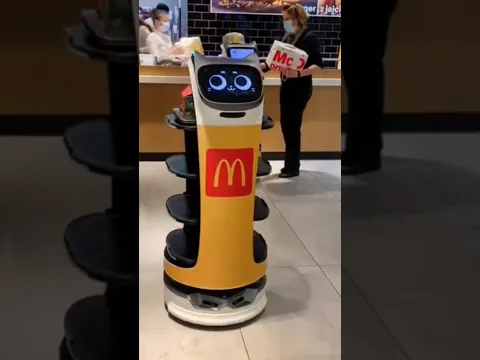
The introduction of robots in fast food is not an isolated phenomenon from McDonald’s. Other chains, such as White Castle and Chipotle, are also investing in similar technologies.

Several years ago, White Castle installed a robot named Flippy in dozens of its kitchens, responsible for frying burgers and fries with precision. Meanwhile, Chipotle has invested in a robotic arm to efficiently make portions of guacamole.
Data from the Brookings Institution reveals that up to 70% of tasks performed in restaurants and food services can be automated with current technology. Furthermore, a study by Oxford Economics pointed out that up to 20 million industrial jobs could be replaced by robots by 2030, with a significant portion of them in developing countries.
In light of this, the 100% automated restaurant from McDonald’s appears more as a harbinger than an exception. The innovations indicate that automation, once restricted to heavy industry, is rapidly advancing into customer service sectors.
End of the Era of Manual Labor: Reflections on the Market and Society
The growing adoption of automated systems raises an urgent question: are we witnessing the end of the era of manual labor? For labor economics experts, the answer is not so simple.
Economist Martin Ford, author of the book “Rise of the Robots: Technology and the Threat of a Jobless Future”, warns that repetitive and low-skilled jobs are at higher risk. “These positions tend to disappear or be drastically reduced with automation,” he states. This includes roles like cashiers, counter attendants, stock clerks, and line cooks.
On the other hand, new roles are also emerging. The need for technicians, automation systems developers, and data managers is growing in proportion to the adoption of robots in retail and food service. In other words, the end of traditional labor may actually signify a transition of skills.
However, this transition does not occur equally in all regions. Countries with less access to technical and digital education tend to suffer more from the displacement of labor. This could further widen social and economic inequalities.
The Debate on Social Media: Fear or Fascination?
With the virality of videos and photos of the automated McDonald’s on social media, especially on Instagram and TikTok, internet users from different parts of the world began to debate the impacts of this model on the daily lives of ordinary people.
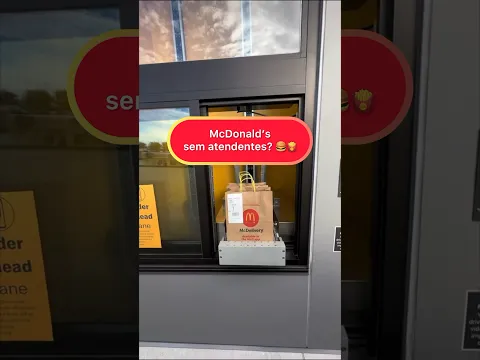
Comments range from enthusiasm for the technology’s efficiency to concern about mass unemployment. While some celebrate “modernity” and “the experience without human errors,” others question: “And where will the young people who currently rely on these jobs to start their lives work?”
The polarization surrounding the topic reflects a global scenario of insecurity regarding the future of work. The discussion goes beyond McDonald’s or automation in fast food — it touches on deep issues about dignity, universal basic income, and the role of technology in a just society.
Total Automation: A Point of No Return?
Experiences involving personalization, empathy, and problem-solving still perform better when executed by people. However, advancements in generative artificial intelligence and autonomous robotics promise to even reduce these limitations. In countries like Japan and South Korea, robots are already used for complex tasks in hospitals, hotels, and even in elderly care.
The trend is clear: McDonald’s 100% automated restaurant is a symbol of an ongoing revolution, and companies that wish to remain competitive will likely need to adhere, at least partially, to this transformation.
The Future of Work Is at Stake
The automated restaurant inaugurated by McDonald’s in 2022 represented a turning point in the food sector. In 2025, the impact of this innovation is even more evident, fueling a global debate about the end of the era of manual labor and the redefinition of the traditional workforce.
Although automation brings undeniable gains in productivity, cost reduction, and new technological opportunities, it also requires social planning, professional training, and public policies focused on digital inclusion and the future of employment.
It is essential that governments, businesses, and civil society work together to ensure that technological advancement benefits everyone — and not just a technological elite. After all, the future of work is not just in machines, but in the human choices we will make with them.







-

Uma pessoa reagiu a isso.