





 Português
  Inglês
  Espanhol
  3 min de leitura
  132 comentários




Mercado Livre Announces The End Of Manual Labor? Robots, Resulting From A Billion-Dollar Investment, Now Transport Up To 600 Kilograms Of Goods!
Mercado Livre has just announced a revolutionary innovation in its logistics operations in Brazil: the implementation of an exclusive robot system. These robots, designed to increase efficiency and accelerate order processing times by up to 20%, will be integrated into the company’s main distribution center located in Cajamar (SP). With over 500,000 packages processed daily, this technology promises to transform Mercado Livre’s logistics, ensuring faster deliveries and raising the level of service offered to customers across the country. Discover how this novelty could impact the Brazilian e-commerce market.
New Robots At Mercado Livre
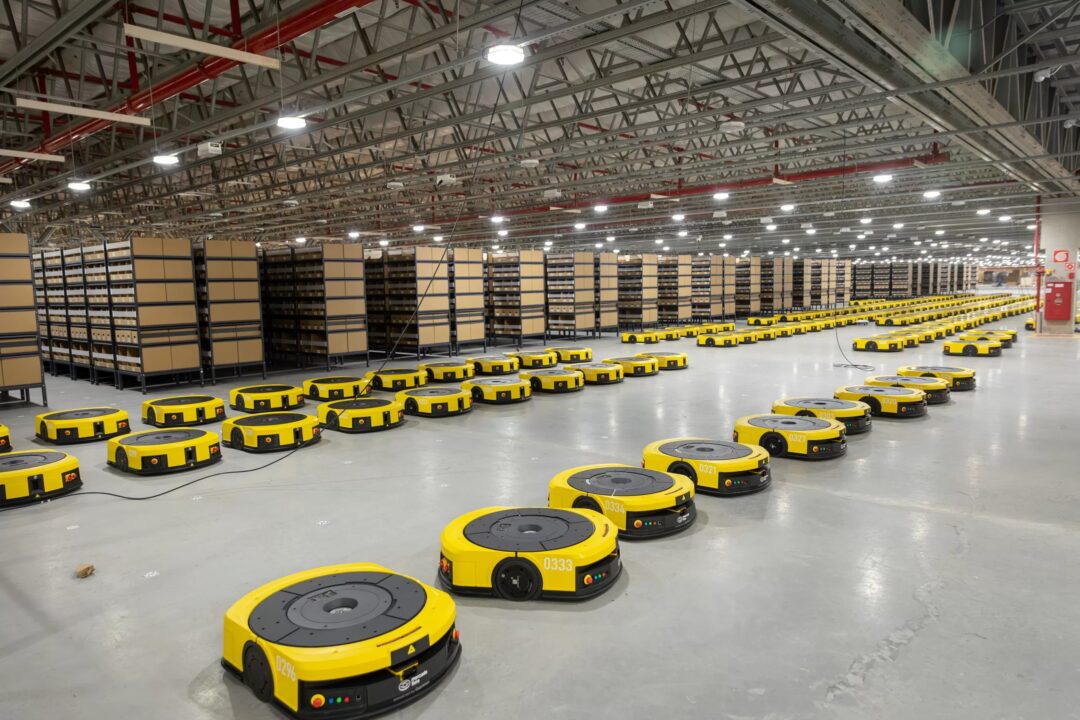
Similar to a vacuum cleaner, the robots that will be used in the operation resemble the well-known robot vacuum cleaners and are from the brand Quickton. They have a diameter of one meter, weigh 145 kilograms, and are yellow.
The Mercado Livre robots are also strong and fast, and according to the company, each robot reaches a speed of two meters per second, capable of lifting and transporting up to 600 kilograms of goods. The Mercado Livre robots have an autonomy of eight hours and recharge in two hours.
-
Found in one of the most radioactive places on Earth, this Chernobyl fungus may be doing something with radiation that no one has been able to explain to this day.

-
A bright yellow mushroom imported from Asia escaped from a cultivation farm in the United States in 2010 and is now aggressively spreading across 25 states, destroying entire communities of native fungi in American forests.

-
Buried under China, a colossal machine weighing 20,000 tons began operating as the largest neutrino detector on the planet and, in just 59 days, surpassed results that science took half a century to achieve.

-
Iran enters the center of a climate alert after the war emitted 5.6 million tons of CO2 in two weeks, surpassing the annual pollution of entire countries.


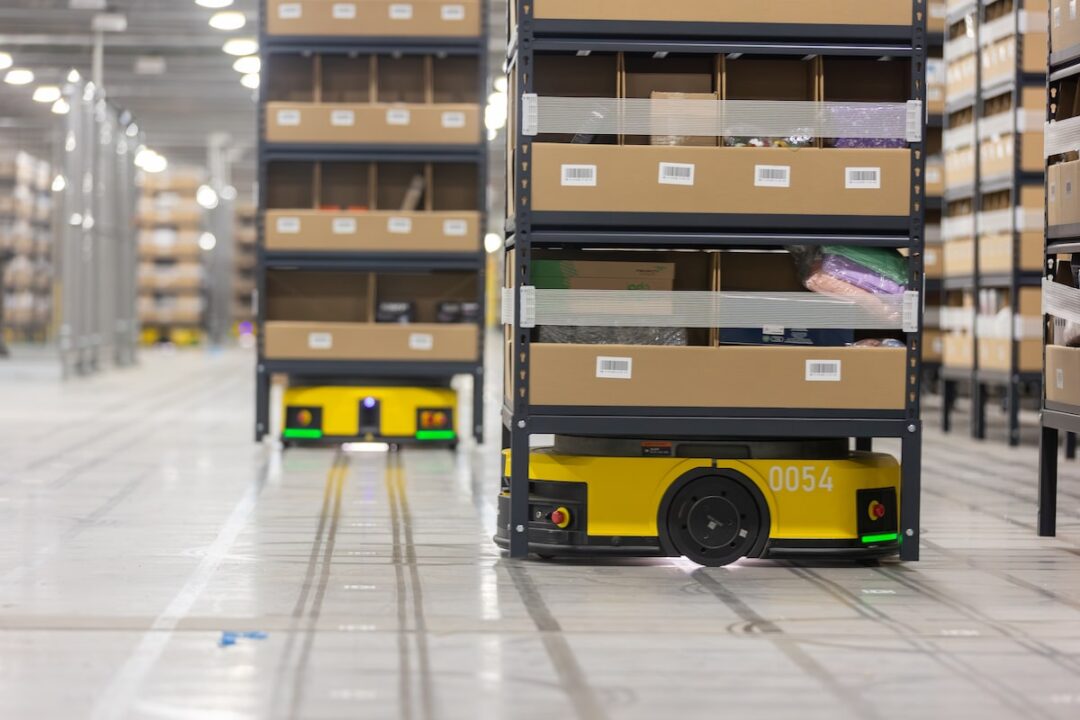
They navigate the distribution center independently and return to charging stations without relying on humans. It is important to note that over 100 robots will be integrated in the first phase. The technology is known as “shelves to person.”
The autonomous Mercado Livre robots will be responsible for the distribution and movement of products, capable of handling up to 20,000 items per day. Combined with human work, order processing times will decrease by up to 20%.
Mercado Livre Robots Are Part Of A Billion-Dollar Investment
According to Mercado Livre itself, the robots will take on the heavier tasks, such as lifting and moving shelves, about 2,500 per day. Employees will be able to focus on less mechanical and more valuable activities.
According to the Senior VP and leader of Mercado Livre in Brazil, Fernando Yunes, integrating robots into the company’s operations has made it possible to accelerate processes and improve storage capacity, especially during periods of higher demand, such as holidays and Black Friday.
The adoption of these robots is part of a total investment of R$ 23 billion that the company plans to invest in Brazil throughout 2024. The amount also includes the hiring of 11,000 new employees. It is worth noting that the company has already stated that by the end of the year, over 234 robots will be integrated into the operation in Cajamar. The expectation is to reach 80,000 orders per day. After the results of this implementation in Brazil, there is a possibility of expanding the technology to other countries.
Will Robots ‘Steal’ Jobs From Humans?
Setting aside the Mercado Livre robots, the advance of robotaxis in China is generating outrage among workers in the transportation sector, who accuse these machines of “stealing jobs” and threatening the livelihood of thousands of families. The fear that robotaxis will eliminate their jobs is becoming an increasingly tangible reality, leading to protests and formal complaints.
These technological innovations, which operate without the need for a human driver, are being viewed as a direct threat to traditional jobs. Last Tuesday, the 27th, the Chinese government took a crucial step by issuing 16,000 test licenses for autonomous vehicles and opening 32,000 kilometers of public roads for these machines to circulate.
Although robotaxis represent only 1% of the transportation market in Wuhan, their presence is enough to generate significant discomfort among local drivers. The cost difference between a ride in a robotaxi and a traditional ride is one of the main points of tension.








Emprego gera mais emprego
No futuro , vão ter que criar um bolsa família permanente, p/ o povo poder consumir o que essas máquinas produzirem e gerar impostos.
Engraçado a AMAZON fez um marketing igual a esse dizendo que robôs iam operar na seleção de pacotes. Só não disseram que havia serem humanos conferindo os robôs trabalhando remotamente por câmeras. Resultado isso foi um grande fracasso e os seres humanos “voltaram” sem nunca terem ido…