





 Portuguese
  English
  Spanish
  7 min of reading
  0 comments


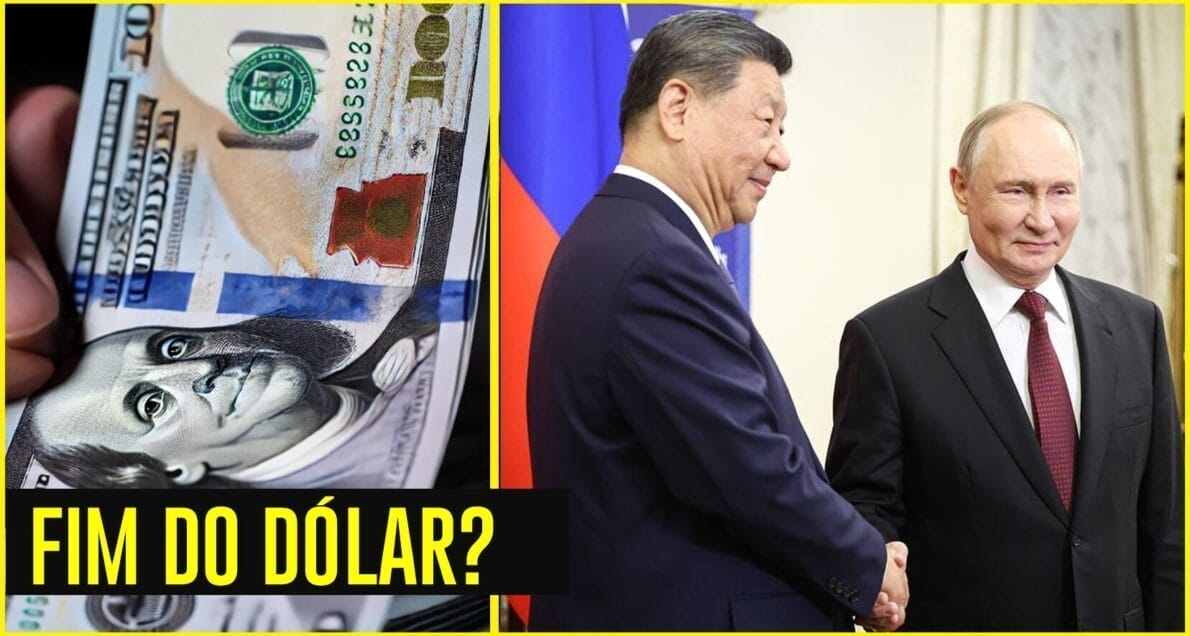
Putin’s Plan To Weaken The Dollar Involves A Strategic Movement During The BRICS Summit. Discover How This Strategy Could Violate The Sanctions Imposed And The Impact It Could Have On The Global Economy!
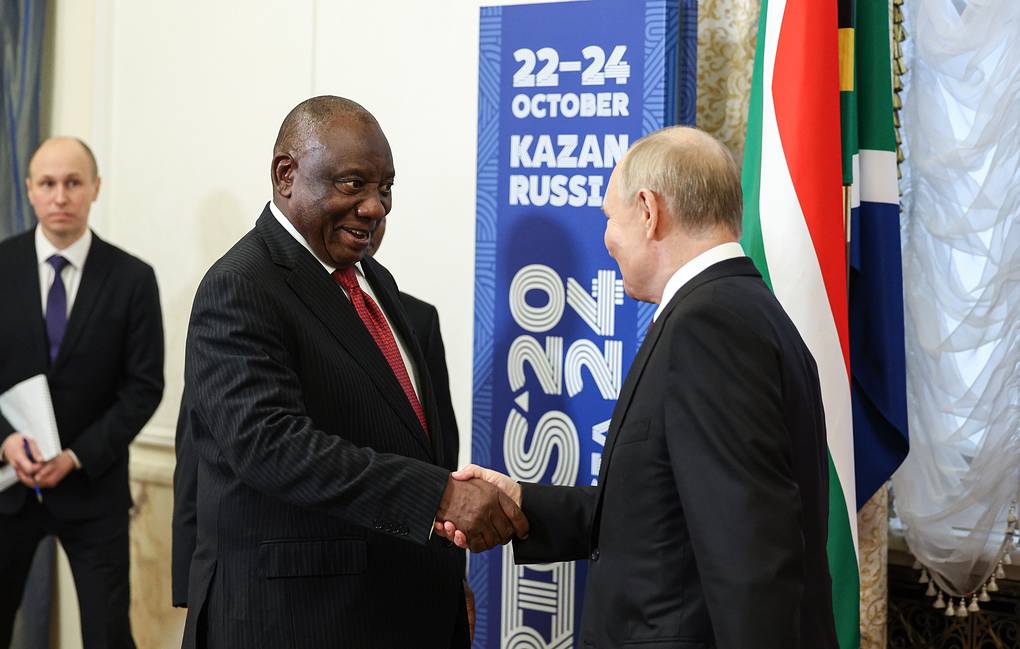
Vladimir Putin, the President of Russia, is posing for photos with leaders from approximately 24 countries, including globally significant geopolitical figures such as Narendra Modi from India and Xi Jinping from China. One of the clear objectives of the BRICS meeting is to reduce dependence on the Dollar.
The event takes place during the BRICS summit, hosted in Kazan, along the banks of the Volga River. This event marks a turning point not only for the bloc, which expanded its membership from five to ten the previous year, but also for Putin, who had to avoid attending the summit in Johannesburg due to an arrest warrant issued by the International Criminal Court in The Hague.
Unlike the previous event, this time Putin, President of Russia, will be present and will seek to play a leadership role, while the BRICS attempts to establish itself as an alliance capable of challenging Western hegemony on the global stage.
-
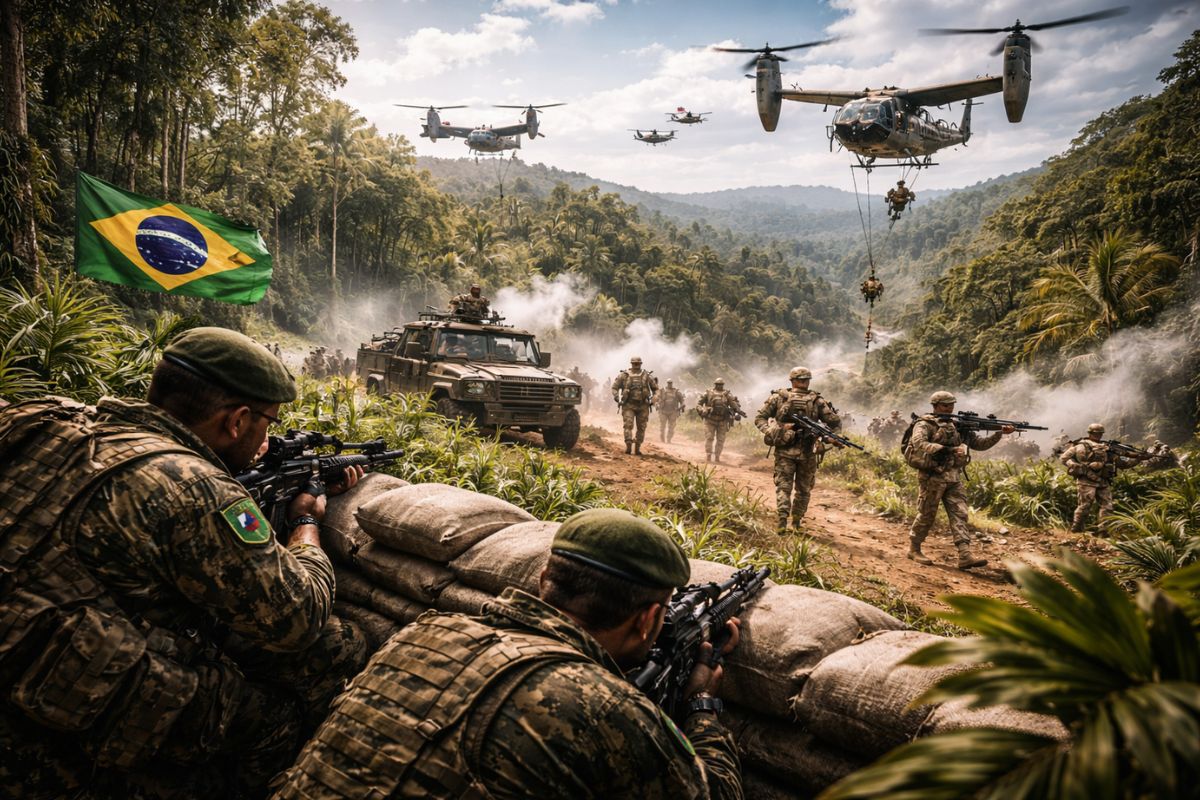
If the USA were to go to war with Brazil, Washington’s greatest fear would not be the attack itself, but facing a vast territory, prolonged resistance, and a costly, chaotic, and unpredictable occupation.
-
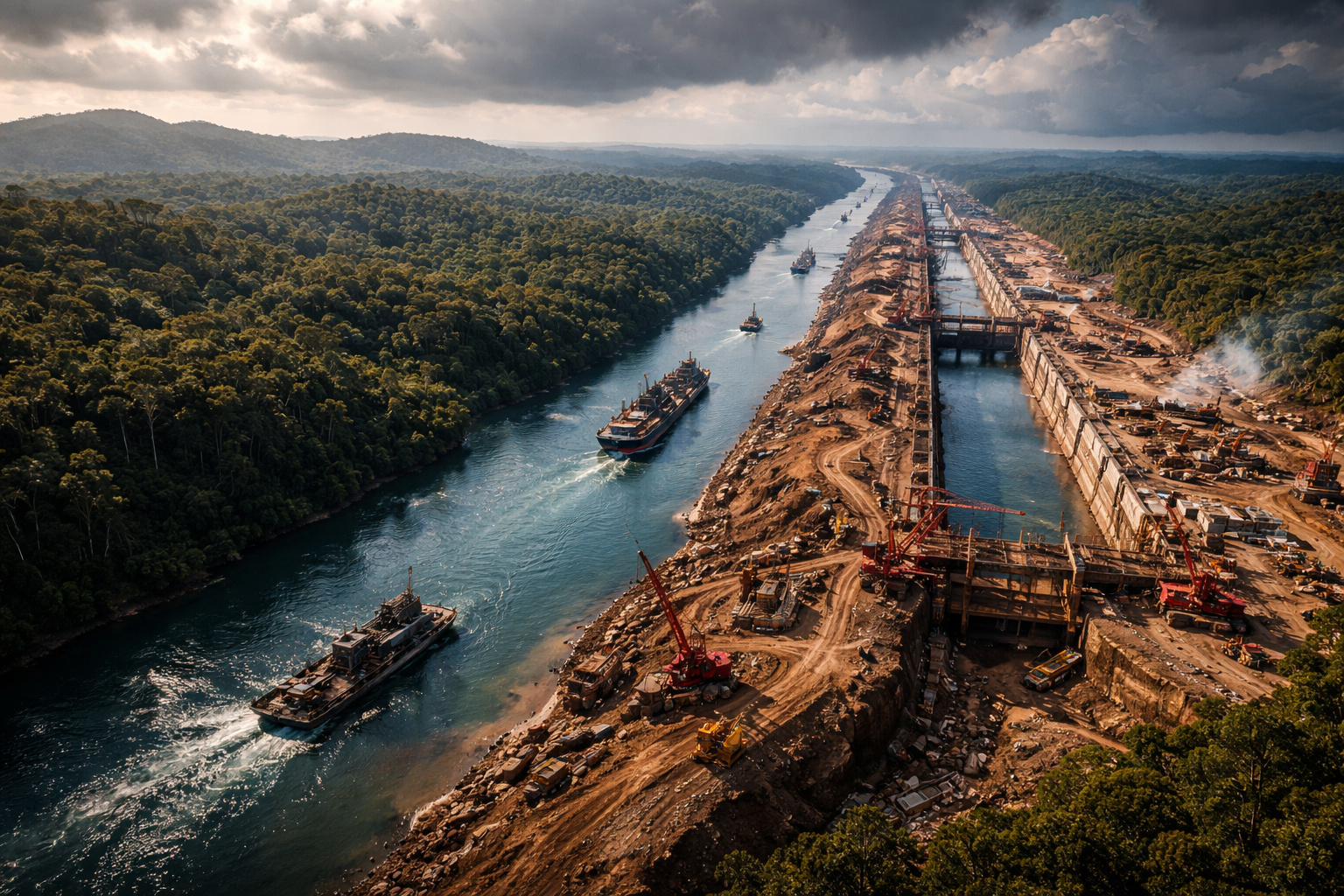
In 2013, Nicaragua sold the concession for a canal to rival Panama to a Chinese billionaire who lost 85% of his fortune, disappeared, and was declared bankrupt. Now the project resurfaces with a new route, a new Chinese partner, and a cost of $64.5 billion.
-
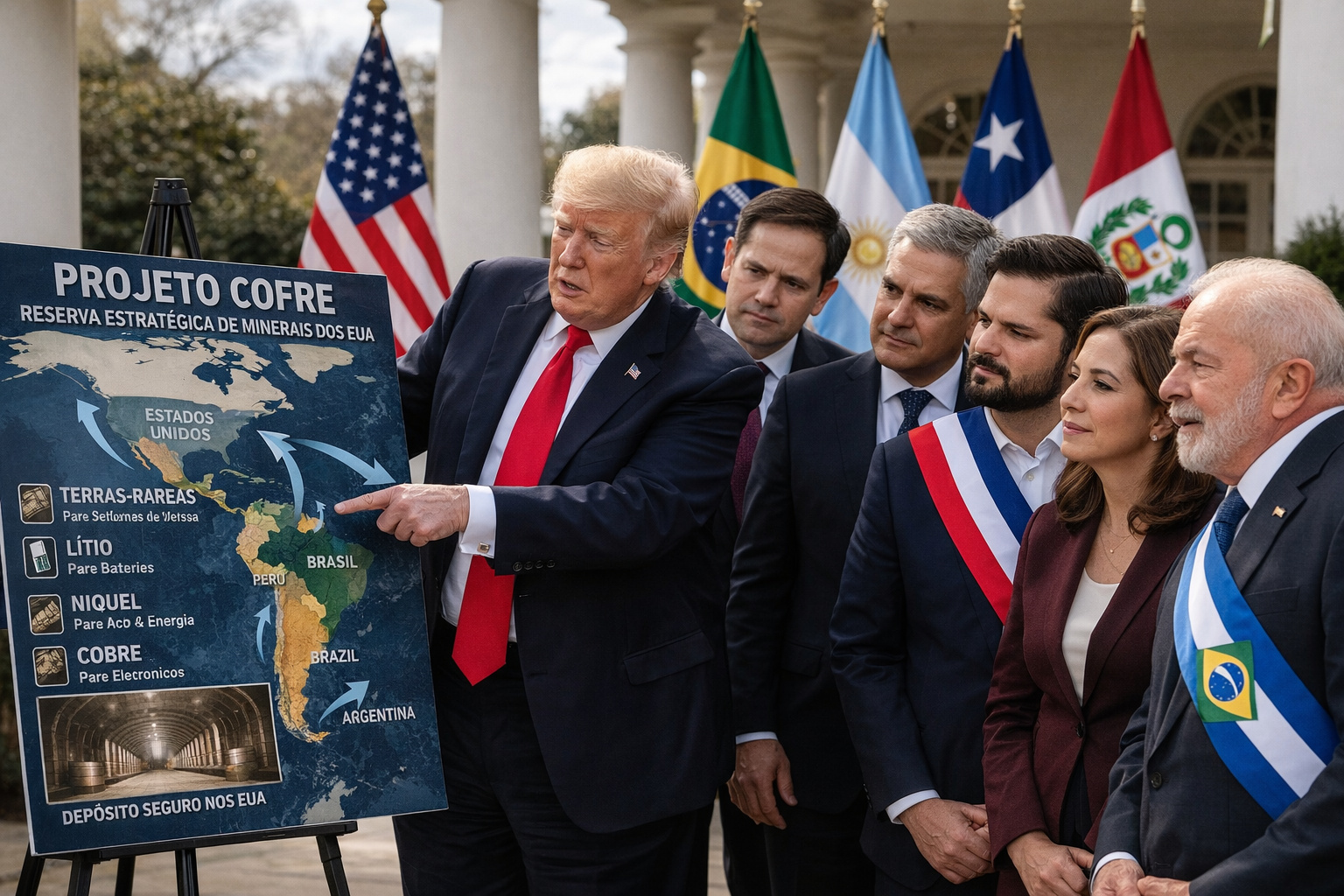
The USA announces a mysterious billion-dollar vault project to store critical minerals, but what intrigues experts is not just the plan itself, but why Latin America, including Brazil, has entered the center of this global dispute against China.
-
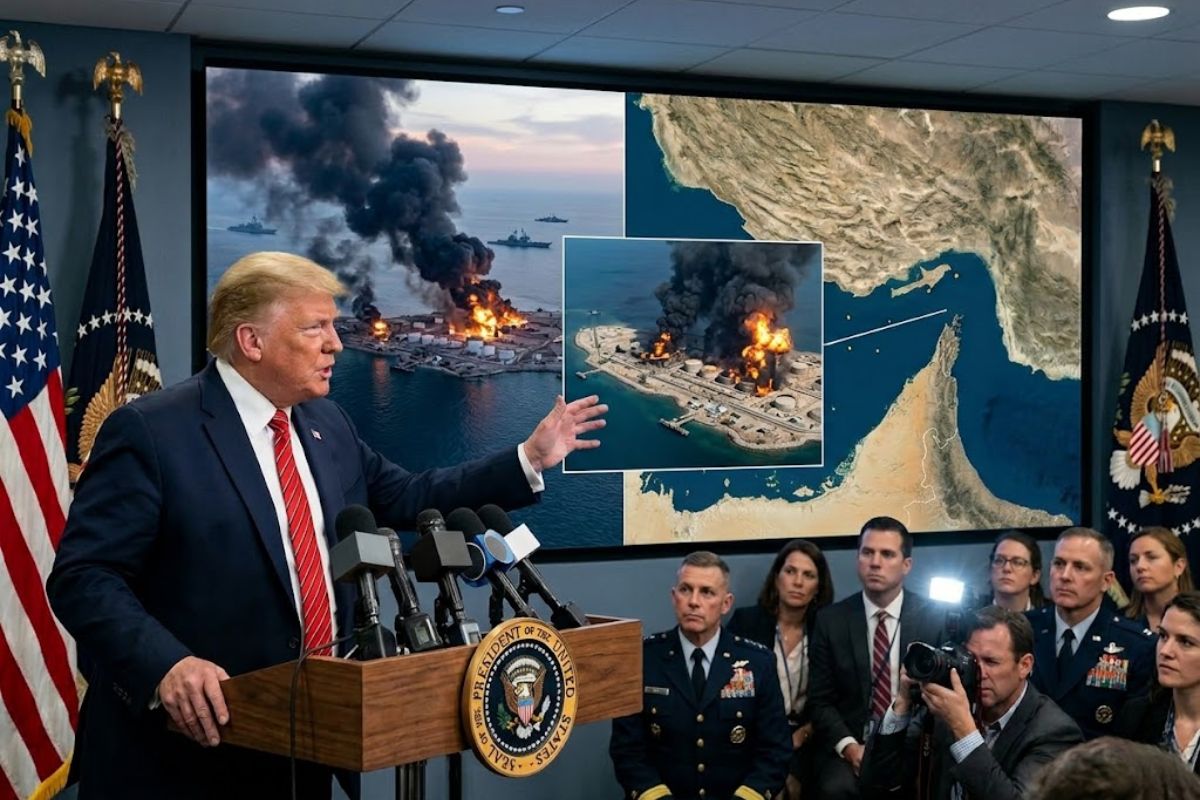
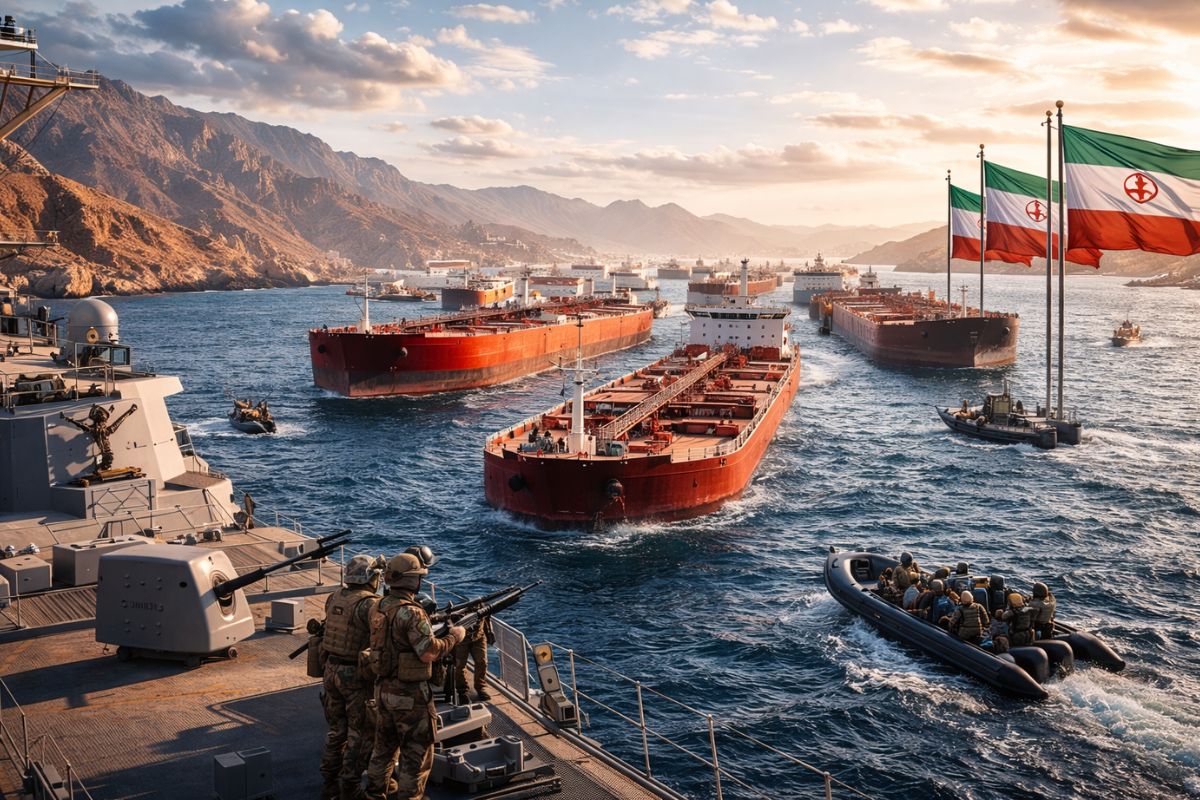
Trump Announces Bombing of U.S. Military Targets on Iranian Island Responsible for About 90% of Iran’s Oil Exports, Warns of Further Attacks if Navigation in Strategic Strait of Hormuz Is Threatened
This bloc, which initially united Brazil, Russia, India, China, and South Africa, has faced significant challenges over its 15 years of existence.
However, with the expansion to include more members such as Egypt and Iran, Putin believes that the BRICS can finally gain the necessary weight to reshape the global economic order.
BRICS Bridge: The New Global Payment Strategy And The End Of Dependence On The Dollar
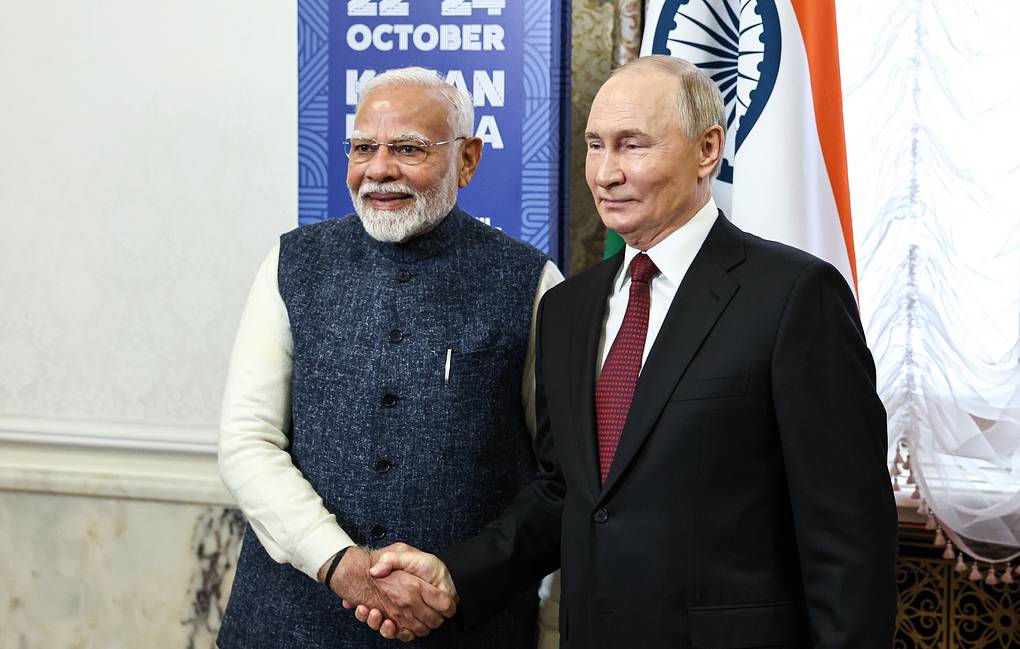
One of the main themes of this summit will be the advancement of a proposal for a global financial system alternative to the Dollar. This system, named BRICS Bridge, aims to allow its members to conduct economic operations without relying on the dollar or euro, currencies traditionally controlled by Western powers.
According to Sergei Lavrov, Russia’s Foreign Minister, this system would allow the economies of the bloc to carry out transactions without being subject to the sanctions imposed by the United States or its European allies.
The idea of the BRICS Bridge revolves around digital platforms managed by the central banks of the member countries. This digital payment system aims to bypass the current financial networks, which are largely dominated by the West, particularly the United States. The proposal is for this new system to be fully operational within a year.
The Centrality Of The Dollar And US Financial Dominance
After World War II, the United States emerged as the largest global economic and military power, consolidating the dollar as the benchmark currency for international transactions.
This American financial centrality allowed the country to exert significant control over global transactions.
Almost 60% of global foreign exchange reserves are still denominated in dollars, reflecting both the stability of the American financial system and investors’ trust in the dollar as a safe haven against inflation and expropriation.
The dollar’s dominance has also allowed the United States to create a complex network of interconnected payment systems, placing American banks at the center of global commerce.
The most common analogy used to explain this system is to compare it to international flights: if two airports do not have a direct connection, passengers must make a stop at a major connection hub.
In the case of global finance, this hub is the United States, where banks around the world convert foreign currencies into dollars so they can be used in international transactions.
However, this centrality has granted the US government immense power, often referred to as “the panoptic effect” and “choke point“.
Since almost all banks transacting in dollars need to operate through correspondent banks located in the US, this allows the US government to monitor global transactions and impose sanctions with relative ease.
Rather than resorting to military conflicts, the US has significantly increased the use of economic sanctions to exert geopolitical influence. A notable example was Iran’s exclusion from the SWIFT system in 2018, which practically paralyzed the Iranian banking system.
The Quick Response To The Conflict In Ukraine
However, the West’s financial response to the Russian invasion of Ukraine in 2022 was unprecedented in magnitude.
The United States and its allies froze $282 billion of Russian assets in foreign banks, in addition to disconnecting major Russian banks from the SWIFT system, significantly hampering Russia’s ability to conduct international transactions.
Furthermore, the US government threatened to impose secondary sanctions on any bank or country that helped Russia circumvent these measures.
The impact was so severe that even Europe, which supported the sanctions, became alarmed by how quickly companies like Visa and MasterCard ceased operations in Russia.
These events led Moscow to accelerate its search for alternatives to the Western financial system. President Putin, President of Russia, hopes that the BRICS Bridge will help alleviate the economic difficulties faced by Russia, allowing transactions outside the dollar-dominated system.
For Putin, the BRICS Bridge is not just a geopolitical strategy but an urgent necessity. Russia, which now relies almost exclusively on the yuan for international transactions, faces a shortage of foreign currency.
In an attempt to overcome this crisis, Russia has had to engage in unusual trade exchanges, such as the recent negotiation of mandarins with Pakistan, which were paid for with chickpeas and lentils.
The Role Of China In Reforming The Payment System
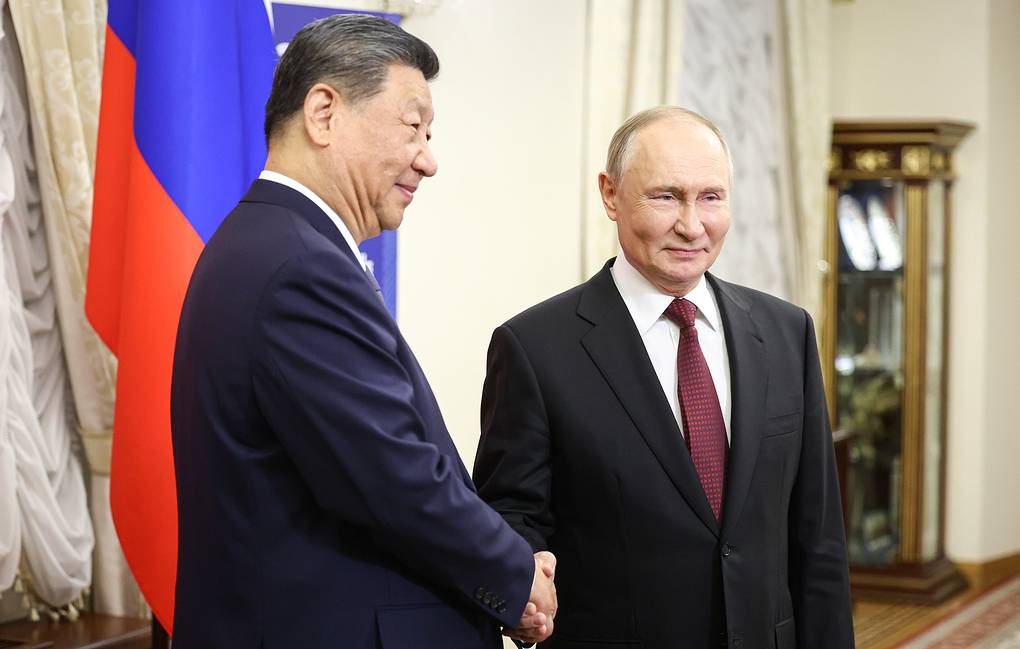
While Russia faces challenges with sanctions, China views technological advancement in the financial sector as a solution to reduce American power.
The Chinese strategy is based on the development of payment technologies that can circumvent the traditional system dominated by the US.
The BRICS Bridge, which can accelerate and lower the costs of international financial transactions, is part of this broader strategy.
According to The Economist, advancements in this field are being closely watched by both emerging nations and Western powers, concerned about the possibility that these systems could be used to bypass sanctions and strengthen the position of geopolitical adversaries.
The BRICS Bridge project seems to have been inspired by another project known as mBridge, an experimental digital payment platform developed by the Bank for International Settlements (BIS), in collaboration with the central banks of China, Hong Kong, Thailand, and the United Arab Emirates.
mBridge has proven to be extremely efficient, reducing transaction times from days to seconds and virtually eliminating costs. This efficiency has attracted the attention of many emerging economies, which are increasingly interested in alternative solutions to the current financial system.
The Fragility Of The Global Financial System
The centrality of the dollar as the world’s reserve currency creates a vulnerability for countries that do not have direct control over it. This was demonstrated acutely in the case of Russia, which was quickly excluded from the global payment system following sanctions.
China, on the other hand, has expressed concerns for years about the excessive dependence of its financial system on the dollar. The sanctions imposed on Russia served as a reminder of the vulnerability that many countries face by relying on a currency that can be “weaponized” in geopolitical conflicts.
President Putin, President of Russia, sees the creation of the BRICS Bridge as a way to alleviate the pressures Russia currently faces, allowing member countries of the bloc to conduct transactions without needing to go through the American financial system.
Discussions around the creation of a credit rating agency and a reinsurance system for Russian oil carriers also demonstrate the bloc’s intention to distance itself from systems controlled by the West.
However, creating an alternative global system to the dollar is not a simple task. Besides the technical barriers, such as ensuring sufficient liquidity to sustain the system, there are political and diplomatic issues.
The project to create a common currency for the BRICS, for example, faces resistance from India, which is wary of China’s growing power.
The lack of trust among members can be a significant obstacle to implementing a fully integrated financial system.
The Future Of Digital Payment Systems
The discussion around the BRICS Bridge reflects a broader trend in the financial world: the growing adoption of digital currencies.
Approximately 134 central banks around the world are currently exploring or developing their own digital currencies. While most of these projects are focused on the domestic market, an increasing number of countries, especially after the invasion of Ukraine, are examining how digital currencies can be used for international transactions.
The current system is often criticized for being slow and costly. For many countries, especially developing ones, the promise of a more efficient system is appealing.
However, for the West, the emergence of new payment systems represents a direct challenge to the hegemony of the dollar. American authorities, for example, have already expressed concerns about the mBridge project, warning that it could be used to undermine the dollar-based system.
A World In Transformation
What is at stake at the BRICS summit in Kazan goes far beyond discussions about new payment technologies.
The BRICS bloc represents an attempt to reshape the global financial order, creating alternatives to the Western-centered system and the American dollar.
While it is still early to predict the real impact of these initiatives, the growing global dissatisfaction with the current system, combined with technological advancements, suggests that significant changes are on the way.
For Putin, President of Russia, and his allies, the BRICS Bridge is more than just a financial tool; it is a political statement. By creating a system that allows financial transactions outside the reach of Western sanctions, the bloc directly challenges the global power structure.
However, the success of this project will depend on the BRICS’s ability to overcome its internal differences and create a system that inspires confidence among its members and the rest of the world.
Article produced with information originally published in The Economist.









Seja o primeiro a reagir!