





 Portuguese
  English
  Spanish
  4 min of reading
  0 comments



End of the Metro in SP? New VLT May Integrate Public Transport in São Paulo While Ricardo Nunes Seeks Subsidies from Companies for the Project.
End of the Metro in SP? The mayor of São Paulo, Ricardo Nunes, announced on August 23 the final list of companies that will present studies for the implementation of the new Light Rail Vehicle (VLT) in the capital. This project, which promises to be a true revolution in the public transport of the city, aims to modernize urban mobility with a modern tram system that will cross the central region of São Paulo. With this advancement, there are expectations that the VLT will become an efficient alternative to the metro, providing more commuting options for the people of São Paulo. The initiative also attracts significant investments and may signal major changes in the public transport landscape of the largest city in Brazil.
What Will the New VLT That Will End the Metro in SP Look Like?
Eight companies have been officially selected, and Mayor Ricardo Nunes had stated in recent weeks that it would be nine.
The total number was 10 proposals; however, there were two withdrawals. Based on the studies presented by the eight companies for the new public transport, the city hall will launch a bidding notice, and the concession will be through a Public-Private Partnership. The city’s goal is for the trams to be operating by 2027 or 2028.
-
Historic bankruptcy of Centauro shocks the market, and the century-old company puts more than 500,000 products, machines, and complete infrastructure up for online auction.

-
New shoe factory in Ceará is expected to create 400 jobs and strengthen the local economy.
-
No one imagined it, but a mixture of sawdust with a mineral that fights fires surprises scientists with a result that changes the course of fire-resistant construction.

-
From empty land to a high-end house, wooden construction uses a lightweight system, metal structure for the foundation, ventilated ceramic cladding, and special windows to create an efficient and comfortable living space throughout the year.

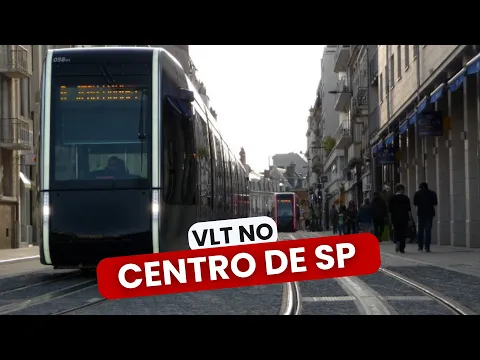

The VLT in downtown São Paulo will have two lines, each six kilometers long, and 27 stops, with 13 distributed in each direction and one connection.
The estimate is that the vehicles will serve the regions of Brás, Campos Elíseos, and Bom Retiro. The two VLT lines are expected to cost between R$ 3.5 billion and R$ 3.7 billion. The system should serve 134,000 passengers and will connect with BRTs (high-capacity and high-speed bus corridors) that are under construction, with regular buses, and with metro stations.
The companies will be accredited for project development, surveys, and studies of technical, operational, economic-financial, and legal-institutional viability, potentially assisting the municipal public administration in the conception of the partnership with the private sector for the design, implementation, operation, and maintenance of urban public transport services using Light Rail Vehicles (VLT), in the Central Region of the Municipality of São Paulo, potentially bringing an end to the metro in SP.
VLT Is Expected to Join Public Transport in SP as Early as 2028
Among the companies behind the project are Modera Engenharia LTDA, Nova Engevix Engenharia e Projetos S.A, Global Ace Participações e Investimentos, Garín Partners, Benvenuto Engenharia S/S LTDA, Consórcio SAM VLT, Ernst & Young Assessoria Empresarial, and Andrade Gutierrez Construções e Serviços S/A.
Among the companies that withdrew are Promulti Engenharia, Infraestrutura e Meio Ambiente Ltda, Sener Setepla Tecnometal Engenharia e Sistemas Ltda. The city hall aims for the trams to be operating by 2027 or 2028.
It is worth noting that Mayor Ricardo Nunes signed on January 25, 2024, the anniversary of the city, the launch of the PMI and a public consultation for the implementation of the first VLT system in the city.
Ricardo Nunes Seeks Subsidies to Facilitate the Structuring of the VLT
The city hall expects to receive from those interested in participating in the PMI, in addition to studies, scenario diagnostics, and operational and economic-financial feasibility surveys. The goal is to assist the Municipal Public Administration in the design of a partnership with the private sector for the project of implementing and operating the VLT on tracks in the central region.
Ricardo Nunes claims that different Brazilian federative entities have opted for conducting procedure manifestations of interest (PMI) to gather subsidies aimed at facilitating the structuring of projects. Mentioned are the cases of the Municipality of Rio de Janeiro, the States of Alagoas and Ceará, and, more recently, the Federal District.
After the accreditation of interested parties, the Special Evaluation Commission (CEA) will proceed with the analysis of the documentation. All interested parties that present the required accreditation documents in accordance with the bidding notice will be accredited.









Seja o primeiro a reagir!