





 Português
  Inglês
  Espanhol
  5 min de leitura
  9 comentários


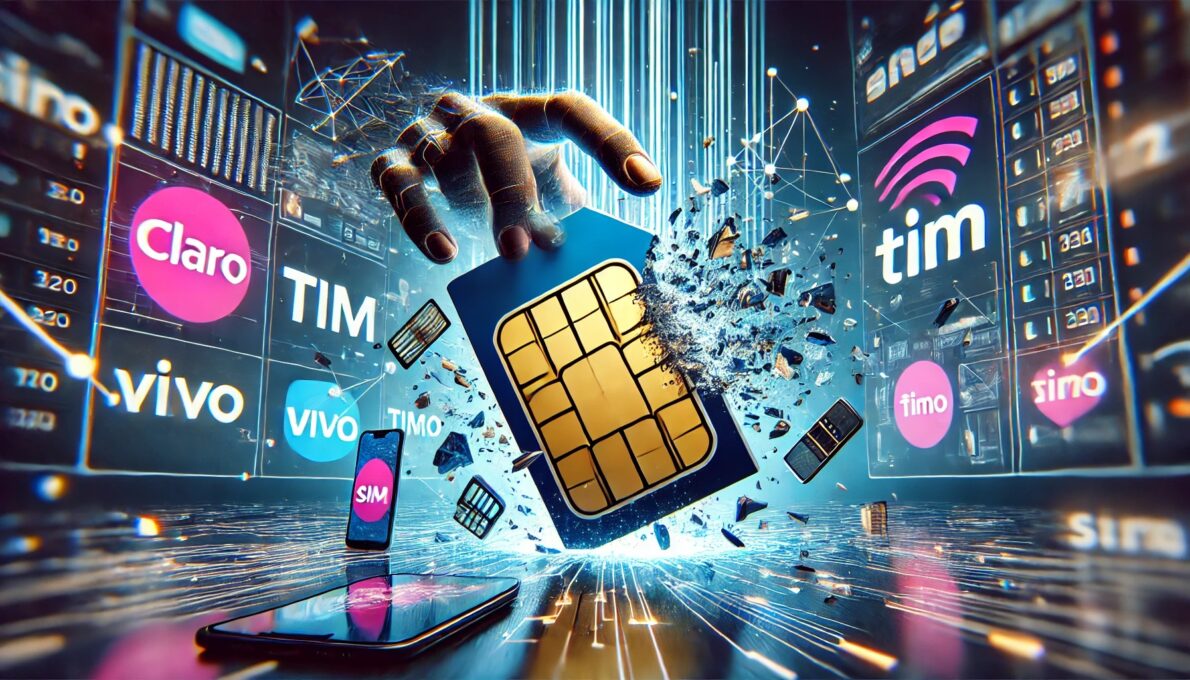


We Are About to Say Goodbye to Something We All Know Very Well: The Physical Phone SIM Card. A New Replacement for the Traditional Phone SIM Card Has Been Announced, Marking the End of Physical SIM Cards in Brazil.
The world of technology never stops evolving, and now we are about to say goodbye to something we all know very well: the physical phone SIM card. That’s right! The end of physical SIM cards, also known as SIM cards, is already underway and promises to transform the way we use our devices. If you are used to swapping the small card in your phone whenever you change carriers or buy a new device, get ready for the change that is already happening. Let’s talk about the replacement for the phone SIM card, the eSIM, and how this new development will impact our lives.
What Is the eSIM and How Does It Replace the Physical SIM Card?
The eSIM technology, also known as virtual SIM, is the key driver behind the end of physical SIM cards. Unlike the traditional SIM card, the eSIM is already integrated into the device and allows users to add multiple phone lines and connections without needing to swap out cards. It’s that simple! With this innovation, the need to insert or remove a physical SIM card from the device will become a thing of the past.
This technology is already in use in various parts of the world, such as the United States, Europe, and Asia, and is now beginning to gain traction in Brazil. Major carriers such as Vivo, Claro, and Tim are starting to adapt to offer eSIMs to their customers. The expectation is that, soon, the use of the replacement for the phone SIM card will become a common practice here.
-
Historic bankruptcy of Centauro shocks the market, and the century-old company puts more than 500,000 products, machines, and complete infrastructure up for online auction.

-
New shoe factory in Ceará is expected to create 400 jobs and strengthen the local economy.

-
No one imagined it, but a mixture of sawdust with a mineral that fights fires surprises scientists with a result that changes the course of fire-resistant construction.

-
From empty land to a high-end house, wooden construction uses a lightweight system, metal structure for the foundation, ventilated ceramic cladding, and special windows to create an efficient and comfortable living space throughout the year.


The End of the Physical SIM Card
According to research conducted by Juniper Research, the number of devices using eSIMs has already surpassed 1.2 billion worldwide, and this number is only expected to grow. It is estimated that half of the 8.05 billion active lines globally will be connected via eSIMs in the coming years.
This transition to eSIM technology has been motivated by several factors. One of the main reasons is the convenience that the technology offers. As the end of the physical SIM card allows the eSIM to be embedded in the device, users can activate their line without having to wait for the delivery of a SIM card or going to a physical store. Additionally, the eSIM enables the use of multiple lines on the same device, something that was much more complicated with a physical SIM card.
Discover the Benefits of the New Technology
The replacement for the phone SIM card is not just a change in the way we use our smartphones. It also opens doors for a range of other connected devices. Imagine a smart refrigerator, a smartwatch, or even a car that connects directly to the network without the need for a physical SIM card. This is already happening in other countries, and the trend is that this technology will spread to more and more devices in Brazil.
The convenience of the eSIM also extends to travelers. Instead of needing to buy a local SIM card upon arriving in another country, users can simply activate a temporary new line directly on their device. This greatly simplifies the lives of frequent travelers who need immediate connectivity.
Is Brazil Prepared for the End of Physical SIM Cards?
Although the end of the physical SIM card is already underway in various parts of the world, as mentioned, Brazil is still beginning to adapt to this new reality. The main telecommunications operators, such as Vivo, Claro, and Tim, are taking steps to implement eSIMs in their services. However, the change may still take some time to reach all consumers.
For now, the eSIM in Brazil is available only for a few models of smartphones, mainly those sold in the United States. But with the advancement of technology, the expectation is that manufacturers and operators will adopt eSIMs in more devices over the coming months.
According to experts, the transition to the replacement for the phone SIM card in Brazil is expected to be gradual. Just as with other technological innovations, such as the arrival of 4G and the future 5G, the adoption process of eSIM will depend on adjustments in the networks of operators and compatibility with the devices available on the market.
Will the Operators Adapt?
With the advancement of eSIM technology, major operators like Vivo, Claro, and Tim need to adapt to keep up with this change. This is because the end of the physical SIM card changes not only the way consumers use their devices but also how operators sell their services.
Currently, many operators still rely on the sale of physical SIM cards as part of the activation process for new lines. With the eSIM, this completely changes. Now, activation can be done digitally, without the need for a physical point of sale. This means that operators will have to rethink their business models and invest in digital platforms to support this new technology.
The flexibility of the eSIM, which allows the use of multiple lines on a single device, could create new challenges for operators. Competition is expected to increase, as consumers will be able to switch carriers more easily without needing to change SIM cards.
The Future with the eSIM
The end of physical SIM cards is getting closer, and the eSIM technology promises to revolutionize the way we use our connected devices. With the possibility of activating lines digitally and integrating into a wide range of devices, from smartphones to appliances, the eSIM offers convenience and innovation.
However, like all technological change, the transition to the replacement for the phone SIM card is expected to be gradual, especially in Brazil. As operators and manufacturers adapt to this new reality, consumers will have the chance to enjoy the benefits of this technology in an increasingly accessible way.
If you are still not familiar with the eSIM, it’s a good idea to start paying attention, because the end of physical SIM cards is coming, and this new technology is here to stay. Get ready for a future without physical SIM cards and enjoy the innovation that the eSIM brings to our connected lives.










E pesquisa pessoal mesmo? Imagine os milhoes e milhoes de pessoas que teriam que comprar um cel novo pra usar essa po**? Ta parecendo pesquisa sobre politicos colocando o pior no top de votações..
Ótimo atraso, pena que temporário! e-sim é uma tecnologia mais complexa, menos segura, e ambientalmente incorreta.
O esim é uma ****, eu prefiro o sim card e mais encontar do que a tecnologia do esim e é mais, já ouvi falar do esim e uma tecnologia cara e pouco confiável, os celulares com sim card são os melhores e mais confiável não existe celular melhor do que os com sim card!!!!!!!!!!!!!!