





 Portuguese
  English
  Spanish
  3 min of reading
  0 comments


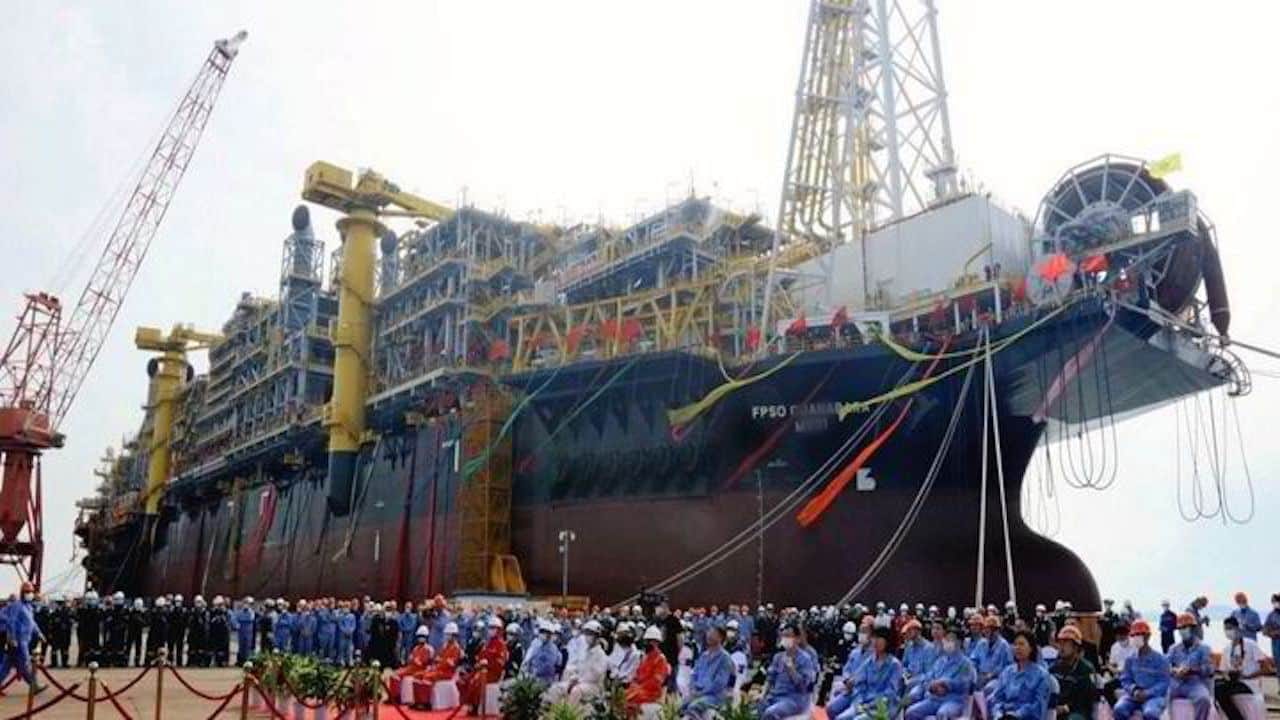
FPSO Duque de Caxias – The Strategic Platform of Petrobras That Will Interconnect 15 Oil Wells to Extract Up to 180 Thousand Barrels of Oil and Compress 12 Million Cubic Meters of Gas Daily,
Finally, the FPSO Duque de Caxias has left the shipyard in China headed for Brazil! On Saturday, February 24, the Petrobras platform ship set sail from Yantai, China, heading for the heart of the pre-salt in the Santos Basin, Brazil. This giant of the seas is on its way to revolutionize oil production in the country.
With the capacity to extract up to 180 thousand barrels of oil and compress 12 million cubic meters of gas daily, this floating production, storage, and offloading unit (FPSO) is set to become one of the pillars of Brazilian oil production in the pre-salt. Petrobras, a global oil giant, chartered the platform along with MISC to integrate the third definitive production system of the Mero field, raising the production capacity to an impressive 590 thousand barrels per day.
This system involves the connection of 15 wells, divided among oil producers and water and gas injectors, to a complex underwater infrastructure. This underwater arrangement consists of a combination of rigid and flexible pipelines, as well as control umbilicals, covering dozens of kilometers.
-
Offshore industrial demand in Macaé skyrockets with the recovery of oil and gas and could grow by up to 396% by 2026 in the Campos Basin.
-
Offshore industrial demand in Macaé surges with the recovery of oil and gas and could grow by up to 396% by 2026 in the Campos Basin.
-
Brazilian giant expands borders in the Southeast: Petrobras confirms new oil discovery in ultra-deep waters in the pre-salt of the Campos Basin.

-
Alert in the global energy market: Severe tropical cyclone hits the coast and disrupts gas production at major plants in Australia, threatening global supply.


Petrobras Is Implementing HISEP Technology That Will Separate Oil and Gas Directly on the Seabed
Innovation on the ocean floor! Petrobras is implementing a groundbreaking approach to gas management with the HISEP equipment, which will separate oil and gas directly on the seabed. This patented technology not only optimizes production but also significantly contributes to the reduction of greenhouse gas emissions, an important step in the company’s journey toward sustainability.
The adoption of CCUS technology (Carbon Capture, Utilization, and Storage) complements this effort, allowing the reinjection of CO2-rich gas into the reservoir. Such innovations reflect Petrobras’ commitment to cleaner, more efficient production aligned with its mission to reduce the intensity of greenhouse gas emissions.
Petrobras’ Exploration and Production Director, Joelson Mendes, highlights the company’s focus on responsible production. By adopting advanced technologies, Petrobras not only increases efficiency in oil and gas production but also strengthens its commitment to decarbonization. These initiatives are essential to ensure a sustainable trajectory, emphasizing the importance of continuous innovation in search of solutions that meet both Brazil’s energy needs and global environmental demands.
Mero – A Giant Field: Recognized as One of the Largest Oil Reservoirs in Brazil
The Mero field, located at the forefront of the pre-salt in the Santos Basin, ranks among the largest in Brazil, surpassed only by Tupi and Búzios. With the FPSO Marechal Duque de Caxias and another unit planned for 2025, Petrobras is preparing the ground for monumental oil production.
The potential of Mero is a highlight in the Petrobras portfolio, reflecting the company’s commitment to investing in the talent and training of its technicians to overcome challenges and maximize production.
Strategic Partnerships with Key Partners Such as Shell Brasil, TotalEnergies, CNOOC, CNPC, and Pré-Sal Petróleo S.A (PPSA)
The operation of the unitized Mero field is a joint effort led by Petrobras, with key partners such as Shell Brasil, TotalEnergies, CNOOC, CNPC, and Pré-Sal Petróleo S.A (PPSA). These strategic partnerships are essential for the success of the project, combining global expertise to explore one of the most promising oil fields in Brazil.
Carlos José Travassos, Director of Engineering, Technology, and Innovation at Petrobras, emphasizes the importance of advancing the Mero project. He highlights the dedication of Petrobras’ highly qualified technicians, who are at the forefront of innovation, ensuring that Brazil remains a global leader in oil production.










Seja o primeiro a reagir!