





 Portuguese
  English
  Spanish
  4 min of reading
  11 comments


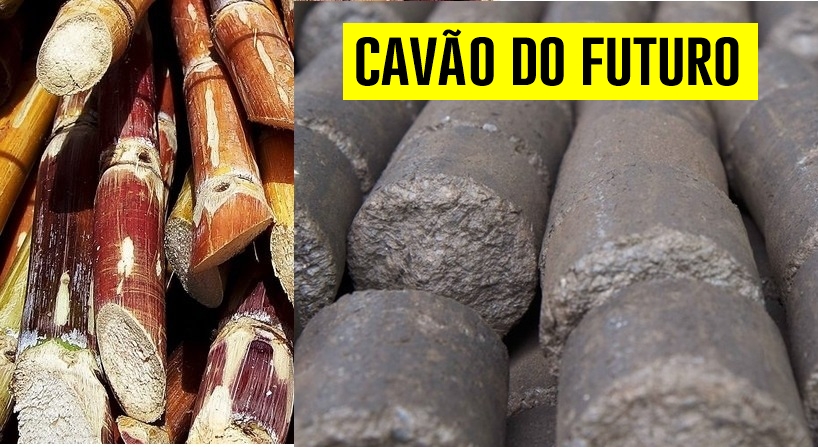


Finland Is Leading Sustainable Initiatives With Investments In Negative Carbon Biofuels, A Promising Solution To Replace Coal And Reduce Emissions.
A silent transformation is happening in Finland. The European country has invested heavily in the largest torrefaction plant on the continent, which is about to begin operations, promising to change the future of fuels and coal.
Capable of producing 60,000 tons per year of briquettes (compressed blocks made from residual materials), NextFuel, the plant represents a breakthrough in the search for cleaner and more sustainable energy alternatives.
Torrefaction, a thermal process that converts biomass into a coal-like substance, is gaining importance as a viable solution for energy-intensive industries, such as cement, electricity generation, and even the aviation sector.
-
A “silent skill” is allowing Brazilians to earn up to R$ 22,000 per month without a degree and become indispensable for companies that rely on millions of data to survive.

-
Researchers at the Toyota Research Institute found that if a human uses robotic arms to flip a pancake 300 times in an afternoon, the robot learns to do it on its own the next morning, and this is currently the most promising method to solve the biggest bottleneck in modern robotics.

-
Goodbye iron: a common item in households is starting to lose space to technology that smooths clothes in minutes without an ironing board and with less energy consumption.

-
Antarctica reveals an unusual clue high in the Hudson Mountains, and what appeared to be just an isolated rock began to expose a secret hidden under the ice for ages.

The moment could not be more opportune. With the conclusion of COP29, held last week, and Brazil at the center of discussions for 2025, the world is turning its attention to alternatives that reduce carbon emissions.
The Role of Torrefaction In Emission Reduction – Will It Replace Coal?
The urgency to find substitutes for coal has never been greater. Global consumption of this fossil fuel reached a record 8.7 billion tons last year, showing that the transition to clean sources is still a challenge.
For Wei-Hsin Chen, a researcher at National Cheng Kung University in Taiwan, torrefaction is promising because it offers fuels that can be used in existing infrastructure, facilitating the replacement of coal without major investments.
This potential has caught the attention of companies like NextFuel, a Scandinavian-Austrian consortium that has been developing technologies to make biofuels viable at scale since 2016. “To compete with coal, it needs to be scalable, profitable, and close in energy content,” explains Audun Sommerli Time, co-founder of NextFuel.
According to him, the briquettes produced by the company have a calorific value between 22 and 28 gigajoules per ton, nearly equivalent to coal, which varies between 24 and 31 gigajoules.
Elephant Grass: The Raw Material of the Future
Among the main raw materials explored by NextFuel is elephant grass, scientifically known as Miscanthus × giganteus.
Capable of growing up to four meters tall in just one season, this plant has high productivity and can be cultivated on marginal lands.
Studies show that replacing arable land with elephant grass plantations could sequester between two and three metric tons of carbon per hectare annually.
Additionally, NextFuel briquettes have a crucial advantage: they can be used in facilities designed for coal, without the need for expensive or time-consuming adaptations.
“The energy transition needs to be practical and economical,” highlights Time. “Our product eliminates the need to build new infrastructure networks, making its adoption easier for governments and industries.”
Global Expansion and Local Impact
With the Joensuu plant about to begin operations, NextFuel is already planning new ventures. A client in East Africa is developing facilities that will use elephant grass and agricultural waste to produce up to 1.5 million tons of briquettes per year.
The goal is to replace coal throughout the region, which currently relies on imports from South Africa.
According to Araya Asfaw, a researcher at Addis Ababa University, the idea is promising. “Torrefaction can provide clean and sustainable energy while protecting local ecosystems. However, it is difficult to imagine it completely replacing fossil fuels in the short term.”
For her, the greatest impact will be on domestic energy use, which represents 80% of demand in countries like Ethiopia.
The Versatility of Agricultural Residues
One of the key differentiators of NextFuel’s technology is its ability to transform various types of biomass into biofuel.
In South America, particularly in Brazil, sugarcane residues can be used; in the United States, wheat and corn straw are viable alternatives; while in India, rice straw can be utilized. This flexibility expands the product’s reach and encourages a circular economy based on the reuse of local waste.
Another promising advancement is the possibility of converting briquettes into liquid fuels, such as sustainable aviation kerosene, through the Fischer-Tropsch process. This technology could address one of the hardest sectors to decarbonize: air transport.
The Role of The European Union
The European Union is one of the regions investing the most in the energy transition. By 2030, all member countries need to replace 29% of their energy matrix for transport with renewable sources. In this context, advanced biofuels like NextFuel have great potential to meet the requirements.
NextFuel’s ambition goes further. “We want our fuel to be the next big step after fossil fuels dominated the last two centuries,” states Time.
Although the path to this transformation is still long, he believes it is possible to create a more sustainable future with an increasing number of NextFuel plants.







Processo de pirólise
Dúvidas: qual a demanda energética para a tal produção do briquete…?
A que custo…??
A NextFuel está investindo em tecnologias para tornar biocombustíveis escaláveis e lucrativos, o que pode ajudar a reduzir as emissões de carbono. Embora o caminho seja longo, a promesa de substituir o carvão em instalações existentes pode ser crucial para a transição energética.
Mas a queima desses briquetes não gera emissão de carbono?