





 Portuguese
  English
  Spanish
  4 min of reading
  1 comment


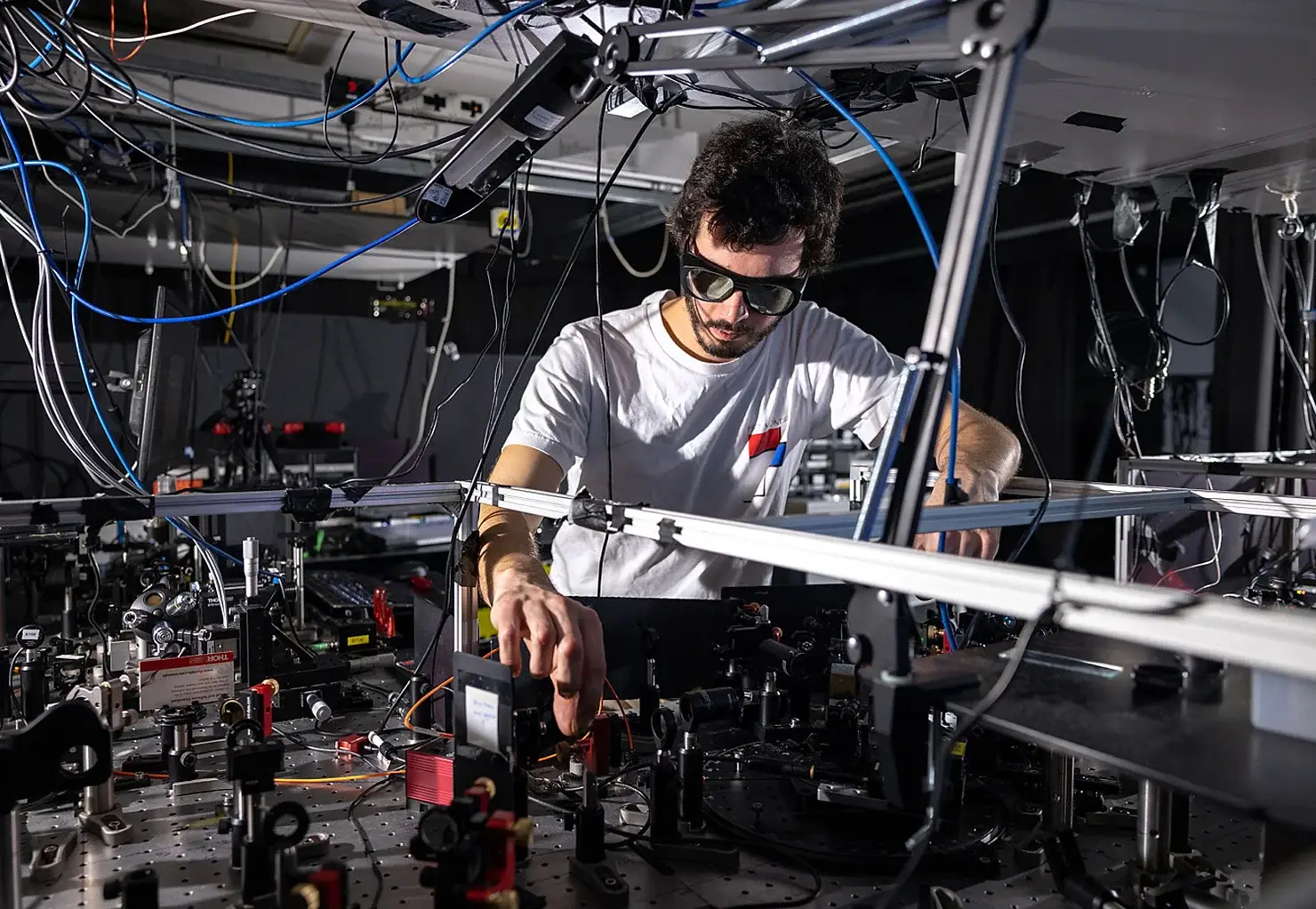


Innovative Experiment of Imperial College London Revolutionizes Quantum Physics by Exploring the Dimension of Space and Time
A group of physicists from Imperial College London made a groundbreaking discovery by recreating the famous double-slit experiment in the dimension of space and time. Led by Professor Riccardo Sapienza, a team used cutting-edge technologies to manipulate the optical properties of materials on a femtosecond scale, offering new insights into the nature of light and its behavior in quantum contexts.
The Double-Slit Experiment: A Historical Review
Originally conducted by Thomas Young in 1801, the double-slit experiment declared that light behaves as a wave. When passing through two physical slits, light created an interference pattern, highlighting its wave properties.
Decades later, it was discovered that light also exhibits particle behavior, revealing the wave-particle duality of light. This experiment was fundamental to the development of quantum mechanics and the understanding of the behavior of subatomic particles.
-
Millions of people have been eating yam for centuries without knowing that this humble tuber contains a compound called diosgenin, which scientists have now discovered can improve memory and help control blood sugar levels.

-
Scientists from an international project drill 1,800 meters of ice in Antarctica using hot water and discover details about one of the most intriguing places on planet Earth.

-
Seen from space, a colossal volcano nearly 5,000 meters high in Russia has released 1,600 km of smoke over the Pacific, forming “devil’s horns” of lava and revealing the brutal force of the Ring of Fire.

-
Expedition 501: Scientists drill into the ocean floor and discover a giant reserve of fresh water hidden beneath the sea, extracting nearly 50,000 liters and revealing an invisible system that could reshape the map of water scarcity.


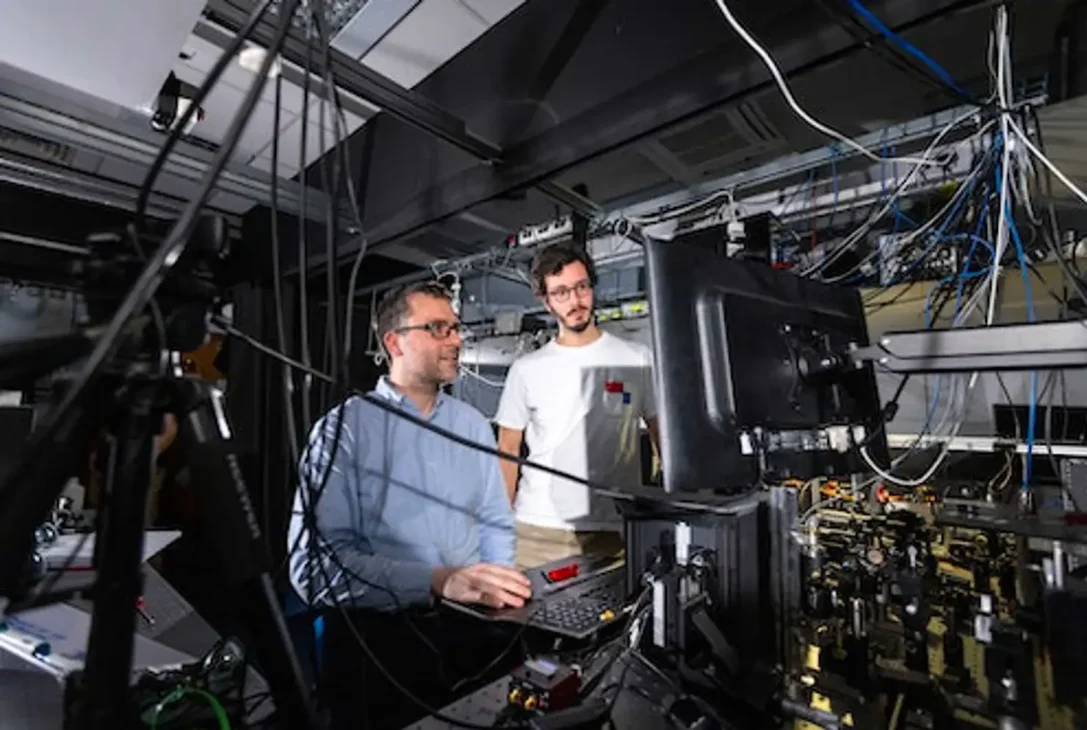
The Innovation in the Experiment: The Dimension of Space and Time
In the Imperial College London experiment, researchers altered the classical approach by focusing on the frequency of light instead of its direction.
Using ultrafast lasers, they can manipulate a thin layer of indium oxide, a material found in the screens of electronic devices, to change its reflectivity properties on femtosecond intervals. This adjustment allowed them to alter the color of light, creating an interference pattern between different frequencies.
This unprecedented experiment was published in the prestigious journal Nature Physics. Professor Sapienza highlighted that the work “reveals more about the fundamental nature of light, also useful as a springboard for creating advanced materials that can control light in space and time.”
Technological Implications of the Experiment
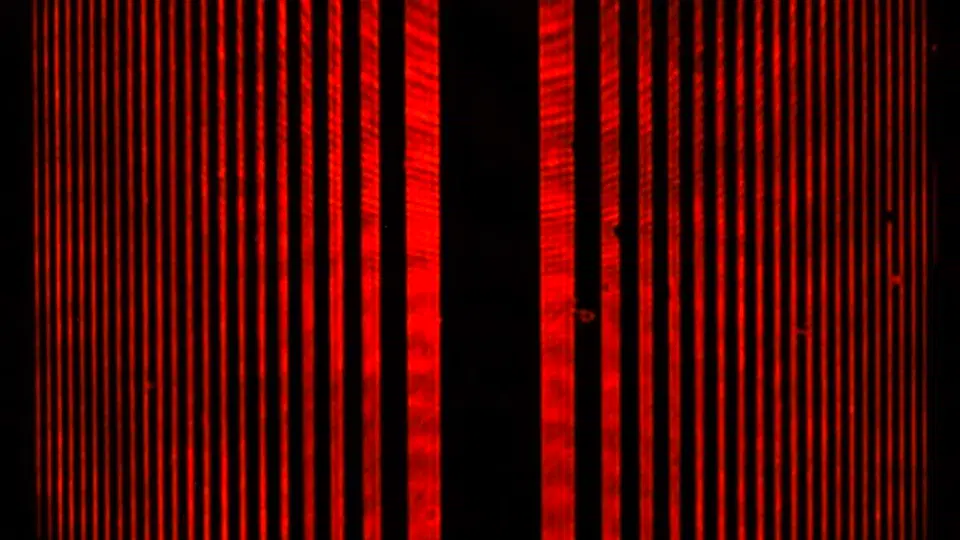
Advances in Spectroscopy: With this discovery, it becomes possible to create new spectroscopy techniques that can measure the temporal structure of light pulses on extremely small scales.
Professor Sir John Pendry, co-author of the study, stated that “the double-time slit experiment opens the door to a completely new spectroscopy capable of resolving the temporal structure of a light pulse on the scale of radiation periods.”
Applications in Telecommunications: The precise manipulation of light may directly impact telecommunications, leading to the creation of more efficient optical switches. These devices can support faster and more specific data, allowing for higher internet speeds and improved communication networks.
Impact on Optical Computing: The advanced control of light may also accelerate the development of optical computing. In this field, light replaces electricity, promising faster and more energy-efficient acceleration.
Optical processors have the potential to make electronic devices more powerful and less polluting.
Innovations in Medical Technology: In healthcare, this technology may lead to the development of more accurate and personalized imaging tools for diagnosis and treatment.
The ability to control light both in space and time opens doors for techniques that allow, for example, the early detection of diseases or targeted treatments that spare healthy cells while attacking cancer cells.
Future Research: Time Crystals and New Materials
This innovative experiment also lays the groundwork for the study of so-called “time crystals,” materials that have structures that repeat not only in space but also in time.
According to Professor Stefan Maier, co-author of the study, “the concept of time crystals has the potential to lead to ultrafast and parallel optical switches.”
The discovery goes beyond applications in telecommunications, computing, and medicine. Metamaterials, like those used in this study, can be applied in areas such as energy, transportation, aerospace, and defense.
Precisely controlling light can result in more efficient energy systems and advanced sensors for vehicles and aircraft, with the potential even to explore the physics of black holes.
The Relevance and Future of Metamaterials and Quantum Physics
As new technologies are developed, the use of metamaterials and the understanding of quantum physics become even more essential.
The ability to manipulate light in space and time promises to transform how we interact with the world around us, providing faster, more efficient, and precise devices.
The discovery by the team at Imperial College London marks a remarkable advancement, highlighting the power of scientific research in contributing to technological innovation.









Que bom!