





 Portuguese
  English
  Spanish
  3 min of reading
  0 comments


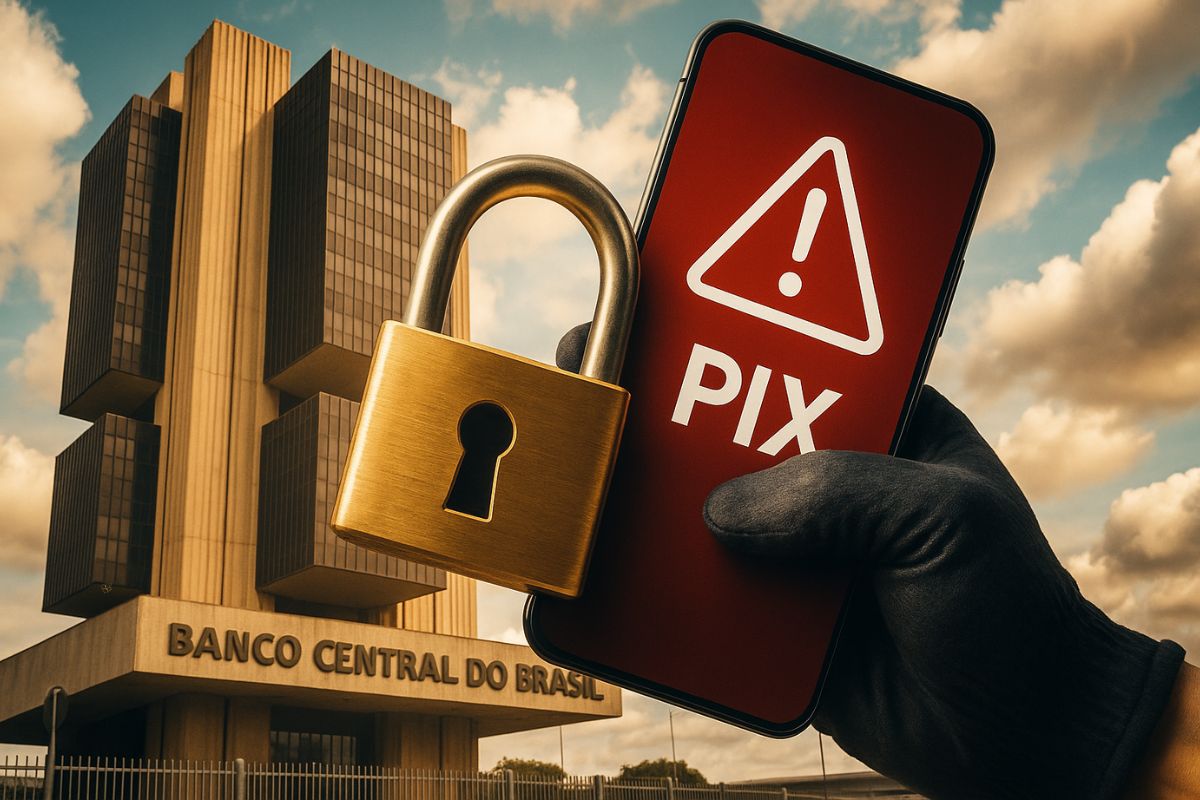
Central Bank Establishes Special Refund Mechanism (MED), A Tool That Allows Blocking Funds In The Fraudster’s Account And Increases The Chances Of The Victim Recovering Lost Amounts In A PIX Scam.
Since 2021, those who fall victim to a PIX scam have an official resource to try to recover their losses. The Central Bank created the Special Refund Mechanism (MED), a tool designed to track and block money in the fraudster’s account, providing an opportunity window for recovering amounts that previously did not exist. The action can extend for up to 90 days after the date of the fraudulent transaction.
This initiative represents a crucial change in the approach to combatting fraud.
Shifting from a purely reactive model, where the victim had to seek the Justice system, to a preventive and technological action.
-
50 viaducts, 4 tunnels, 28 bridges, and 40 kilometers of bike paths: BR-262 in Espírito Santo will receive 8.6 billion reais for the largest engineering project in the state’s history, inspired by the Immigrant Highway in São Paulo.

-
Brazil produces too much clean energy and doesn’t know what to do with it: over 20% of solar and wind capacity was wasted in 2025 while investors flee and 509 renewable generation projects were abandoned in the last year.

-
Piauí will produce a new fuel that replaces diesel without needing to change anything in the truck’s engine and reduces pollutant gas emissions by half: truck drivers from all over the Northeast are already celebrating the news that will arrive later this decade.

-
A new Brazilian shopping center worth R$ 400 million will be built in an area equivalent to more than 4 football fields, featuring 90 stores, 5 cinemas, a supermarket, a college, and parking for 1,700 cars, potentially generating 3,000 jobs.


Although the refund is not guaranteed, the MED turns the scammer’s account into a trap.
Significantly increasing the chance that the money will be returned to its rightful owner.
How The Special Refund Mechanism Works
The MED is a procedure that begins with the victim’s action.
Upon noticing the fraud, the consumer must file a formal complaint with their own bank within 80 days, requesting the activation of the mechanism.
From this filing, the victim’s bank notifies the financial institution of the recipient, which in turn is obliged to perform a preventive block on the funds in the suspicious account.
The main innovation of the system is its long-term operational capability.
If at the time of the block the money has already been withdrawn or transferred by the fraudster, the “blocking order” remains active for 90 days.
In practice, this means that the fraudster’s bank will perform partial blocks on any new funds that enter that account, until the total amount of the fraud is recovered and returned to the victim.
Step By Step To Activate The MED In Practice
For the mechanism to work, the victim’s promptness is crucial.
As soon as they identify the PIX scam, the first step is to immediately contact their own bank through a quick channel, such as the app’s chat or the telephone hotline.
It is crucial to be direct and inform clearly:
“I was a victim of a scam and want to activate the Special Refund Mechanism.”
Having transaction details such as the ID, amount, and date on hand speeds up the process.
After your contact, your bank registers a “notification of violation” in the Central Bank’s system, which instantly informs the recipient institution.
From there, the banks have up to seven days to analyze the case.
If the fraud is confirmed and there are funds in the fraudster’s account, the money is refunded.
Otherwise, monitoring begins for 90 days to recover the amount in installments as new deposits are made into the fraudster’s account.
The Special Refund Mechanism is the most powerful tool consumers have today to reverse a PIX scam.
It does not eliminate the risk of fraud, but creates a real and immediate consequence for the fraudster, while also offering a concrete hope of recovery for the victim.
Did you already know about the MED? Do you believe this tool can really reduce losses from fraud? Share your opinion or experience in the comments.









Seja o primeiro a reagir!