





 English
  Francês
  Alemão
  Italiano
  Japonês
  Norueguês
  Portuguese
  Spanish
  5 min of reading
  0 comments


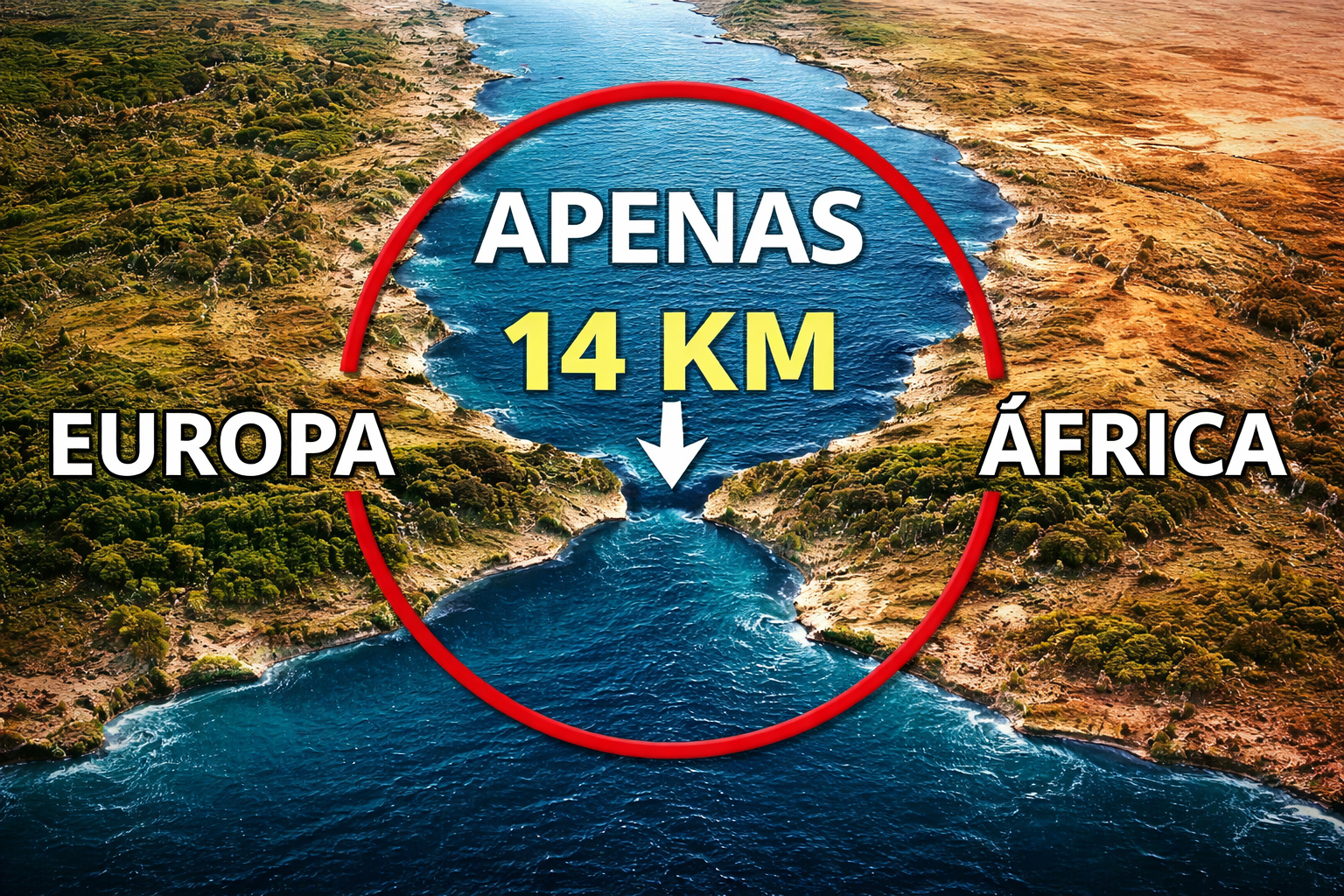
Tunnel project between Europe and Africa faces tectonic failure, extreme depth, and unstable soil after 45 years of studies in the Strait of Gibraltar
On June 1, 1979, Spain and Morocco signed, in the city of Fez, a cooperation protocol to study the feasibility of a fixed link between Europe and Africa through the Strait of Gibraltar. The document did not specify whether the connection would be made by bridge or tunnel — it only established the commitment to investigate the possibility.
Forty-five years later, the project still remains on paper. In December 2025, a study conducted by the German company Herrenknecht confirmed that the construction of a railway tunnel is technically feasible. The estimated cost on the Spanish side alone exceeds 8.5 billion euros, with a projected execution timeline between 2035 and 2040.
Despite the short distance of approximately 14 kilometers between the continents, visible to the naked eye on clear days from the Spanish coast, connecting Europe and Africa remains one of the greatest engineering challenges in the world.
-
Goodbye expensive water tank: residents replace traditional system with a cheaper and more efficient solution that reduces water consumption and reuses rainwater.
-
Mexico is building a 300-kilometer railway corridor that connects the Pacific to the Atlantic in just seven hours and wants to compete directly with the Panama Canal, which is already facing water scarcity issues.
-
The largest tunnel module factory in the world was built from scratch on a beach in Denmark to produce 89 concrete blocks and will be demolished after the project: each structure weighs up to 10 times the Eiffel Tower and will be installed on the bottom of the Baltic Sea with an accuracy of 12 millimeters in a tunnel that will halve the travel time between Hamburg and Copenhagen.
-
India wants to build the highest railway in the world in the Himalayas, 489 kilometers crossing four mountain passes above 3,900 meters, with 74 tunnels and pressurized carriages like airplanes, and the most expensive project in Indian railway history still has no date for the start of the main works.
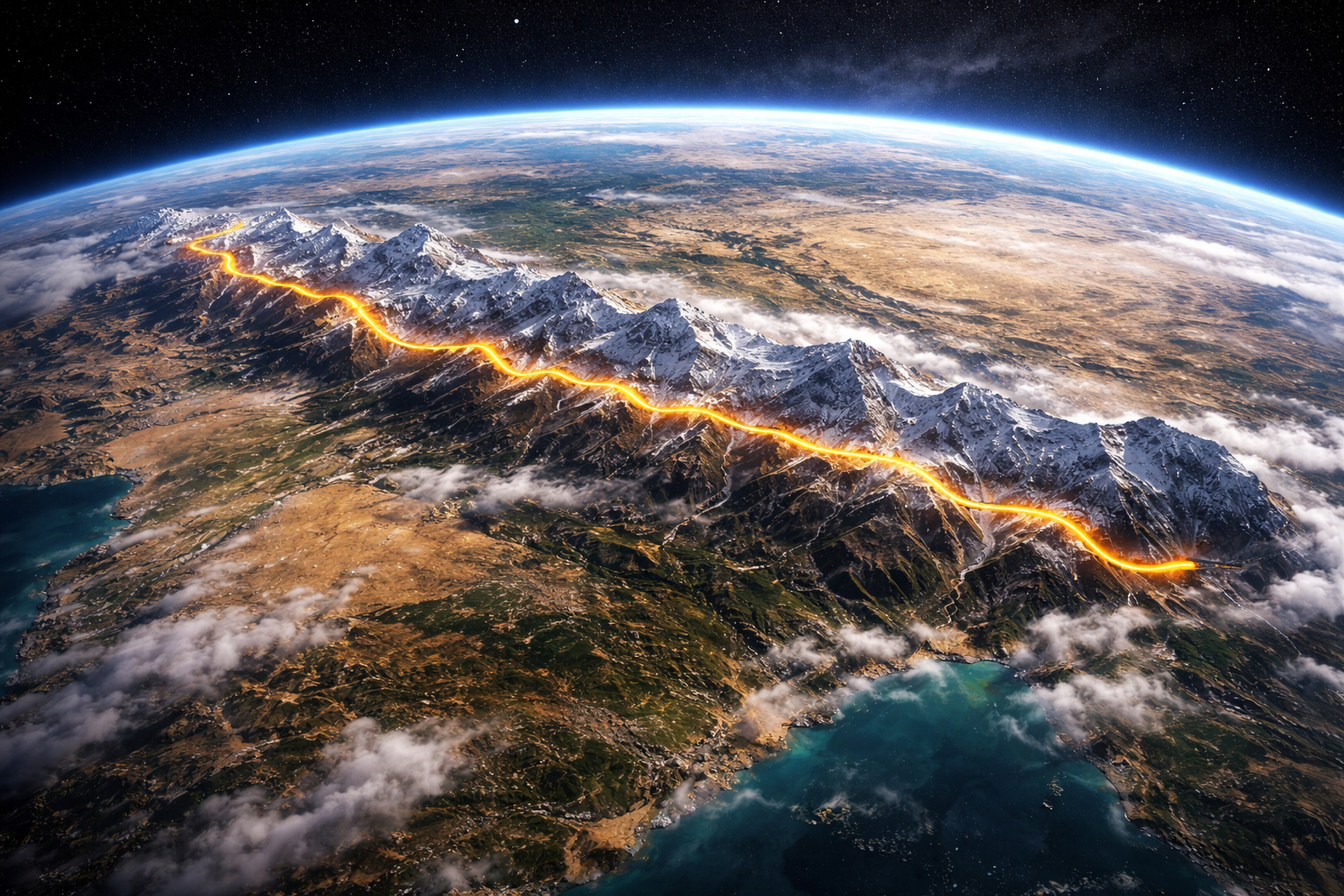

Why a bridge in the Strait of Gibraltar is considered infeasible by modern engineering
The construction of a bridge was the first solution analyzed, but it was officially discarded by Spain in 1996 after years of technical studies.
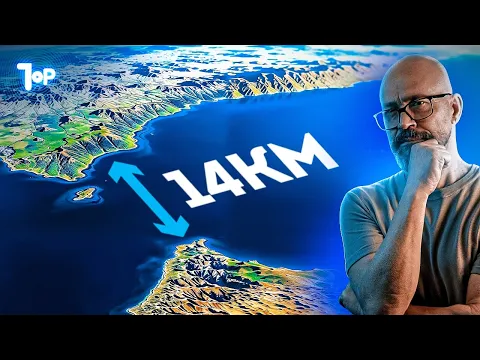

The main obstacle is the depth of the strait, which reaches up to 900 meters at its most critical point. For comparison, the world’s largest sea bridge was built over waters about 40 meters deep. Erecting pillars of that magnitude exceeds any viable structural capacity with current technology.
Moreover, the Strait of Gibraltar is one of the busiest maritime corridors on the planet, with over 100,000 vessels crossing the region annually. The structure would need to allow the passage of large ships, requiring spans and towers with extreme dimensions.
The third factor makes any surface solution even more critical: the region is located over the contact zone between the African and Eurasian tectonic plates, responsible for historical seismic events, including the Lisbon earthquake of 1755.
Submarine tunnel in the Strait of Gibraltar faces extreme depth and unstable soil
In light of the infeasibility of a bridge, studies began to exclusively consider the construction of a railway tunnel.
The chosen route circumvents the deepest point of the strait and crosses the Camarinal Sill, where the depth is reduced to about 280 meters. Still, the project envisions a tunnel with a maximum depth of approximately 475 meters below sea level.
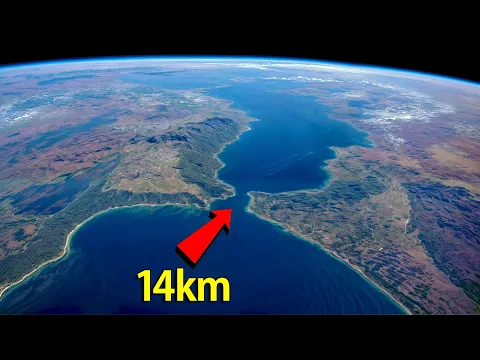
This would make the structure the deepest underwater tunnel ever built, surpassing any existing works today. The pressure at that depth is about 47 times greater than atmospheric pressure at sea level.
However, the main challenge lies not only in the depth but in the geological composition of the soil. The region is formed by flysch, a type of unstable sedimentary rock that exhibits unpredictable behavior during excavations.
In addition, there are layers of highly plastic Quaternary clays, which increase the risk of deformations and require advanced engineering techniques to ensure structural stability.
Active tectonic fault in the Strait of Gibraltar increases risks of the Europe-Africa project
Under the seabed of the strait lies the Açores-Gibraltar Fault, an active tectonic structure over 1,700 kilometers long.
This fault is responsible for large magnitude earthquakes in the region, including historical events and recent records. Studies published in 2025 indicate the existence of new tectonic fractures, suggesting that the geological dynamics of the area are even more complex than previously thought.
Building a tunnel in this region implies designing a structure capable of withstanding geological displacements and high-intensity seismic events over decades.
This factor represents one of the main elements of uncertainty in the project, as it is impossible to accurately predict when a new major earthquake will occur.
45 years of studies without works reveal the complexity of the tunnel between Europe and Africa
Since the signing of the initial agreement in 1979, Spain and Morocco have created specific institutional structures to study the project, such as SECEGSA and its Moroccan equivalent.
Over the decades, various studies have been conducted, preliminary projects developed, and technical analyses reviewed. However, not a single meter of tunnel has been effectively constructed.
The project has gone through phases of advancement and interruption, influenced by technical, economic, and geopolitical factors. Only recently has the evolution of tunneling technologies allowed for a more optimistic assessment of its feasibility.
Even so, the project remains in the advanced planning phase, with no concrete start of works.
Tunneling technology evolves, but geological challenges and costs remain high
The main advancement in recent years has been the development of more sophisticated excavation machines capable of operating in high-pressure environments and unstable soil.
Herrenknecht, responsible for the most recent study, indicated that current technologies are capable of handling the project’s conditions. However, this technical feasibility does not eliminate operational and financial risks.

The total estimated cost of the work, considering both sides of the strait, could reach between 15 and 20 billion euros. So far, there is no complete definition regarding the project’s financing.
Additionally, the timeline depends on the construction of an exploratory tunnel, which would serve to validate the actual conditions of the subsoil before the main work begins.
Rail link between Europe and Africa could reduce journey to 30 minutes
If completed, the tunnel will allow direct railway connection between Spain and Morocco, with an estimated crossing time of approximately 30 minutes.
The integration of railway networks is already technically possible, especially after the development of the Moroccan high-speed line connecting Tangier to Casablanca.
The economic demand for the link exists, driven by the logistical growth of the region and the strategic importance of the Strait of Gibraltar as a connection point between continents.
The Strait of Gibraltar project depends on geology, technology, and political decision
What has changed over 45 years is the technological capacity to face the challenge. What remains is the geological complexity and the uncertainty associated with a project of this magnitude.
The combination of extreme depth, unstable soil, and active tectonic activity makes the project one of the most challenging ever conceived in modern engineering.
The actual start of construction depends not only on technical feasibility but also on political decisions, financing, and validation of geological conditions through exploratory excavations.
Until then, the link between Europe and Africa remains visible to the naked eye — but still inaccessible by solid ground.










Seja o primeiro a reagir!