





 Portuguese
  English
  Spanish
  4 min of reading
  0 comments


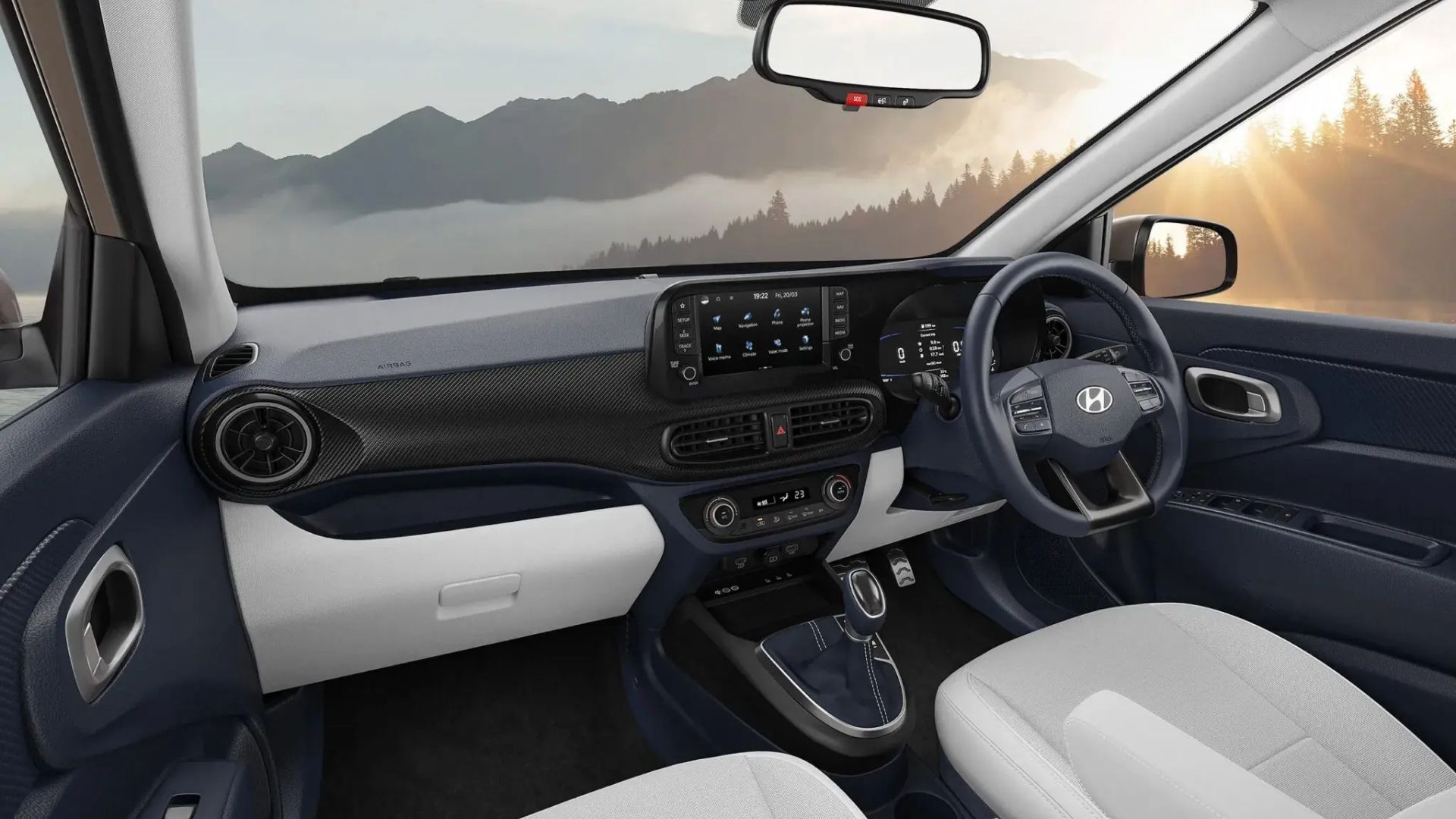
Affordable subcompact SUV gets a visual update, more safety equipment, and expanded connectivity, while maintaining a 1.2 naturally aspirated engine and an option with CNG, while remaining among the cheapest models from Hyundai in the Indian market and reinforcing competition with compact hatchbacks.
Hyundai launched the 2026 line of the Exter in India with a discreet visual update, new comfort features, and expanded safety from the entry-level versions.
The subcompact SUV remains the cheapest SUV from the brand in that market and retains the already known mechanical set, with a 1.2 naturally aspirated engine and a factory CNG option.
Update of the Hyundai Exter 2026 maintains affordable proposal
The renewal makes few changes to the formula that positioned the model as Hyundai’s entry point among SUVs in India.
-
He bought a new car in 1983, locked it in the barn in 1988, and no one opened the door for 38 years until the family discovered what was stored inside and realized it looked like something out of a movie.

-
A 250cc motorcycle that can reach 560 km with a 14-liter tank, features disc brakes on both wheels and is among the most well-known in Brazil.

-
Man finds over 200 rare cars abandoned on a lot and tries to do the impossible in 8 hours with a surprise at the end.

-
An irregular parking case gains attention after a Mercedes Classe A was removed in such a strange way that it even raised doubts about damage to the car.


Originally launched in 2023, the Exter is now undergoing its first facelift and receives changes focused on the exterior design, cabin finish, and equipment list, without altering its size, urban proposal, or positioning below the Venue.
Visual changes reinforce the identity of the compact SUV
At the front, the split headlights and the “H” shaped light signature remain, one of the most recognizable features of the car.

The bumper has been redesigned, the grille is wider, and the “Exter” inscription now occupies a higher area, integrated into the bar between the optical units.
The side changes are also minor, but help differentiate the 2026 line from the previous model without altering the design.
The Exter has gained new 15-inch alloy wheels and thicker plastic trims on the wheel arches, while the rear has adopted a dual-wing spoiler, revised bumper, and simplified trim between the taillights.
Interior gains wireless connectivity and new finish
Inside, the 8-inch multimedia center has been retained, now with wireless Android Auto and Apple CarPlay via adapter in compatible versions.
The cabin received a new color combination in navy blue and gray, a textured finish reminiscent of carbon fiber, a flat-bottom steering wheel, a central armrest, USB-C ports, and an integrated dash camera.
Standard safety with six airbags and assistances
Hyundai also expanded the safety and convenience package in the more affordable configurations, a common move among manufacturers competing in the entry segment in India.
Six airbags are now standard, as well as the height adjustment for the driver’s seat, while electronic stability control and hill-start assist appear among the main items highlighted by the brand for the new Exter.
1.2 naturally aspirated engine and option with CNG remain unchanged

In the mechanics, there were no changes.
The Exter continues to be equipped with a 1.2 Kappa gasoline engine, capable of delivering 61 kW, equivalent to 83 hp, and 113.8 Nm of torque, with options for a five-speed manual transmission or automated AMT, always with front-wheel drive.
The bi-fuel variant with CNG remains in the catalog to cater to an audience that prioritizes lower operating costs and flexible fueling.
In this configuration, power drops to 50.5 kW, or 69 hp, and torque decreases to 95.2 Nm, maintaining the proposal of efficiency over performance.
Trunk and dimensions favor urban use
The luggage space continues to be one of the strong points of the utility vehicle in the gasoline version.
According to Hyundai, the trunk holds 391 liters by the V215 standard, while the Exter equipped with the Hy-CNG Duo system loses useful volume due to the cylinders and offers considerably less capacity.
In dimensions, the model remains within the Indian tax limit for compact cars, measuring 3.99 meters in length, a decisive feature for maintaining a competitive price in that market.

Still, it is larger than the Casper sold by Hyundai in South Korea and tries to combine SUV appearance with elevated hatch proportions, a formula that has solidified in India in recent years.
Low price keeps Exter among the cheapest SUVs in India
The official price range of the Exter 2026 varies, on the Hyundai India website, from ₹ 5.64 lakh to ₹ 9.51 lakh depending on the city, local taxes, and version consulted, while the general page of the brand’s range lists the model between ₹ 5.79 lakh and ₹ 9.40 lakh.
In the launch announcement made on March 20, 2026, the automaker itself reported an initial price of ₹ 5.79 lakh, equivalent to about R$ 32,000 based on the exchange rate on March 28, 2026.
At the top of the line, the reference of ₹ 9.40 lakh to ₹ 9.42 lakh leads to a value close to R$ 52,000 in direct conversion, not considering import taxes, freight, or localization costs.
This helps explain why the Exter draws attention in international comparisons, although it is inserted in a very different tax and competitive reality than Brazil.
In addition to the low price by local standards, the utility vehicle continues to be supported by a package that mixes connectivity, good internal utilization, and safety equipment that were previously uncommon in the entry segment.
In practice, Hyundai sought to preserve the Exter’s formula and only reinforce sensitive points for the Indian consumer, such as the perception of modernity, finish, and content from the basic versions.







Seja o primeiro a reagir!