





 English
  Francês
  Alemão
  Italiano
  Japonês
  Norueguês
  Portuguese
  Spanish
  7 min of reading
  0 comments


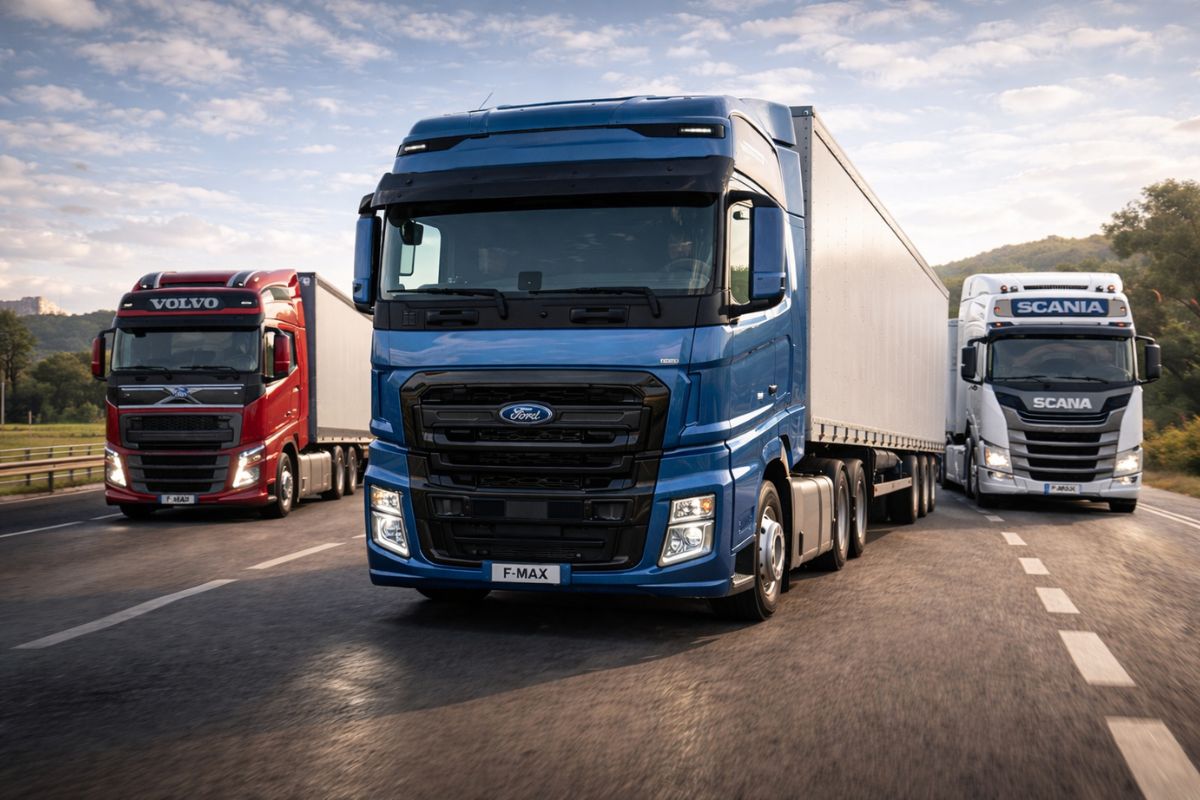
With The Ford F-MAX In Brazil, The Brand Returns To The Extra Heavy Weight Game With A Cheap, Robust Truck Designed For Those Who Live On The Road, Targeting Those Who Count In The Spreadsheet And Promises To Really Disturb Traditional Rivals Like Volvo And Scania.
After years of distrust and skepticism towards the brand, Ford decided to attack precisely where it hurts the least for truck drivers and fleet owners: a simple, coherent extra heavy weight truck, focused on cost-benefit and without unnecessary frills. At the same time, the Ford F-MAX has already established itself in demanding markets abroad, especially in Europe, and now raises the big question that moves the sector: Does the Ford F-MAX in Brazil have what it takes to repeat its success and become a real alternative against the established giants?
In Europe, the F-MAX is no longer a novelty and has become a serious fleet option, well-received among carriers and drivers who travel long distances. It is not the most luxurious nor the most powerful truck in its category, but it is one of the most coherent in the relationship between price, comfort, technology, and operational cost. And it is exactly this formula that Ford is trying to replicate with the Ford F-MAX in Brazil, betting on a modern, rational extra heavy weight truck that is less traumatic when it comes to closing a deal and keeping the operation running.
Ford F-MAX In Brazil: The Return Of Ford To The Extra Heavy Weight Game

The arrival of the Ford F-MAX In Brazil marks a clear change in the brand’s posture. No more concepts that never materialize, no vague promises that fade over time.
-
BRL 20.1 Million Bridge Project Kicks Off: 200-Meter Construction to Improve Access in Three Cities in Minas Gerais

-
‘Endless Road’ In Brazil Is One of The Largest In The World: 145 Km Stretch On An Important Highway (BR) Crosses The West Of Bahia And Had 135.9 Km Revitalized With R$ 35.3 Million
-
Engineer From ITA Who Worked at Embraer Leads Free Flow Expansion With National Artificial Intelligence and Technology for Toll Without Barriers in Brazil

-
With ‘Super’ Asphalt, New Highway (BR) Will Receive R$ 375 Million to Pave 60 Km, Reduce Route from 432 Km to 150.7 Km and Apply 10 Cm of Asphalt in 24 Months
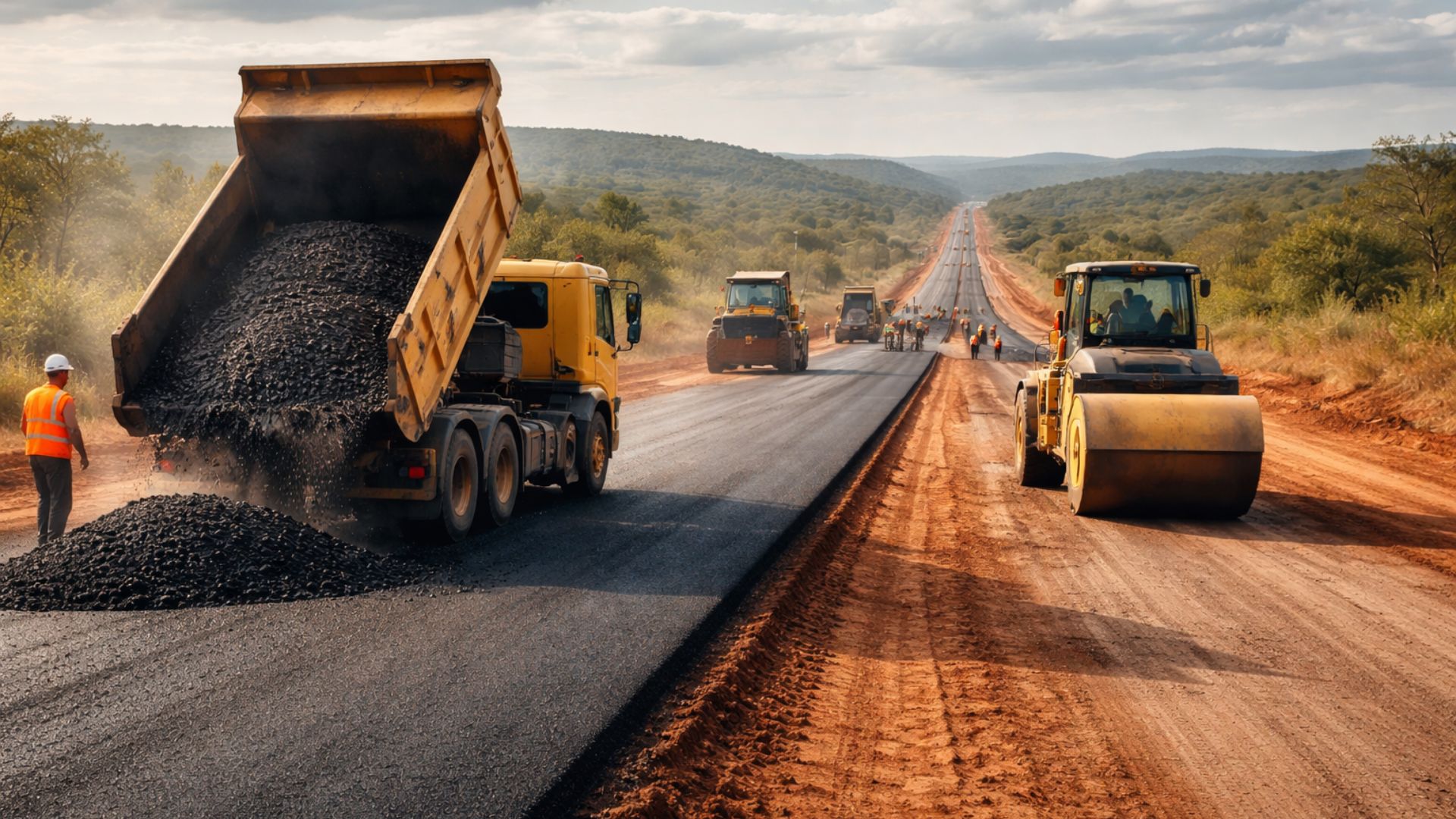

The proposal now is to deliver a truck that speaks the same language as the Brazilian road: robustness, mechanical simplicity, competitive pricing, and a focus on hard work.
Instead of trying to impress with excess electronics or luxury that increases costs without necessarily bringing returns, Ford bets on the basics done well.
The F-MAX was designed to be a long-distance extra heavy weight truck with a modern design, but with a simple logic: drive a lot, spend little, and not turn the owner into a hostage of workshops or difficult-to-maintain technology.
This makes a difference in a market that still looks sideways at the brand when it comes to trucks. Many people wonder if Ford has really “returned” or if it is just another one-off move.
The answer lies less in words and more in the product: The Ford F-MAX in Brazil is not here to just be present; it comes to compete for freight, renew fleets, and enter cost spreadsheets.
From European Success To The Challenge Of Facing Brazilian Reality
The F-MAX was not born from improvisation. It is a global project that marked Ford’s return to the long-distance extra heavy weight segment, designed from the outset to meet the demands of fleet owners and drivers who spend weeks in the cabin.
In Europe, the model is already a well-established success, running strongly in various countries and gaining traction in fleets that traditionally bet on established brands.
This performance carries an important message: when a truck establishes itself in competitive markets, it is not luck; it is a combination of factors. Spacious cabin, reliable mechanics, coherent consumption, and costs that make sense in the fine line of spreadsheets.
It is this reputation that the brand attempts to capitalize on with the Ford F-MAX in Brazil, showing that it is not merely relaunching a name, but bringing a product that has already been tested in a high-demand environment.
The big question is how this global package adapts to our reality. Variable fuel prices, challenging roads, maintenance spread across remote areas, and heavy operations in conditions that are often much harsher than those in Europe.
This is where the Ford F-MAX in Brazil needs to prove that it is not just an export success, but an extra heavy weight truck ready to face potholes, heat, long climbs, and the real demands of daily life.
Aggressive Price: The Extra Heavy Weight That Talks To The Spreadsheet

One of the most striking points is the pricing positioning. In Europe, the brand new F-MAX operates in a range of approximately 86,950 to 103,470 euros, which, in a direct conversion, places the truck in a price bracket close to R$ 470 thousand to R$ 560 thousand, not including import taxes, adaptations, and specific costs for the Brazilian market.
When you compare this with what is paid for extra heavy trucks from traditional brands, it is hard not to look twice at the number.
While some competitors charge high prices just to list options, the Ford F-MAX positions itself as a big truck, with a respectable cabin, good technology, and competitive performance, but at a lower initial investment. It is not a showroom truck; it is a spreadsheet truck.
Of course, the final price of the Ford F-MAX in Brazil will inevitably rise due to taxes, logistics, and local adjustments.
But even so, Ford’s message is clear: they do not want to lead with the highest price; they want to lead in cost-benefit, delivering a lot of truck for less than the traditional giants.
In a scenario where every cent per kilometer makes a difference, this changes the game for fleets and owner-operators.
Cabin, Comfort, And Technology In Just The Right Measure

Another strong point of the Ford F-MAX In Brazil is the cabin. And here, it is not just advertising exaggeration; it is a fact: the F-MAX cabin has already been awarded for comfort, with good space utilization, proper ergonomics, and an environment designed for those who spend hours sitting at the wheel.
It is not that excess luxury that only increases the truck’s price without necessarily improving daily life, but it is also far from being too simple of an environment.
There is space for resting, correct driving position, and an overall feeling of “I can work comfortably here.” It is the type of cabin that a truck driver enters and feels capable of long routes without suffering too much.
In terms of safety and driver assistance, the F-MAX also stands out. The model received three stars in specific safety ratings, being considered ideal for highway operations precisely because of its supportive driving systems.
These are technologies that help, not hinder: they reduce fatigue, make driving more predictable, and make daily life less stressful without overly invading the driver’s way of driving.
Is The Ford F-MAX In Brazil Already On The Road?
A common question is whether the Ford F-MAX In Brazil is already a reality or if it is still just a topic of conversation in videos, fairs, and market backrooms.
The answer, for now, is simple: the truck has not yet officially arrived in the Brazilian market, which keeps this discussion much more in the realm of “what if” rather than “it is already running here.”
Abroad, the F-MAX has already proven to be a coherent extra heavy truck, cheap for what it delivers, and well-accepted among fleet owners, but this has not yet translated into a full presence on our roads.
Without a structured official operation, dedicated network, and local price list, any conversation about delivery times for the Ford F-MAX in Brazil remains projection, not fact.
And it is precisely here that curiosity lies: If Ford really brings the F-MAX to Brazil with the same logic of a cheap and robust truck it practices abroad, it has every potential to shake up the spreadsheets of those needing to renew fleets. But until this decision is clearly made by the brand, the question remains open.
Can It Face Volvo And Scania On Equal Terms?
At the end of the day, the question remains whether the Ford F-MAX In Brazil really stands up to Volvo and Scania or if it is just a loud supporting character. Looking at the whole picture, the answer is clear: it does compete, indeed, with a solid cost-benefit argument.
Volvo and Scania remain giants, with tradition, prestige, and a vast base of loyal customers. No one can take that away. But the F-MAX arrives as an option for those who want results without overpaying just for the strength of the badge on the front grille.
It is the truck for those who want road comfort, operational efficiency, and controlled costs, without needing to enter the top of the price list.
It does not try to be the most extreme, the most powerful, or the most technological truck in the world. It aims to be the most rational for those who live by the book, contracted freight, and kilometers driven. And rationality, today, is highly valuable in transportation.
When a new truck manages to sit at the same table as the giants without asking for permission, it is because it has the technical and economic argument for that.
The Ford F-MAX has ceased to be just a current novelty and has become a respected rival, especially for fleets that weigh each real invested carefully.
If Ford maintains support, parts, network, and after-sales service at the level that this truck promises, the Ford F-MAX in Brazil has everything to consolidate its space and become one of the smartest options in the extra heavy weight segment.
And you, looking at price, cabin, technology, and what is already known about the Ford F-MAX in Brazil, would you put this truck to work in your fleet instead of a Volvo or Scania, or do you still find it risky to bet on a “new face” in this segment?









-

-

2 pessoas reagiram a isso.