





 English
  Francês
  Alemão
  Italiano
  Japonês
  Norueguês
  Portuguese
  Spanish
 6 min of reading
  0 comments


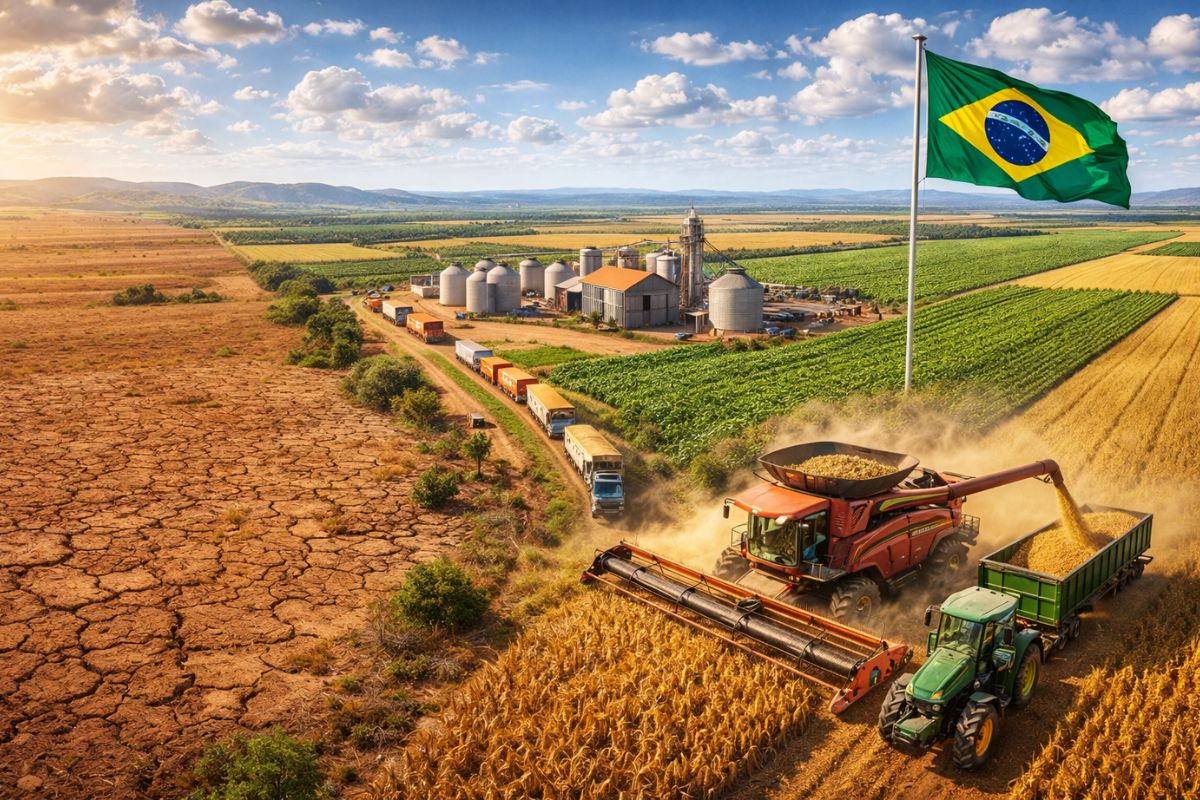
The empire that grows in MATOPIBA transformed lands once seen as unproductive into one of the most impressive economic fronts in Brazil, with billions in grains, cities enriched by agriculture, and an expansion that still seems far from its limit.
This agricultural empire advanced in an area formed by Maranhão, Tocantins, Piauí, and Bahia, uniting available land, technology, logistics, and productivity in a combination that changed the fate of an entire region. What once seemed like a distant interior has now consolidated as one of the most strategic movements in Brazilian agribusiness.
For a long time, this part of the country was treated as a vast area of cerrado, with small towns, limited infrastructure, and little apparent economic value. However, in recent decades, the scenario has changed radically. What seemed like empty space has turned into high-production territory, heavy investment, and accelerated growth.
The most impressive thing is that this process happened almost without national fanfare. While the major centers continue to dominate the headlines, the empire of MATOPIBA has gained strength with giant crops, cutting-edge machinery, new export corridors, and an appreciation that transformed the local economy.
-
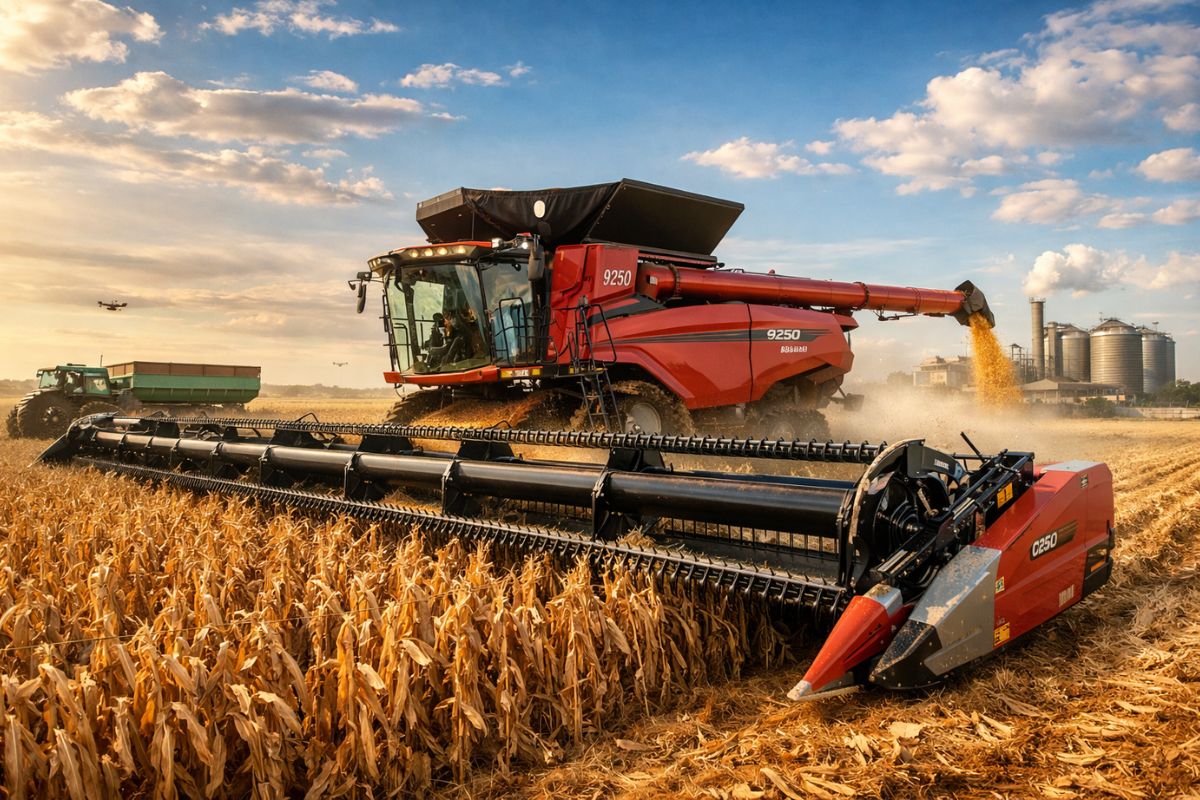
With a 775 hp engine, the world’s largest axial combine harvester arrives in Brazil, promising to harvest more in less time with advanced automation and the capacity for platforms up to 61 feet.
-
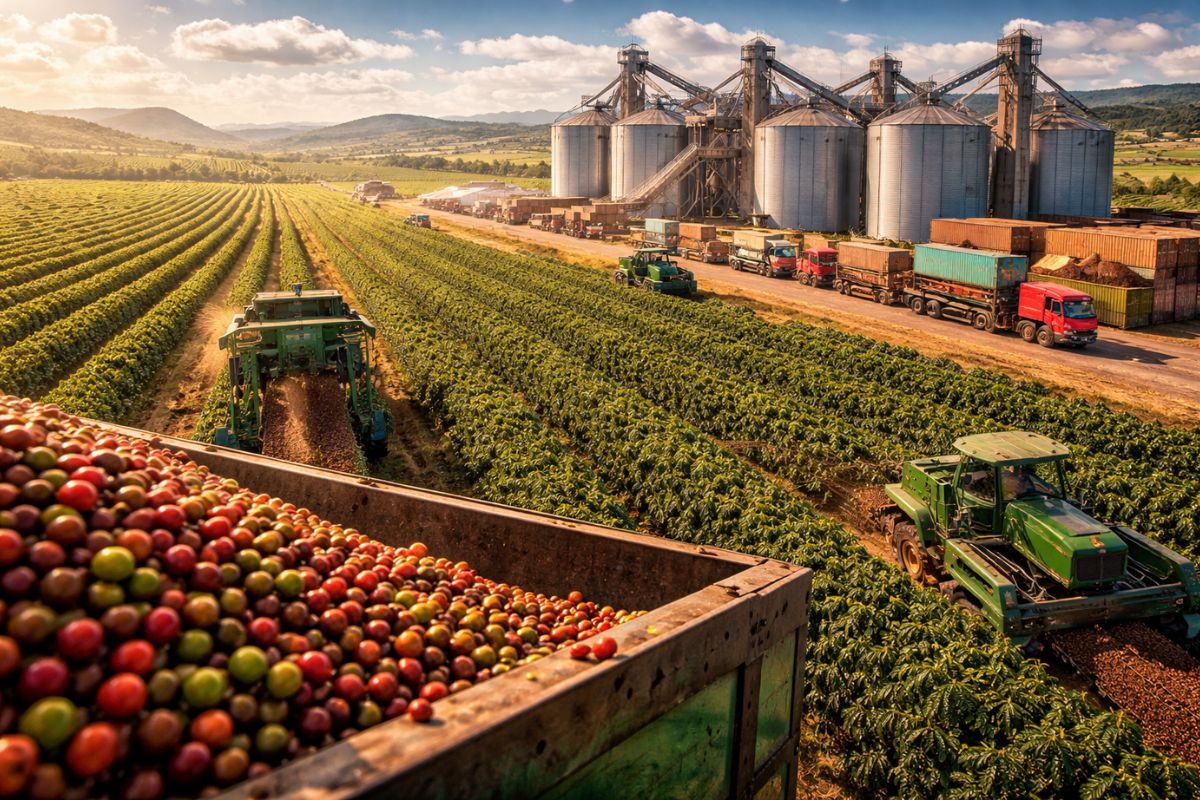
With 18 million feet, giant farms, and 2.2 million sacks per year, a mining group is building a coffee empire in Brazil with heavy mechanization, giant silos, and exports to various continents.
-
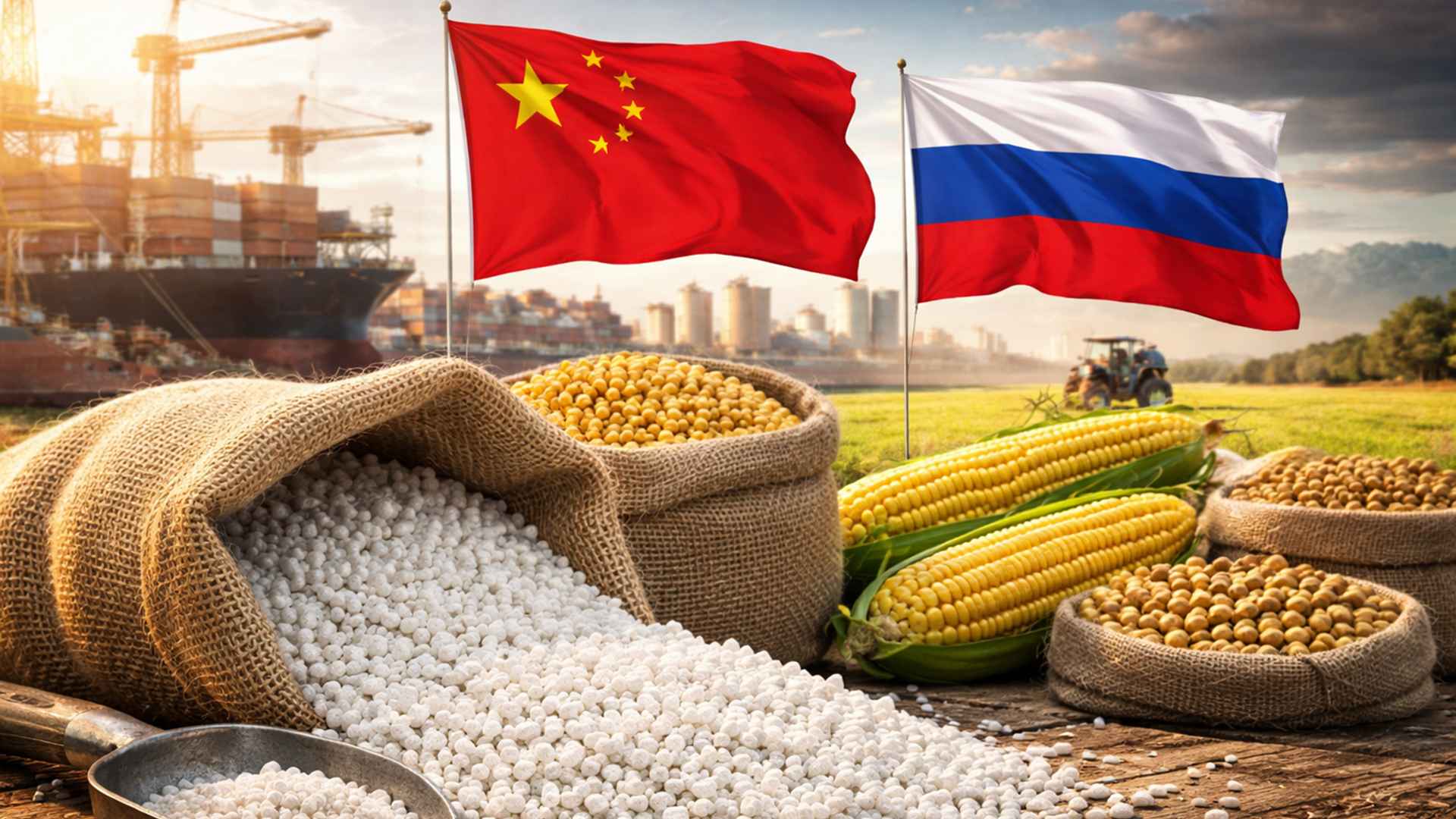
China and Russia suspend fertilizer exports, prices soar, and Brazil is already at real risk of shortages in the fields.
-
Brazilian soybeans feel little impact from the surge in oil prices, and producers see part of their profits vanish due to higher freight costs, pressured expenses, and uncertainty in sales for the 2025/2026 harvest.


What is MATOPIBA and why did it become an empire
MATOPIBA was born from the combination of the initials of Maranhão, Tocantins, Piauí, and Bahia. This large quadrilateral in the interior of Brazil has come to be seen by many experts as the last great agricultural frontier on the planet, precisely because it combines territorial scale, favorable climate, and strong potential for expansion.
It was from this combination that the new empire of agriculture emerged. Instead of a region already saturated, MATOPIBA offered large expanses of flat land, the possibility of productive growth, and space for modern agriculture to advance rapidly.
The region ceased to be an economic periphery and began to operate as the center of a new agricultural logic in the country.
Lands with no apparent value turned into fortune
For decades, much of these areas were considered unsuitable for large-scale agriculture. Poor soils, distance from consumer centers, and precarious infrastructure helped maintain the image of a little-promising interior. However, this perception began to crumble when Brazilian agricultural science came into play.
With techniques for correcting acidity, appropriate fertilization, and seeds adapted to the tropical climate, what seemed unfeasible began to produce at a high level. It was then that the empire of MATOPIBA gained a real foundation.
Lands that once cost almost nothing began to be worth fortunes, and forgotten areas started attracting producers and investors from various parts of Brazil.
Soy, corn, and cotton changed the scale of the region
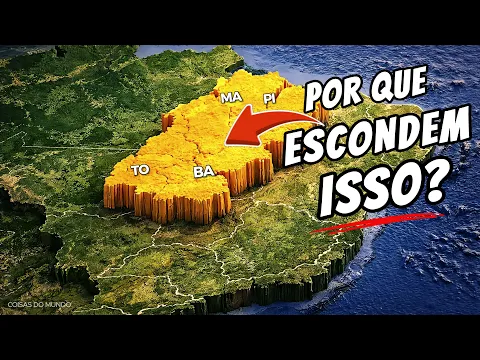

The economic transformation of MATOPIBA relies mainly on three crops: soy, corn, and cotton. These commodities placed the region on another level and helped consolidate the agricultural empire that today moves billions of dollars annually.
In the 2025-2026 harvest, MATOPIBA is already responsible for between 32 and 35 million tons of grains, according to the cited figures.
In some consolidated regional estimates, this represents about 14 to 19% of the national soy production. It is no longer a future bet, but a concrete force that already weighs on the present of Brazilian agriculture.
Interior cities became poles of wealth
The growth of production has not been restricted to the fields. Some cities have completely changed their profile and have begun to operate as centers of modern agribusiness.
Luís Eduardo Magalhães, in western Bahia, is one of the most striking examples. In just over two decades, it transformed from a small village into one of the richest agricultural hubs in the Northeast.
Balsas, in southern Maranhão, has also become a reference, with investments in infrastructure, storage, and logistics. The advancement of these cities shows that the empire of MATOPIBA is not just rural.
It alters commerce, services, the real estate market, the circulation of machinery, and the local standard of living. Agriculture not only occupies the land, it reorganizes the urban space around it.
Logistics helped transform production into power
Producing a lot in the interior has never been enough by itself. It was necessary to create more efficient pathways to international markets. At this point, logistics became one of the keys to the empire of MATOPIBA.
For a long time, a large part of Brazilian agricultural production depended on the ports in the South and Southeast. With the expansion of the agricultural frontier in the interior, shorter routes gained prominence.
The port of Itaqui, in São Luís, became a strategic piece of this corridor. In 2025, the Gran Itaqui grain terminal handled 13.5 million tons, much of it coming from MATOPIBA. This Northern Arc corridor shortened distances, reduced freight costs, and increased competitiveness.
Railway and ports connected the interior to the world
In addition to the port, the railway infrastructure became a decisive element. The North-South Railway began to function as the backbone of cargo transport, helping the agricultural empire of the interior connect more efficiently to the country’s ports.
This combination of trucks, trains, and maritime export elevated the competitiveness of regional production. The result was a new economic logic, in which farms in the interior began to connect directly with Europe, Asia, and especially China. What once seemed geographically isolated has become an integrated part of global trade.
Giant farms and technology accelerated productivity
Another central factor for the rise of the region was scale. In MATOPIBA, there are farms that exceed 10,000 hectares of cultivated area.
In many cases, they function as true agricultural cities, covered by mechanized crops and high-intensity production systems.
In this environment, the agricultural empire grew supported by precision agriculture, drones, large machinery, and modern irrigation systems.
This explains why productivity advanced so quickly and why certain areas are already beginning to be compared with large international agricultural hubs. The region did not grow simply because it had land, but because it knew how to combine land with technology.
The giant grew almost without attracting attention
Perhaps the most curious point about MATOPIBA is precisely the contrast between economic relevance and low national visibility.
Even moving billions, increasing its share in grain production, and attracting heavy investment, the empire of the region is still little known by a large part of Brazilians.
While the major urban centers dominate attention, a new economic giant grows silently in the heart of the country. Huge plantations, full silos, machines operating day and night, and export logistics corridors are already part of the regional routine.
It is a productive, strategic, and fully expanding Brazil, but it still goes almost unnoticed outside the agricultural universe.
The challenge now is to grow without losing balance
The advancement of MATOPIBA also brings challenges. The very foundation highlights the need to balance expansion with the preservation of the cerrado, which places sustainability at the center of the discussion about the future of the agricultural empire.
This point is crucial because the economic strength of the region does not eliminate environmental responsibility. What is at stake is whether Brazil will be able to maintain productivity, innovation, and expansion without compromising the biome that sustains part of this new wealth. The future of MATOPIBA depends as much on economic efficiency as on territorial intelligence.
MATOPIBA is already one of the most strategic stories in Brazil
In the end, what MATOPIBA symbolizes is something greater than a new productive area. The region represents a stage where territory, science, logistics, and capital came together to create a new economic empire within Brazil.
The strongest aspect of this story is realizing the speed of change. In just a few decades, an area treated as a limit has turned into a powerhouse.
And all indications are that this process is still far from over. MATOPIBA is no longer a promise, but one of the most concrete expressions of how the Brazilian interior continues to reinvent itself on a billion-dollar scale.
Do you think this MATOPIBA empire will still grow a lot or has it already reached the limit of this agricultural frontier?








Seja o primeiro a reagir!